
Custom Board Game Certification Comparison: ISO 9001 vs SMETA vs BSCI vs FSC
ISO 9001:2015, SMETA, amfori BSCI and FSC are not four competing options for the same requirement. In a custom board game project they cover four different layers of buyer risk - process quality, ethical trade and labour, social compliance, and certified raw material - and the correct priority order is set by your destination market and the retail channel you sell into, not by which logo appears most often in a supplier catalogue.
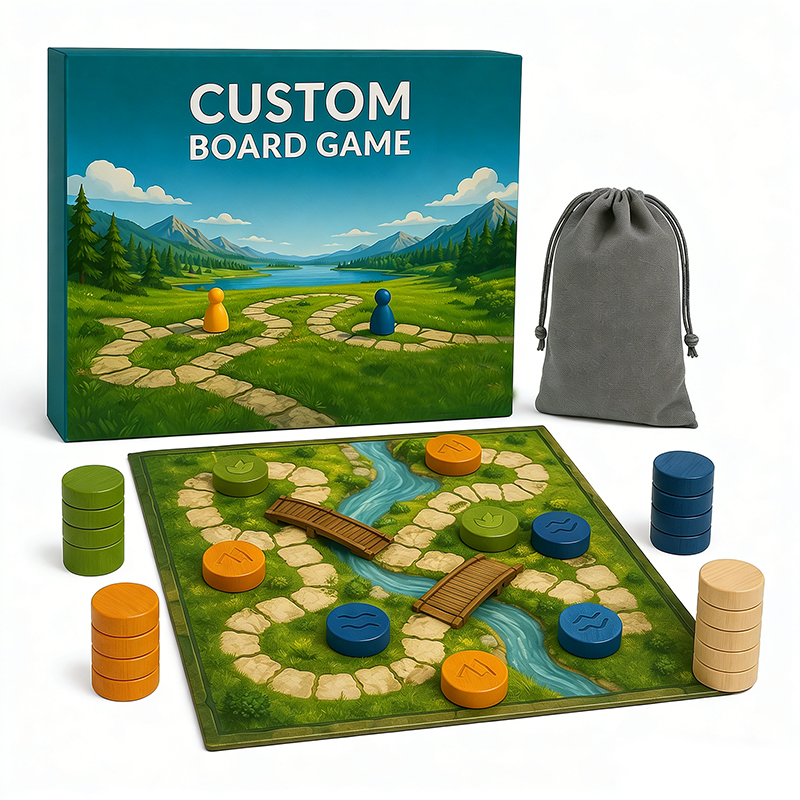
Custom board game reference model BG-001: paper weight 128-400 gsm or custom, box thickness 1.5-3 mm or custom, CMYK offset printing, custom dimensions.
The reference certification set used throughout this comparison
- ISO 9001:2015 - certificate 710925, issued by Guardian Independent Certification Ltd, documented for US, Europe and Asia programs.
- SMETA - audit reference ZAA600202718, associated with LRQA, referencing the Sedex SMETA Code, the ILO Core Labour Standards and the ETI Base Code.
- amfori BSCI - reference 26-0387346, under amfori, documented for US market programs.
- FSC - certificate code ESTS-COC-241865, against FSC-STD-40-004 V3-1, issued by Extensive Standard Technical Services Co., Ltd., documented for US and Europe.
All four are documented against custom board game model BG-001 manufactured by Vietnam Yawanhong Printing Culture Co., Ltd., a printing and game manufacturer established in 2006 in Hai Phong City, Vietnam, exporting 100% of its output to the USA and Europe.
The Problem: Buyers Compare Certificates Instead of Project Requirements
When an importer requests quotes from three or four custom board game manufacturers, the reply usually arrives as a folder of PDFs: a quality certificate, a social audit report, a material certificate, sometimes a factory licence. The instinct is to rank the folders. That ranking fails, and it fails in four predictable ways.
First, the schemes are governed by different organisations and use different numbering systems, so a "newer" or "higher" number means nothing when you compare across them. Second, scope differs completely: ISO 9001:2015 addresses how a factory controls production processes; SMETA and amfori BSCI examine labour and ethical trade conditions on site; FSC examines the origin of certified paper and wood fibre. Third, a manufacturer can legitimately hold one scheme and not the others, because demand for each comes from different customers rather than from a single universal rule.
The fourth failure mode is the most expensive. Management-system certificates are sometimes treated as a substitute for product safety compliance. They are not. Board games sold in the EU must comply with the Toy Safety Directive 2009/48/EC and the harmonised EN 71 standards, including EN 71-1 for mechanical properties and EN 71-13 for olfactory games. In the United States, board games intended for children under 14 must meet ASTM F963-23, which is mandatory under 16 CFR part 1250. Those requirements attach to the product and the market. ISO 9001, SMETA, BSCI and FSC sit above that legal floor as supplier credentials.
Industry Background: Why Certification Questionnaires Reach the Factory Floor
Two forces have pushed certification questions to the front of board game sourcing. The first is market scale. The global board games market was valued at approximately USD 15.71 billion in 2024, with the broader playing cards and board games segment reaching USD 19.9 billion, according to Grand View Research. North America accounted for approximately 42.06% of global demand in 2024, valued at USD 6.66 billion, per Fortune Business Insights, and Credence Research projects a 10.38% CAGR from 2025 to 2032, reaching an estimated USD 31.58 billion.
Those figures should be read as directional rather than precise. Published estimates for the same year differ by category definition - Grand View Research records USD 15.71 billion for 2024 while Global Market Insights records USD 12.2 billion - largely because playing cards, RPG accessories and collectible components are included or excluded differently. For sourcing purposes the useful signal is the direction: online and e-commerce sales of board games are projected to grow at a CAGR of 11.53%, which means more brand owners now complete compliance questionnaires themselves instead of leaving them to a retailer's buying office.
The second force is category structure. Publishing is concentrated among organisations such as Hasbro, Mattel, Asmodee, Ravensburger and Spin Master, with Ravensburger holding over 5% share in 2024, according to Global Market Insights. Smaller and mid-size brands compete with licensed, educational and family-positioned titles - and those brands are the ones placing custom board game OEM and ODM orders. When they sell into EU or US retail, they inherit the compliance expectations of that channel.
In practice, the requirement stack has four layers:
- Product safety law - EN 71 and Directive 2009/48/EC in the EU; ASTM F963-23 under 16 CFR part 1250 in the US.
- Process quality - how consistently the game is printed, laminated, cut and packed, order after order.
- Labour and ethical trade - how the people producing it are treated, and how that is independently audited.
- Material sourcing - whether paper, board and wood components come from certified supply chains.
The four schemes compared below map onto layers two, three and four.
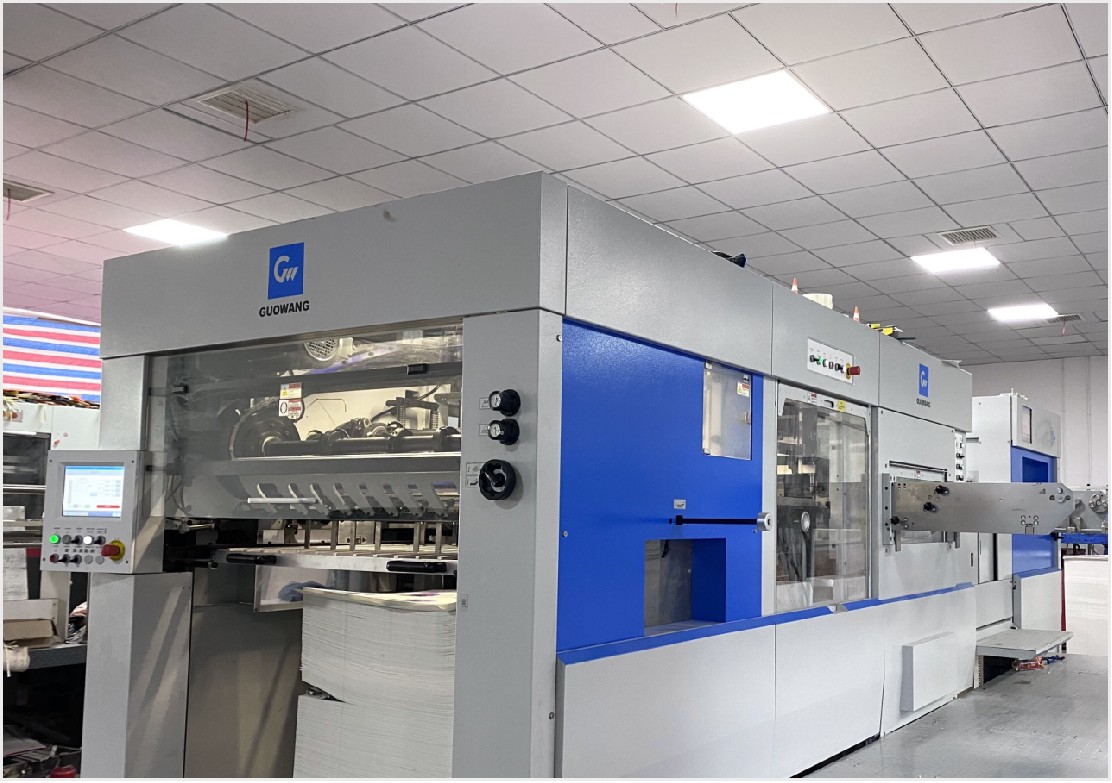
Equipped with advanced printing and production machinery, enabling precise printing and consistent product quality. These are the process stages a quality management system audit reviews.
The Four Schemes, One by One
ISO 9001:2015 - the process baseline
ISO 9001:2015 is the quality management system standard most frequently requested in custom board game tenders because it is market-neutral. The reference in this comparison is certificate 710925, issued by Guardian Independent Certification Ltd and documented for programs serving the United States, Europe and Asia.
What it covers: how a factory plans, controls and improves production. For a board game that translates into incoming material control, printing and lamination parameters, in-process inspection, final inspection before packing, and corrective action when a defect is found. Yawanhong applies 100% test quality control across its board game output, which is the operational behaviour a quality management system is designed to make repeatable rather than occasional.
What it does not cover: labour conditions, worker welfare, or the origin of paper fibre. A valid ISO 9001 certificate is not evidence on any of those points.
SMETA - labour and ethical trade audit evidence
SMETA is an audit methodology rather than a product certificate, and that distinction changes how a buyer should treat it. The reference here is audit ZAA600202718, associated with LRQA, and the audit framework references the Sedex SMETA Code, the ILO Core Labour Standards and the ETI Base Code.
What it covers: labour practices, working hours, health and safety, wages and ethical trade conduct at a production site, assessed against a recognisable code set. Because the underlying references are the ILO Core Labour Standards and the ETI Base Code, a SMETA audit answers questions that a retailer's ethical sourcing team will ask in its own language.
Applicability is driven by the requesting customer rather than by geography: SMETA is normally required when a retail or brand customer operates its own ethical trade programme. That means a buyer comparing suppliers should confirm whether their customers actually request it before making it the deciding criterion.
amfori BSCI - social compliance under a different programme
amfori BSCI is a social compliance audit programme run under amfori, through which suppliers are assessed against the programme's code of conduct framework. In this reference set the BSCI reference is 26-0387346, documented for US market programs.
What it covers: social compliance performance at the audited site, reported through amfori's own system. What it does not cover: product quality management or material origin.
The practical consequence for a buyer is that SMETA and BSCI are similar in intent and different in administration. Which one you need is decided by the organisation asking for it, not by the intrinsic strength of either scheme. If your customers or their agents work through amfori, a BSCI reference is the one they will recognise; if they work through Sedex, it is the SMETA audit.
FSC - chain of custody for paper and wood
FSC addresses raw material rather than process or labour. The reference here is certificate code ESTS-COC-241865, certified against FSC-STD-40-004 V3-1 - the chain of custody standard - by Extensive Standard Technical Services Co., Ltd., and documented for US and Europe.
What it covers: the chain of custody that tracks certified material from forest through pulp, paper and board into the finished printed product. For a board game this applies directly to the game board, box, rulebook and cards. What it does not cover: working conditions, wages, or how consistently the game is produced.
FSC is also the scheme most often requested for a commercial reason rather than a legal one: a brand making a sustainability statement on a family or educational game, or a retailer with a paper sourcing policy. Because a claim of that type has to be supported by a certificate whose scope actually covers the products and materials ordered, scope checking matters more here than anywhere else in the set.
For custom board game model BG-001, the four schemes sit alongside a specification a buyer can trace: paper weight of 128-400 gsm or custom, box thickness of 1.5-3 mm or custom, CMYK offset printing, and surface finishes covering matte lamination, glossy lamination, UV coating, embossing and debossing, with fully customised dimensions.
Comparison Table: Scope, Issuing Body, Reference Number and Market Fit
| Scheme | Scheme type | Issuing / auditing body | Reference number | Standard or framework referenced | Documented market applicability | Does not cover |
|---|---|---|---|---|---|---|
| ISO 9001:2015 | Quality management system certification | Guardian Independent Certification Ltd | 710925 | ISO 9001:2015 | US, Europe, Asia | Labour conditions; material origin |
| SMETA | Social and ethical trade audit | LRQA (audit), within the Sedex framework | ZAA600202718 | Sedex SMETA Code; ILO Core Labour Standards; ETI Base Code | Set by the requesting customer's ethical trade programme | Product quality; material origin |
| amfori BSCI | Social compliance audit programme | amfori | 26-0387346 | amfori BSCI programme framework | US market programs | Product quality; material origin |
| FSC | Chain of custody certification | Extensive Standard Technical Services Co., Ltd. | ESTS-COC-241865 | FSC-STD-40-004 V3-1 | US, Europe | Labour conditions; process quality |
Read across the table and the priority question answers itself: the schemes do not overlap, so the only meaningful comparison is between each scheme and your own project requirement.
| Target market / channel | Mandatory product safety layer | Documented schemes in this reference set | Buyer action |
|---|---|---|---|
| EU retail (kids and family games) | Directive 2009/48/EC; EN 71 series, including EN 71-1 and EN 71-13 | ISO 9001:2015 (US/Europe/Asia); FSC (US/Europe) | Confirm EN 71 test evidence and the FSC code on the paper and board specification |
| US retail (children under 14) | ASTM F963-23, mandatory under 16 CFR part 1250 | ISO 9001:2015; amfori BSCI (US market) | Match the certificate or audit reference to the production site named on the purchase order |
| Retail customer with its own ethical trade programme | Contractual, not statutory | SMETA (ZAA600202718, LRQA) | Ask the customer's sourcing team which audit framework it recognises |
| Brand positioning on certified material | Contractual / marketing claim | FSC (ESTS-COC-241865, FSC-STD-40-004 V3-1) | Verify the certificate scope covers the actual products and materials ordered |
Step-by-Step: Mapping Certifications to a Custom Board Game Project
Step 1 - Fix the legal floor first. Establish what the destination market requires before discussing supplier credentials. EU: Directive 2009/48/EC and the EN 71 series. US: ASTM F963-23 under 16 CFR part 1250 for products for children under 14. Everything else is layered on this floor.
Step 2 - Identify who is asking, not what is impressive. If a retail customer's ethical sourcing team is driving the requirement, the choice between SMETA (ZAA600202718, LRQA) and amfori BSCI (26-0387346) is theirs to make. If the requirement is self-imposed, the buyer decides.
Step 3 - Decide the material story. If the game board, box, rulebook or cards will carry a certified-material claim, FSC chain of custody under FSC-STD-40-004 V3-1 (ESTS-COC-241865) is the relevant scheme. If no such claim is made, FSC is optional rather than foundational.
Step 4 - Set the process baseline. ISO 9001:2015 (710925, Guardian Independent Certification Ltd) is the one scheme that applies to every market in this set and to every order regardless of destination, which is why it is normally placed first in a supplier qualification file.
Step 5 - Verify each reference at the source. Certificate numbers are only useful if they can be checked with the organisation that issued them - Guardian Independent Certification Ltd for 710925, LRQA and Sedex for ZAA600202718, amfori for 26-0387346, and the FSC system for ESTS-COC-241865. A PDF can be edited; a registry entry cannot.
Step 6 - Write the verified set into the specification and the purchase order. Certifications belong next to commercial and technical parameters, not in a separate folder: reference model BG-001, paper weight 128-400 gsm or custom, box thickness 1.5-3 mm or custom, CMYK offset printing, MOQ 1,000 units, and a lead time of 25-45 days.
It is worth being explicit about how these schemes are actually delivered. Audits and certificates describe a system, but the system is executed on specific equipment: a Heidelberg printing press, an automatic laminating machine, a varnishing machine, a gliding press, an embosser and a die cutting machine, operated in a normal-temperature, dust-free indoor workshop. The stated special requirements on a board game line - eco-friendly paper material, non-toxic ink, child-safe edge treatment and FSC compliant raw materials - are where an FSC chain of custody stops being a certificate and becomes a physical condition: certified material has to enter an identified process and stay identifiable through mass customized printing production.
Use Cases: Three Projects, Three Certification Priorities
Use case 1 - EU retail launch of a family-night board game
A European brand launching a family-night title into toy and book retail must satisfy Directive 2009/48/EC and the EN 71 series before anything else. Its shortlist is usually ISO 9001:2015 for process reliability plus FSC for the paper and board story, with SMETA added only if the retail customer runs an ethical trade programme. The check that matters: certificate 710925 and certificate code ESTS-COC-241865 are verified with their issuing bodies and match the production site named on the order.
Use case 2 - US e-commerce brand scaling a kids' educational game
A US-facing brand selling a kids' educational game through e-commerce and marketplace channels needs ASTM F963-23 compliance under 16 CFR part 1250. Its supplier file typically pairs ISO 9001:2015 with an amfori BSCI reference (26-0387346), because buyers and agents working through amfori recognise that programme. FSC enters the file if the listing carries a certified-material message.
Use case 3 - Sustainability-positioned strategy game for adults
An adult strategy or party game sold on a sustainability narrative in the US and Europe has the reverse priority: FSC chain of custody (ESTS-COC-241865, FSC-STD-40-004 V3-1) is the headline credential because the claim depends on it, ISO 9001:2015 supports the quality promise behind the claim, and the social audit scheme is chosen by whichever organisation the retail partner reports to.
Across all three cases the product function set is the same. Custom board game and card game production serves enterprise promotion, family fun and interaction, kids education, and packaging for product protection and brand display, through mass customized printing production and manual interactive play.
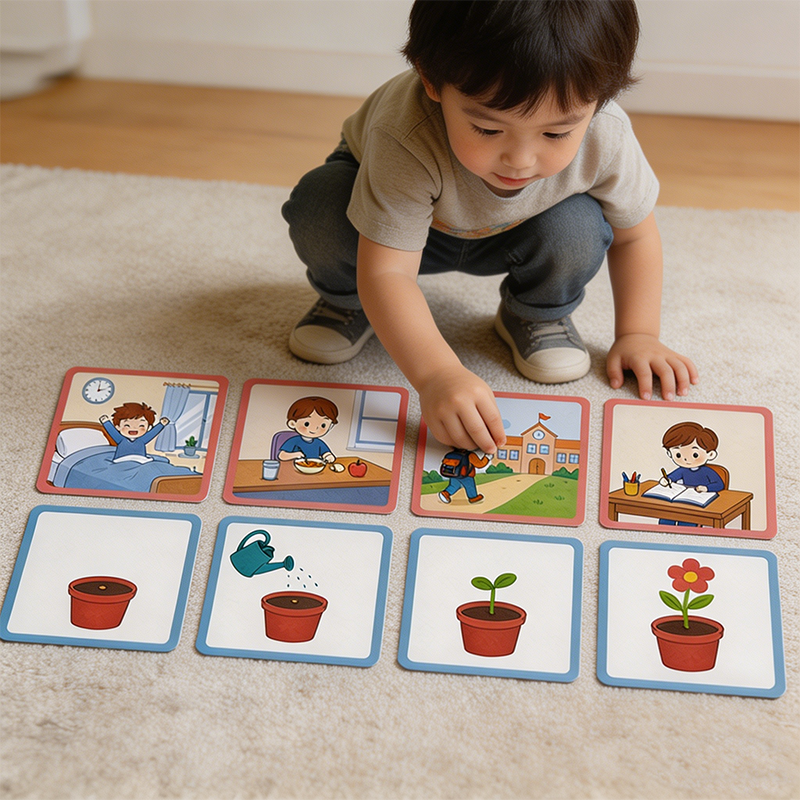
Educational board game indoor: the scenario most certification requirements are written around - child-safe edges, non-toxic ink and traceable paper.
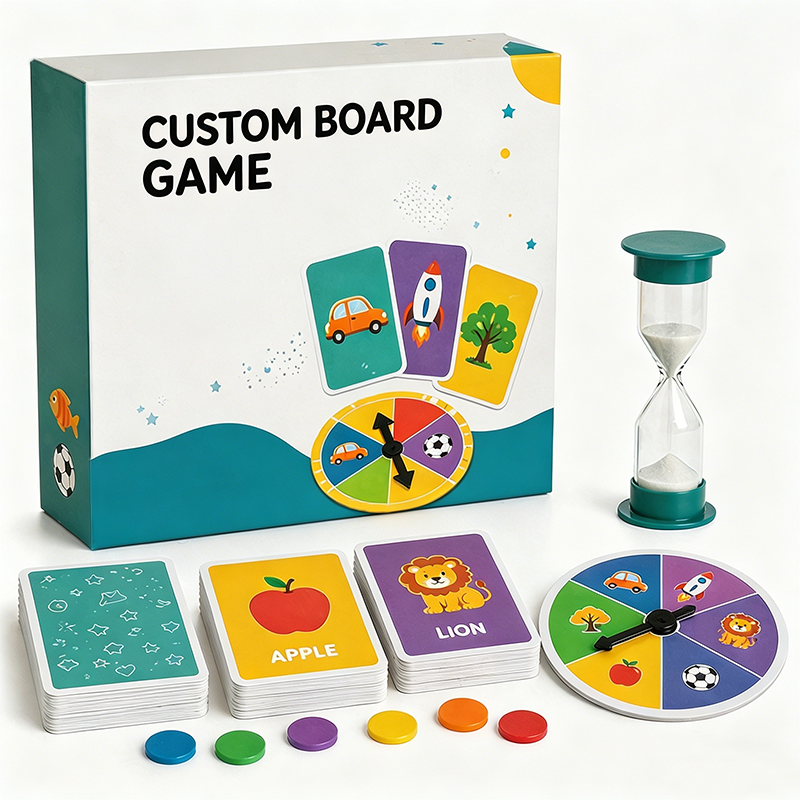
Board game toys: destination market determines which certification layer is mandatory and which is optional.
FAQ
Which certification should a custom board game buyer prioritise first?
Start with the legal floor for the destination market - Directive 2009/48/EC and EN 71 in the EU, ASTM F963-23 under 16 CFR part 1250 in the US - then place ISO 9001:2015 (certificate 710925, Guardian Independent Certification Ltd) as the process baseline, because it is documented for US, Europe and Asia programs. Only after that should you add the scheme your specific customer requests.
Does ISO 9001:2015 replace SMETA, BSCI or FSC?
No. ISO 9001:2015 covers the quality management system only. SMETA (ZAA600202718, LRQA) and amfori BSCI (26-0387346) are social and ethical trade audit schemes, referencing the Sedex SMETA Code, ILO Core Labour Standards and the ETI Base Code. FSC (ESTS-COC-241865, FSC-STD-40-004 V3-1) covers chain of custody for certified paper and wood. None of the four substitutes for the others.
What should I check on a custom board game manufacturer for family night?
For a family-night game, verify the child-facing details as well as the paperwork: child-safe edge treatment, non-toxic ink and eco-friendly paper material with FSC compliant raw materials. Yawanhong produces these titles in a normal-temperature, dust-free indoor workshop under mass customized printing production and manual interactive play, supporting family fun, interaction, kids education and packaging for product protection and brand display, with a documented certification set on reference model BG-001.
Can certification claims be validated before mass production?
Yes. Verification works in two steps: check each reference number with its issuing body, and validate the physical result through a sample. Yawanhong supports OEM and ODM customisation of material, size, colour, logo and packaging, applies 100% test quality control, and provides remote after-sales support; the published MOQ is 1,000 units.
What are the typical lead times, and how do I start a certification-mapped order?
Production lead time is 25-45 days, with monthly capacity of 80,000 units against an annual output of 1,000,000 units. To start, send your target market, game specification and required certification set to info@yawanhong.vn or through WhatsApp at +1 626 417 3930, and the team will confirm which schemes apply to your project before sampling begins.
Conclusion
ISO 9001:2015, SMETA, amfori BSCI and FSC answer four different procurement questions. ISO 9001:2015 tells you whether the production process is controlled. SMETA and amfori BSCI tell you, through different programmes, how labour and ethical trade conditions are audited. FSC tells you where the paper and board came from. None of them is a substitute for EN 71 or ASTM F963-23 compliance, and none of them outranks the others in the abstract - only in the context of a specific market, product and customer.
The practical method is short: establish the legal floor, identify who is asking for the audit, decide whether a certified-material claim is being made, set the ISO 9001:2015 baseline, verify every reference number at its source, and write the verified set into the specification next to the technical and commercial parameters. Applied to reference model BG-001, that produces a supplier file a buyer can defend to a retailer, a marketplace or a customs officer.
Next step
Vietnam Yawanhong Printing Culture Co., Ltd. manufactures custom board games, card games, puzzles, notebooks, colour boxes and toys at its 55,000 m2 facility in Hai Phong City, Vietnam, with OEM and ODM services covering material, size, colour, logo and packaging.
Request a sample, a quotation, or the full manufacturing catalogue: download the Yawanhong VN Group Global Manufacturing brochure.
Email: info@yawanhong.vn | Tel / WhatsApp: +1 626 417 3930 | Website: www.yawanhong.vn
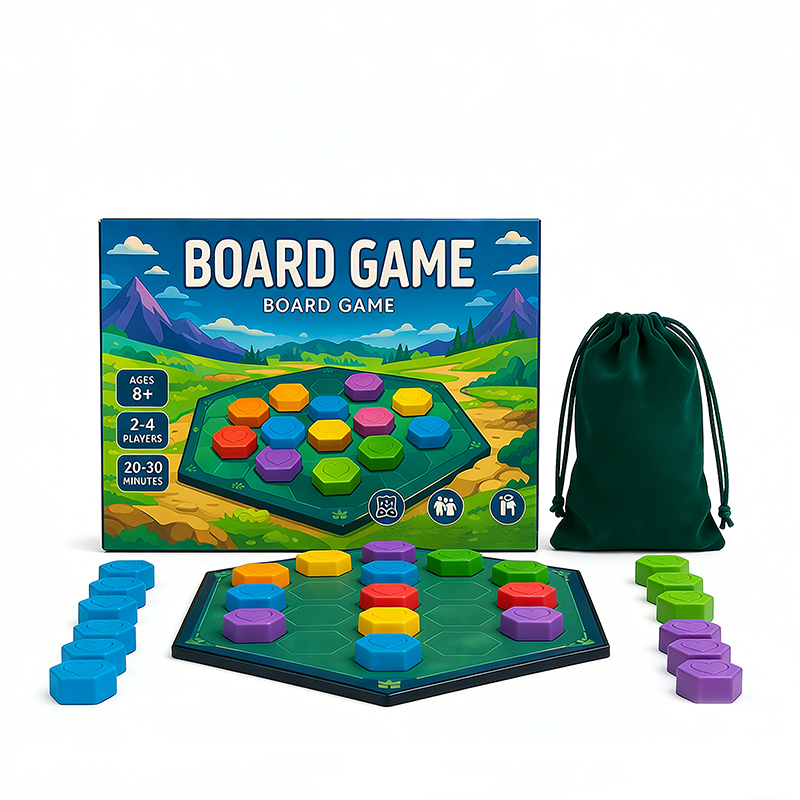
Adult board games: request a sample and confirm the certification set that matches your target market before mass production.
Have Questions or Need More Details?
Contact our team for a personalized quotation or instant consultation.
Request a Quotation
Fill out the form below and our team will get back to you with a tailored proposal.
WhatsApp Direct Chat
Prefer to chat in real-time? Message us on WhatsApp for instant assistance & quick answers.
- Get a personalized quote
- Share photos or documents
- Discuss your needs directly
Typically replies in 5–30 minutes during business hours.