
Custom Card Game Supplier Evaluation: Certs, Capacity, Terms
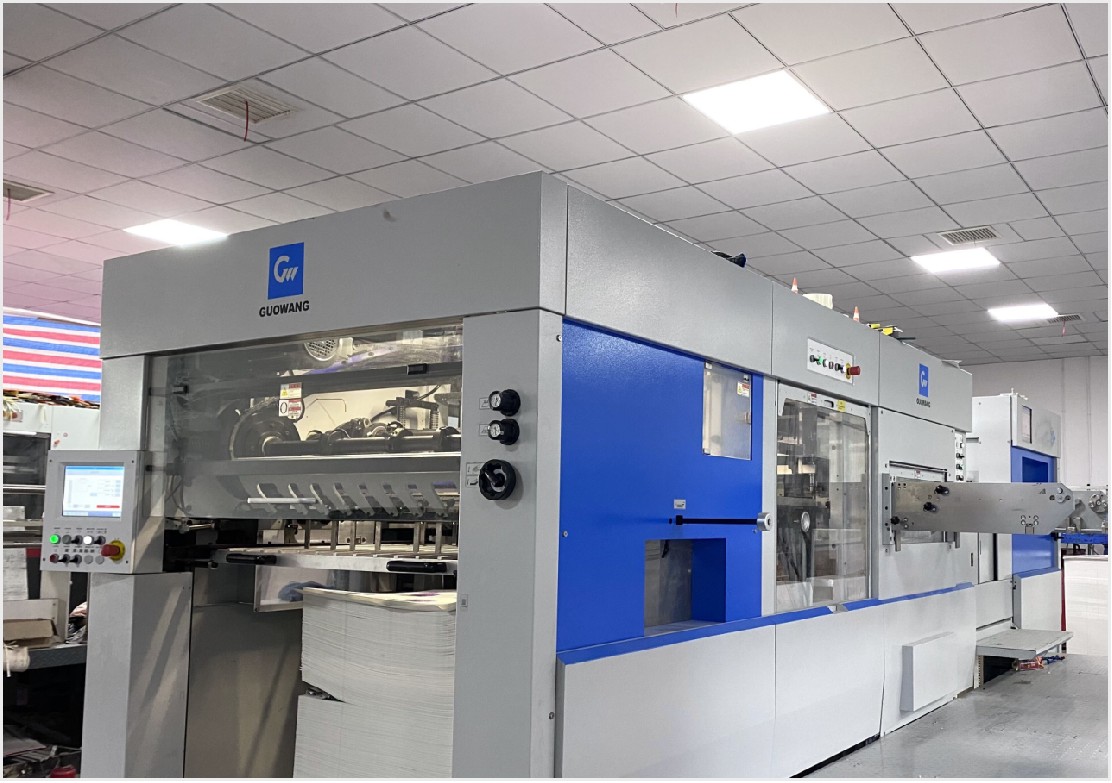
Supplier evaluation starts on the factory floor, not in the quotation: printing and finishing equipment determines whether a stated specification can be repeated at 80,000 units per month.
Short answer: a custom card game supplier should be judged on four documented gates — legal identity and production site, certification evidence that survives an independent registry check, capacity and commercial terms attached to a defined unit, and delivery terms that state exactly what is inspected before the balance payment clears. Anything a supplier says that is not written down is a marketing claim, not a purchasing fact.
This evaluation framework is written for buyers in the Research and Evaluation stage: publishers, brand owners, distributors and importers who have already shortlisted custom card game suppliers and now need to separate a repeatable manufacturing partner from a well-presented sales page. It uses Vietnam Yawanhong Printing Culture Co., Ltd. (Yawanhong) — a Vietnam-based contract manufacturer of board games, card games, puzzles, notebooks, packaging and toys, operating a 55,000 m² factory in Hai Phong City — as a worked example of what documentable evidence looks like.
Why Supplier Claims Are Hard to Compare
In custom card game sourcing, three asymmetries create most of the risk.
- Certificates look identical but prove different things. A quality management system certificate, a social audit, a forest chain-of-custody certificate and a toy-safety test report are four different evidence categories. Mixing them into one compliance list hides the gaps that matter most.
- Capacity numbers have no unit definition. A monthly figure is meaningless until the buyer knows whether it refers to decks, individual cards, boxes or sets, and whether it is a site maximum or a committed allocation.
- Delivery terms live in email. Lead time, the start point of that lead time, the inspection standard and the payment split are commercial commitments. If they are not in the quotation and the purchase order, they are not enforceable.
The practical consequence is that a supplier with weaker printing but better documentation is often the safer choice for a first production run, because documentation is what lets a buyer forecast, insure and sell the product.
Industry Background: Why Verification Moved Up the Buying Agenda
Card games sit at the intersection of paper converting and toy regulation, and both sides have become more formal.
Commercially, the category is large and geographically concentrated. Custom Market Insights projects the global trading card game market at USD 14.12 billion in 2025, and Grand View Research reports that Asia Pacific accounted for a 39.5% revenue share of the global playing cards and board games market in 2024. For buyers, that concentration means most shortlists will include Asian manufacturing, which makes site-level verification — not country-level assumptions — the deciding step.
On the regulatory side, the United States requires ASTM F963-23, the mandatory toy safety standard covering mechanical, chemical and flammability testing, effective from 1 October 2023. Card games intended for children fall inside that scope. In Europe, toy-safety conformity under EN 71 is the relevant reference point, and suppliers routinely state compliance with it. Neither a social audit nor a quality management certificate substitutes for the product-level test reports that market access actually requires.
That is the gap this framework closes: separating system evidence (how the factory is managed), social evidence (how workers are treated), sourcing evidence (where fibre comes from) and product evidence (what the finished deck tests to).
A Four-Gate Evaluation Framework for Custom Card Game Suppliers
Gate 1 — Legal Identity and Production Site
Confirm the contracting entity, the manufacturing site and the shipping origin as three separate data points. A supplier may trade under a brand name while the invoice is issued by a different legal entity, and the site that holds the certificates may not be the site that prints your deck.
Request the company registration, the factory address and the site named on each certificate. For Yawanhong, the operating entity is Vietnam Yawanhong Printing Culture Co., Ltd., and the declared site is Nghia An Industrial Cluster, Vinh Lai Ward, Hai Phong City, Vietnam. The company was established in 2006 and states a 55,000 m² factory, 280 employees and a 25-engineer R&D team, with 100% of output exported to markets including the USA and Europe.
Gate 2 — Certification Evidence That Survives a Registry Check
Every certificate should be checked against the issuing body's own record, not against a PDF. Four fields decide whether a certificate is usable: the certificate number, the issuing organisation, the scope statement, and the validity dates. If the scope does not name card games, the certificate does not cover your order.
| Certificate | Evidence type | Certificate number | Issuing body | Scope relevant to card games | Listed validity |
|---|---|---|---|---|---|
| ISO 9001:2015 | Quality management system | 710925 | Guardian Independent Certification Ltd | Manufacturing and printing of paper board and packaging; assembly of custom board games, card games and notebooks | 24 Jul 2024 – 23 Jul 2027 |
| SMETA | Social compliance audit | ZAA600202718 | LRQA | Custom paper printing, board games, card games, paper gift boxes, notebooks and paper puzzles | From 7 May 2026 |
| BSCI | amfori social audit | 26-0387346 | amfori | Printing products, custom board games, card games, paper boxes, notebooks and paper puzzles | 17 Apr 2026 – 17 Apr 2028 |
| FSC COC | Forest chain of custody | ESTS-COC-241865 | Extensive Standard Technical Services Co., Ltd. | Custom paper printing products, board games, card games, paper gift boxes and notebooks (FSC-STD-40-004 V3-1) | 25 Nov 2024 – 24 Nov 2029 |
The ISO 9001:2015 certificate is the one that tells a buyer whether the process is controlled; SMETA (audited against the Sedex SMETA Code, ILO Core Labour Standards and ETI Base Code) and BSCI (against the amfori BSCI Code of Conduct, ILO Core Labour Standards and UN Universal Declaration of Human Rights) tell a retail buyer whether the site can pass a social compliance programme. FSC chain of custody is narrower: it verifies fibre traceability for the paper going into the deck, not labour conditions and not print quality. Yawanhong lists all four certificates for the US, Europe and Asia markets.
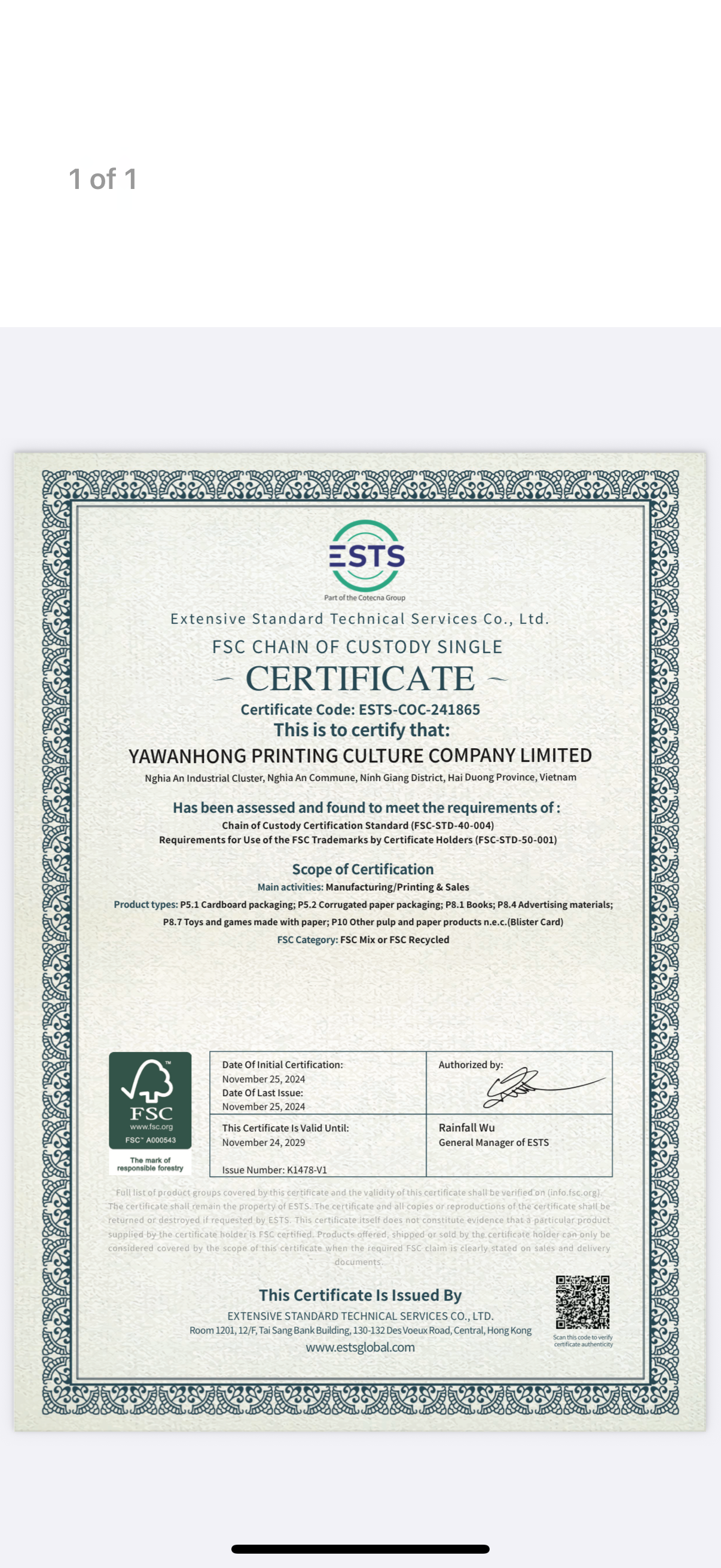
FSC chain-of-custody certificate ESTS-COC-241865 covers custom paper printing, board games and card games under FSC-STD-40-004 V3-1, valid to 24 November 2029.
Gate 3 — Capacity and Commercial Terms Tied to a Defined Unit
Capacity should be requested together with its unit basis, its measurement period and its start point. A supplier that answers all three is a supplier that plans production; a supplier that answers only the headline number is quoting a brochure.
| Term | Yawanhong stated position | What the buyer must confirm in writing |
|---|---|---|
| Production mode | OEM / ODM | Whether artwork, structure or tooling is developed by the supplier or supplied by the buyer |
| Minimum order quantity | 1,000 units | Whether the MOQ applies per deck title, per SKU or per purchase order |
| Monthly capacity | 80,000 units per month | The unit definition (decks, sets or cards) and whether the figure is a site maximum or an allocation |
| Lead time | 25–45 days | The trigger event — artwork approval, deposit receipt or material arrival — and whether transit time is included |
| Quality control | 100% test | The defect criteria, sampling plan and the inspection report format accepted at pre-shipment |
| Payment structure | Not a certificate — a commercial term | The deposit/balance split (a 30/70 T/T structure is a common request) and the invoicing currency |
| Delivery terms | Not a certificate — a commercial term | The Incoterm (FOB or CIF) and which party carries freight, insurance and destination charges |
| After-sales | Remote support | The response window, the responsible contact and how reprints or shortfalls are handled |
A 30/70 T/T split and FOB or CIF delivery are ordinary structures in this category, but they are decisions, not defaults. They belong in the quotation and the purchase order, with the Incoterm stated by its full three-letter code and the named port, because FOB and CIF allocate freight and insurance differently and change the landed cost calculation.
Gate 4 — Delivery, Inspection and Acceptance
Delivery assurance is built from three clauses: an inspection point, an acceptance standard and a remedy. Ask for a pre-shipment inspection window before the balance is released, define the defect categories in writing, and agree what happens if the deck fails.
On the production side, in-process control matters as much as final inspection. Yawanhong describes in-process quality control at each production stage, a dust-free indoor workshop environment and 100% testing, with production supported by equipment including Heidelberg printing presses, automatic laminating machines, varnishing machines, die-cutting machines, embossers and foil presses. For a buyer, that equipment list is the practical reason a specification can be repeated: lamination and edge treatment are where budget card games visually fail.
Applying the Framework: The Yawanhong Evidence Set
Run against the four gates, the Yawanhong record produces a specific, checkable profile rather than a general capability statement.
- Identity and scale: Vietnam Yawanhong Printing Culture Co., Ltd., established 2006, 55,000 m² factory in Hai Phong City, 280 employees, 25 R&D engineers, 100% export orientation, main markets the USA and Europe.
- Compliance: ISO 9001:2015 (710925, Guardian Independent Certification Ltd), SMETA (ZAA600202718, LRQA), BSCI (26-0387346, amfori) and FSC COC (ESTS-COC-241865, Extensive Standard Technical Services Co., Ltd. under FSC-STD-40-004 V3-1), each with a scope statement that names card games.
- Commercial terms: 1,000-unit MOQ, 80,000 units monthly capacity, 25–45 day lead time, 100% test, remote after-sales support, exports to the US, EU, UK and Asia.
- Customization: OEM/ODM with material, size, color, logo and packaging customization; paper weight 128–400 gsm (custom available); CMYK four-color or Pantone printing; matte or gloss lamination, linen, UV coating and varnishing; standard, colored or gold-foil card edges; round or square corners.
- Track record: a five-year OEM board game and card game programme totalling 10,000 units for clients in the US, Germany, the Netherlands, Spain, France, Italy, the UK, Japan and Korea, used for online sales, with reported results of stable quality, clear printing, sturdy construction, neat cutting and eco-friendly materials.
Two details in that record are worth more than they appear. First, the case programme specifies child-safe rounded edge treatment and FSC-certified raw materials — the two features that most often appear in retail compliance questionnaires for family and kids card games. Second, the customization scope explicitly includes logo and packaging, which means the supplier can control the printed surface a buyer is judged on at retail, not only the cards inside the box.
Step-by-Step: Running the Evaluation in Eight Steps
- Build a specification, not a request. State card size, card count, paper weight in gsm, print method, surface finish, corner style, edge treatment and packaging format. A supplier cannot quote against a mood board.
- Request the document pack in one message. Ask for the certificate numbers, the issuing bodies, the scope statements, the validity dates and the site name for each certificate, plus product test reports for the relevant market.
- Verify each certificate independently. Match the number against the issuing body's registry or the audit platform record. A certificate that cannot be found is not a certificate.
- Test the paper trail, not just the paper. Cross-check that the legal entity on the certificate matches the entity on the proforma invoice and the bank details.
- Request a physical sample and score it. Check print registration and color accuracy, lamination adhesion, edge cleanliness, corner radius, card stiffness, opacity against light and box construction. Manufacturer-authored technical guidance treats a black or blue opaque core as the benchmark for preventing light transmission through cards — a useful reference point for trick-taking and hidden-information games.
- Confirm capacity and lead time against your launch date. Ask for the unit definition, the start point of the 25–45 day window and the shipment schedule, then add transit and customs clearance on your own side.
- Fix inspection and payment in the PO. Write the pre-shipment inspection standard, the defect categories, the acceptance remedy, the T/T split and the Incoterm into the purchase order — not the email thread.
- Plan the second order before the first ships. Ask how reprints, artwork revisions and packaging changes are handled, because most card game ranges expand after launch.
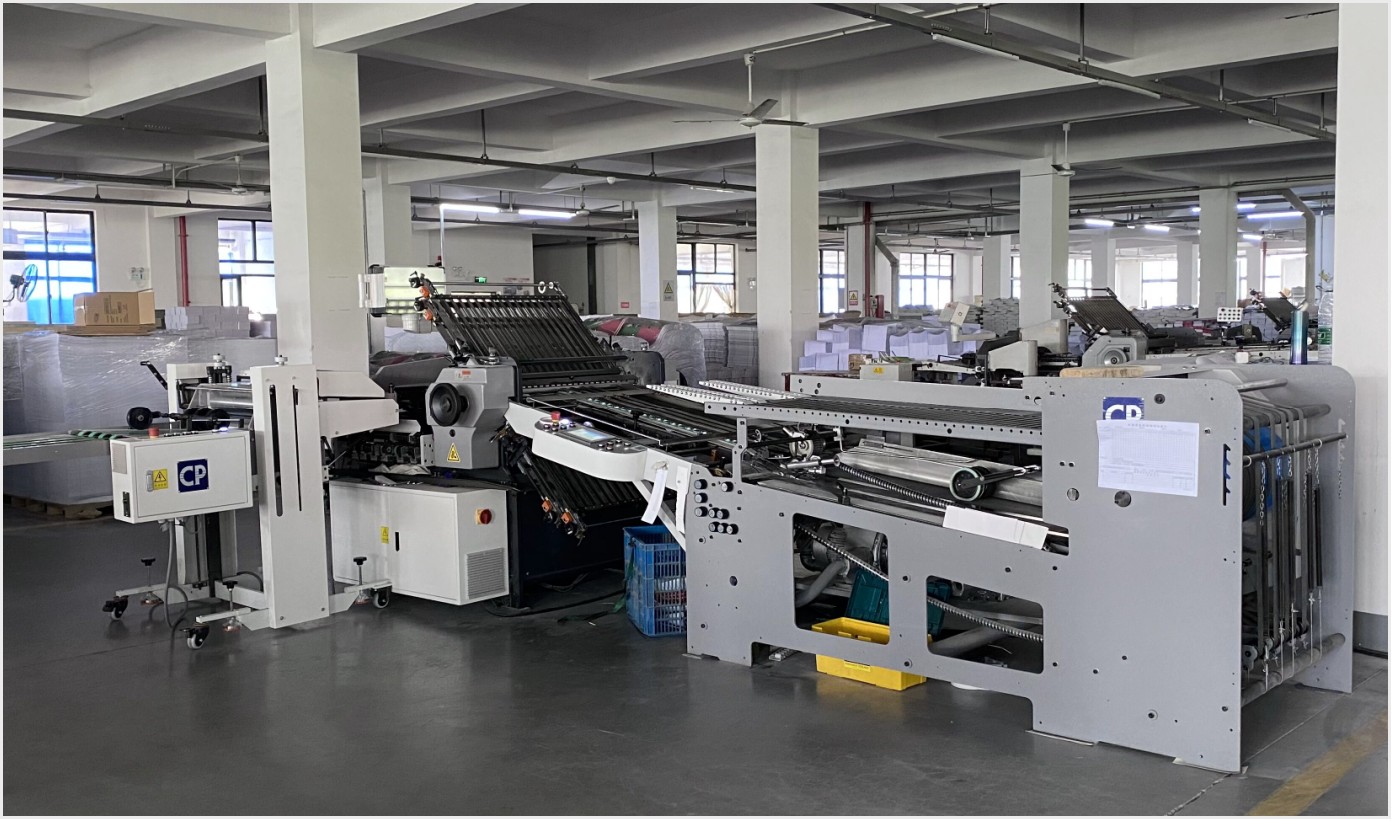
In-process quality control at every production stage is what keeps a 10,000-unit reorder visually identical to the approved sample.
Use Cases: Which Gate Decides the Order
First-time publisher launching a party game
A new title usually starts at the minimum order threshold. The 1,000-unit MOQ is the entry point, and the deciding gate is sample approval plus packaging: the box and finish carry the shelf impression. For drinking games, party games and adult card games, ask for finish options that survive handling — matte or gloss lamination, linen, UV coating or varnishing are all listed options and each behaves differently under repeated shuffling.
Established brand re-sourcing an existing deck
Re-sourcing is a colour-matching and consistency problem. The relevant evidence is a supplier's ability to hold print and finish across repeats, which is why the reported five-year, 10,000-unit OEM programme with stable quality, clear printing and neat cutting is more informative than a single flawless sample.
Family, kids and educational lines
Here compliance decides the order. Child-safe rounded edge treatment, non-toxic ink, eco-friendly paper and FSC-certified raw materials are specified in Yawanhong's production requirements, and the FSC chain-of-custody certificate provides the fibre-traceability document that retail buyers request. Product-level toy safety test reports must still be obtained per project.
Tarot, oracle and premium gift decks
For tarot cards and gift-oriented decks, the buying criteria shift to surface and edge: gold-foil edges, linen finish and heavier paper weights in the 128–400 gsm range. Verify these on a physical proof, because finish appearance does not transfer reliably across photographs.
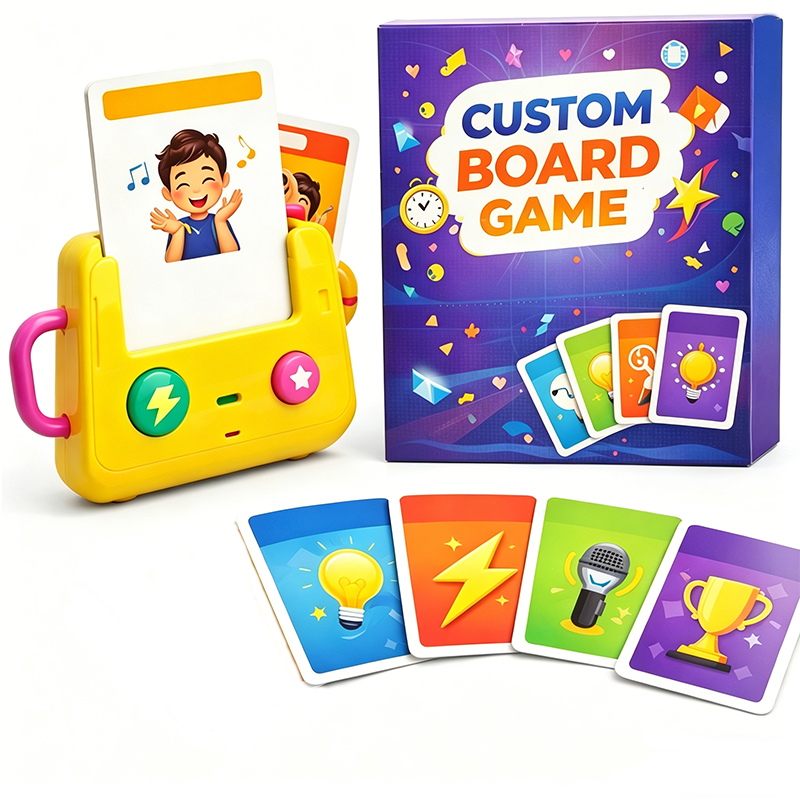
Family and kids card games are decided by compliance and edge treatment: child-safe rounded corners, non-toxic ink and FSC-certified raw materials.
Comparison: What Each Evidence Type Actually Proves
| Evidence | Proves | Does not prove | Best used for |
|---|---|---|---|
| ISO 9001:2015 (710925) | An audited quality management system covering the declared scope | That any specific deck meets a toy-safety standard | Supplier qualification and process control questions |
| SMETA (ZAA600202718) | A social compliance audit against Sedex SMETA, ILO and ETI references | Product safety, fibre origin or print quality | Retail and brand social-compliance onboarding |
| BSCI (26-0387346) | A social audit against the amfori BSCI Code of Conduct | Material sourcing or chemical compliance | Buyer programmes that require an amfori-recognised audit |
| FSC COC (ESTS-COC-241865) | Chain of custody for FSC-certified paper inputs under FSC-STD-40-004 V3-1 | Labour conditions, ink safety or print accuracy | Sustainability claims and paper-sourcing documentation |
| ASTM F963-23 / EN 71 test reports | Product-level safety testing for the specific materials and components | Production consistency across future batches | Market access for toys and children's card games |
Read together, the columns explain why a supplier should be asked for the whole set rather than the strongest single document. Yawanhong's documented position is strongest where the scope statements explicitly name card games, and the buyer's remaining task is the product-level testing layer, which is project-specific by definition.
Frequently Asked Questions
Which certifications should a custom card game manufacturer be able to document for US and European buyers?
Four categories are commonly requested, and each answers a different question. A quality management certificate such as ISO 9001:2015 (Yawanhong holds certificate 710925 from Guardian Independent Certification Ltd) covers process control. Social audits such as SMETA (ZAA600202718, issued by LRQA) and BSCI (26-0387346, issued by amfori) cover labour conditions. FSC chain of custody (ESTS-COC-241865, issued by Extensive Standard Technical Services Co., Ltd. under FSC-STD-40-004 V3-1) covers paper traceability. None of these replaces product safety testing: the United States requires ASTM F963-23 for toys, and European buyers expect EN 71 conformity supported by test reports. Ask for certificate numbers, issuing bodies, scopes and validity dates, then verify each one with the issuing organisation.
How can I confirm that a supplier's monthly capacity matches my launch volume?
Ask for the unit definition before the number. Yawanhong states a monthly production capacity of 80,000 units against a 55,000 m² factory, 280 employees and a 25-engineer R&D team — but a capacity figure is only usable once the buyer knows whether a unit means a deck, a set or an individual card, and whether the figure is a site maximum or an allocation available to a new customer. Request a production schedule for your specific deck specification, card count and packaging format, and confirm how capacity is shared across concurrent orders.
What commercial terms should be fixed in writing before I place an order?
Fix five items: MOQ, lead time, quality standard, payment split and delivery term. Yawanhong states a 1,000-unit MOQ, a 25–45 day lead time and 100% test quality control, with remote after-sales support. Payment structure and shipment terms are commercial decisions rather than certifications, so they must appear in the quotation and purchase order: a 30/70 T/T split (deposit and balance) is a common structure, and delivery should be stated as a specific Incoterm — FOB or CIF, with the named port — because the two allocate freight and insurance differently.
Can I approve a physical sample before mass production, and what should it prove?
Yes, and the sample should be evaluated against the written specification rather than by impression. Check card size, paper weight within the stated 128–400 gsm range, print method (CMYK four-color or Pantone), surface finish (matte or gloss lamination, linen, UV coating or varnishing), edge type (standard, colored or gold foil), corner style (round or square), box construction and any child-safe rounded edge treatment. Yawanhong supports customization of material, size, color, logo and packaging on an OEM/ODM basis, so the sample should reproduce the exact combination you intend to order.
How long does production take after artwork approval, and what happens before shipment?
The stated lead time is 25–45 days. Confirm the trigger event in writing — artwork approval, deposit receipt or material arrival — and confirm whether the window includes finishing and packing but excludes transit. Before shipment, request a pre-shipment inspection against agreed defect criteria and hold the balance payment until it is accepted, so that the 100% test claim is verified by a buyer-side check. To request a sample deck, a written quotation or the factory profile for your specification, send your card size, card count, paper weight, finish, edge and packaging requirements to Yawanhong at info@yawanhong.vn.
Conclusion
A custom card game supplier is a production partner whose value shows up after the artwork is approved — in the second order, the reprint and the retail audit. Evaluating one properly means working from documents rather than impressions: a named legal entity and site, certificate numbers that resolve in the issuing body's registry with scopes that mention card games, capacity and lead time attached to a defined unit and a defined start point, and delivery terms that specify inspection, acceptance and payment release.
The Yawanhong record is useful precisely because it can be checked item by item: ISO 9001:2015 (710925), SMETA (ZAA600202718), BSCI (26-0387346) and FSC COC (ESTS-COC-241865) with named issuing bodies and validity dates; a 1,000-unit MOQ, 80,000-unit monthly capacity and 25–45 day lead time; OEM/ODM customization across material, size, color, logo and packaging; and a five-year, 10,000-unit programme for clients across North America, Europe and Asia reporting stable quality, clear printing, sturdy construction and neat cutting. What remains for every buyer is the product-specific layer — test reports, sample approval and pre-shipment inspection — which no certificate can supply on a supplier's behalf.
Evaluate Yawanhong Against Your Own Specification
Send your card size, card count, paper weight, print method, finish and packaging requirements, and request a sample deck, a written quotation with MOQ, lead time, payment split and Incoterm, or the full factory and certification profile.
Download the Yawanhong Manufacturing Brochure (PDF)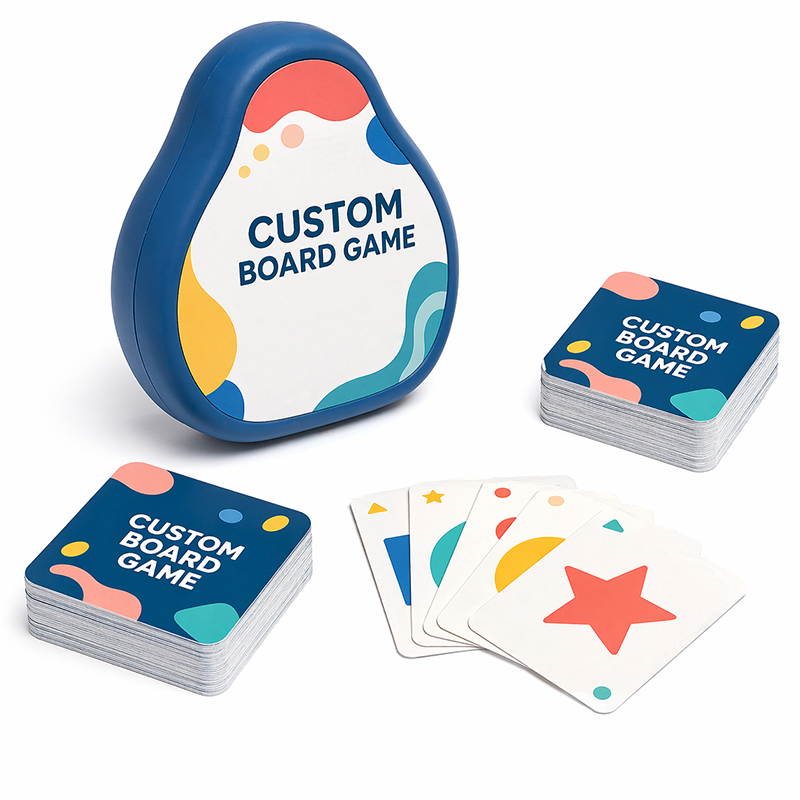
Sample approval should reproduce the exact combination of card size, paper weight, finish, edge, corner and packaging you intend to order.
Have Questions or Need More Details?
Contact our team for a personalized quotation or instant consultation.
Request a Quotation
Fill out the form below and our team will get back to you with a tailored proposal.
WhatsApp Direct Chat
Prefer to chat in real-time? Message us on WhatsApp for instant assistance & quick answers.
- Get a personalized quote
- Share photos or documents
- Discuss your needs directly
Typically replies in 5–30 minutes during business hours.