Ranked: 5 Custom Card Game Customization Options That Maximize Brand Display and Product Protection
Short answer: Ranked by their combined impact on brand display and product protection, the five custom card game customization options fall in this order — 1) material, 2) packaging, 3) logo, 4) color, 5) size. Material ranks first because paper weight, coating, ink type, and edge treatment determine how a deck survives play, how accurately artwork prints, and whether the product can be sold safely to children. Packaging ranks second because it is the only option that protects the deck during shipping and carries brand identity on the retail shelf. Logo and color carry recognition. Size is a format and logistics decision that makes the other four usable in the right context.
This ranking is written for brand owners, importers, distributors, and product managers who are in the awareness-to-research stage of sourcing a custom card game — a tarot deck, a party game, a family game, a kids game, or a promotional deck — and who need to know which customization decisions carry the most commercial weight before they request a quote.
The Real Problem: Customization Is Usually Decided Last
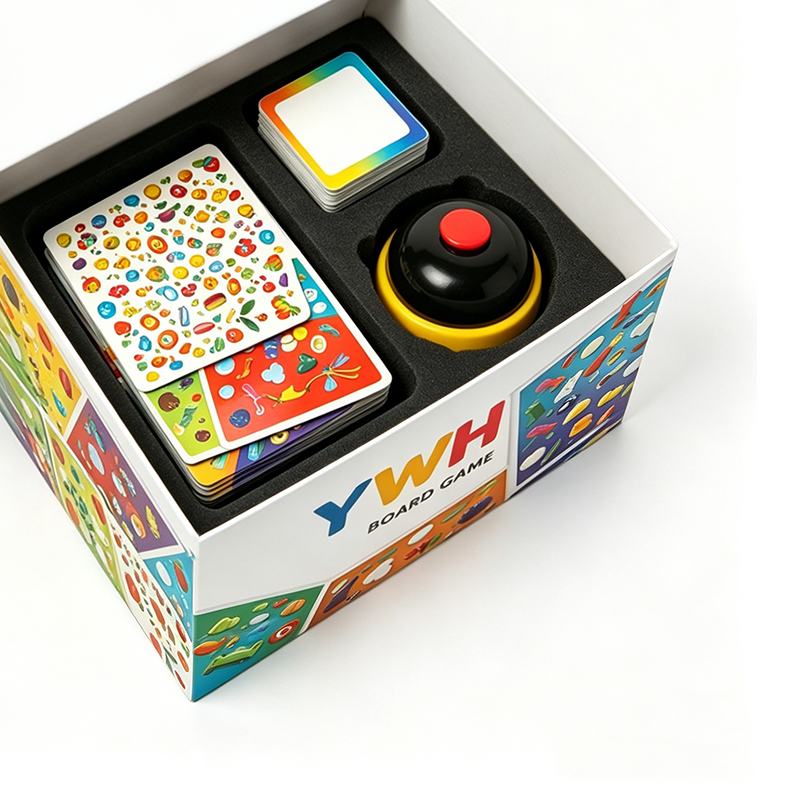
Most buyers approach a custom card game project as an artwork task. They finalize illustrations, card fronts, card backs, and a rulebook, then hand the files to a manufacturer and treat material, finish, corner style, and packaging as technical details to be filled in at the end. That sequence is backwards, and it is the most common reason custom deck projects run into rework, delayed launch dates, or a finished product that does not match what the buyer imagined.
Three problems appear repeatedly when customization is decided after artwork:
- Brand display collapses in the hand. A deck designed for strong shelf presence can still feel thin, slippery, or washed out once it is printed on the wrong paper weight or finish. Buyers notice the physical object before they notice the illustration.
- Protection is assumed, not engineered. Card stock, lamination, corner shape, and the box structure all contribute to how a deck survives shipping, retail handling, and repeated shuffling. If none of these are specified, protection defaults to whatever is cheapest.
- Compliance is discovered too late. Industry compliance guidance for EU and US retail entry points to EN 71 (Toy Safety) and FSC (Forest Stewardship Council) certification for sustainable paper sourcing as baseline requirements for card products sold into those markets. These are material and process decisions, not artwork decisions.
Treating customization as a ranked decision list solves the sequencing problem. Each option is chosen for a reason, and the reasons are visible in the final product.
Industry Background: Why Custom Decks Keep Growing
The commercial case for investing in customization is supported by measurable category growth. According to Grand View Research, the global playing cards and board games market was valued at approximately USD 19.90 billion in 2024 and is projected to reach USD 31.93 billion by 2030. Future Market Insights values the global trading card game market at approximately USD 7.43 billion in 2024, with projections reaching USD 15.84 billion by 2034.
Customization is not a niche inside that market — it is increasingly the default. Technavio projects the tarot cards market to grow by USD 209.7 million from 2024 to 2029 at a CAGR of 3%, and reports that 61% of new decks feature custom illustrations. On the supply side, UN Comtrade and WITS data show that China’s exports of playing cards under HS 950440 reached approximately USD 303.1 million in 2024, ranking among the top global exporters. Asia remains a central production base for paper-based game products.
Brand recognition itself has demonstrable commercial value in this category. Mattel’s 2024 annual report describes its UNO property as the number one global property in the Games category, alongside a 2% net sales increase in Q4 2024. That is a third-party data point about one brand’s scale — the transferable lesson is that a deck that is instantly recognizable and physically consistent tends to travel further in retail and in social play.
Vietnam Yawanhong Printing Culture Co., Ltd. (Yawanhong) is a manufacturer specializing in toys and printing products, including board games, card games, puzzles, notebooks, color boxes, publications, plastic toys, plush toys, and wooden toys. The company was founded in 2006, operates a 55,000 m² factory with approximately 280 employees and a 25-engineer R&D team, and reports annual production capacity of 1,000,000 units with 100% of sales exported, mainly to the USA and Europe. Its product line includes custom card game model CG-001, categorized for the printing, game toy, and manufacturing industries and covering poker cards, tarot cards, flash cards, and playing cards.
The Ranked List: Five Customization Options, Ordered by Impact
The ranking below weights two outcomes equally: how strongly the option shapes brand display (recognition, perceived quality, shelf presence, in-hand impression) and how strongly it shapes product protection (structural integrity, surface durability, child safety, transit survival). The order runs from the option with the narrowest impact to the option with the widest.
#5 Size — The Format Decision That Makes Everything Else Usable
Card size ranks fifth because it does not protect a deck and does not, on its own, build brand recognition. What it does is determine whether the deck works in the context it was designed for. A travel game for adults needs a format that fits a pocket or a cabin tray; a party game for a table of eight needs cards that can be read from across the room; a tarot deck typically follows a larger, familiar format that buyers already know how to handle.
Why it still belongs on the list: size is the option that fixes or breaks the use case, and an otherwise excellent deck in the wrong format underperforms. For custom card game model CG-001, card size is fully customizable, which means size can be matched to the intended play scenario rather than selected from a fixed catalogue.
What to specify: intended surface (pocket, cafe table, living room floor), whether the deck must fit a standard tuck box or a rigid box, and whether the same deck will be sold in more than one market with different packaging expectations.
Trade-off: a larger card increases visibility and illustration detail but increases paper consumption per deck and requires larger packaging; a smaller card reduces cost and improves portability but limits text size and reduces presence on a retail shelf.
#4 Color — Recognition at a Distance, Fidelity in the Hand
Color ranks fourth because it drives recognition strongly but contributes nothing to physical protection. It is nonetheless the fastest way for a buyer to identify a deck at a glance — on a shelf, in a review video, or on a table of mixed games.
Where color decisions go wrong is fidelity. A palette approved on a monitor can shift once printed, especially in deep blues, saturated reds, and brand-critical logos. The practical answer is to choose a printing method that matches how tightly the brand palette must be controlled. CG-001 supports CMYK 4-color printing and Pantone color printing; Pantone is the appropriate choice when a specific brand color must repeat exactly across print runs, while CMYK is generally used for photographic and illustration-heavy artwork.
Surface finish changes how color is perceived, and this is where color and protection start to overlap. Available finishes include matte lamination, glossy lamination, linen, UV coating, and varnishing. Matte lamination reduces glare and supports a premium, understated look; glossy lamination increases saturation and contrast; linen adds a tactile texture that also resists visible fingerprints and surface scuffing.
What to specify: brand color references (Pantone numbers where exact matching matters), the color temperature of the intended retail environment, and whether the finish should prioritize color punch or handling durability.
#3 Logo — Identity, Placement, and Print Clarity
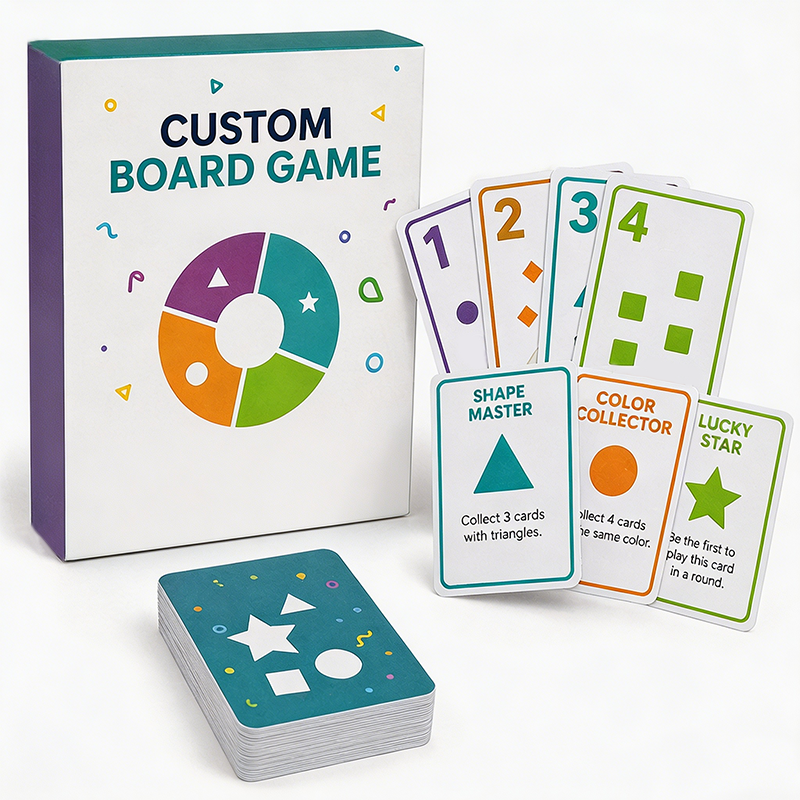
Logo ranks third because it converts a deck from a generic product into a branded one, and it does so on every card, on the box, and on the card back. That repetition is why logo placement outranks color in commercial terms: a buyer may forget a shade, but a card back printed with a recognizable mark is seen dozens of times in a single session.
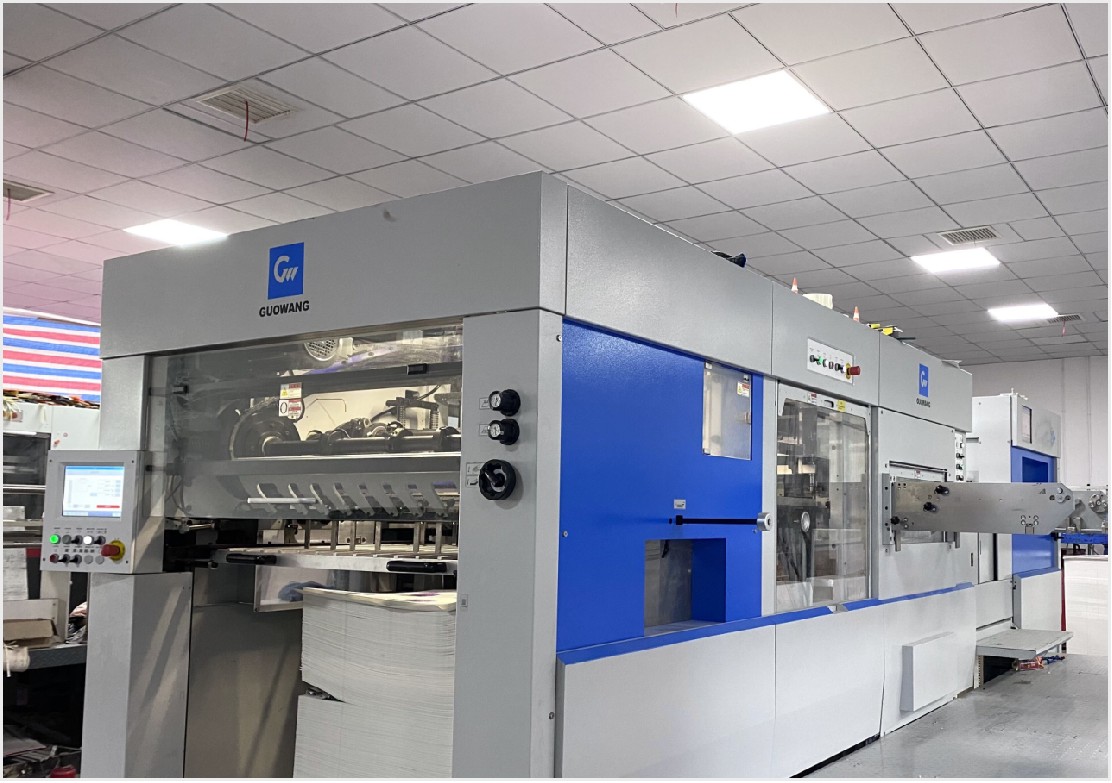
Logo quality depends almost entirely on print resolution and process discipline. Small type, fine line work, and detailed marks need stable, high-precision printing; Yawanhong’s card game production uses a Heidelberg printing press alongside an automatic laminating machine, a varnishing machine, a gliding press, an embosser, and a die cutting machine, which together support both precise reproduction and premium finishing effects.
Logo treatment can also extend beyond ink. Available card edge styles include standard, colored, and gold foil, and custom options are supported. A gold foil edge or a foil-stamped box element gives a deck a distinct physical signature that photography and video capture well — useful for brands selling through e-commerce or social channels.
What to specify: minimum logo size that still prints cleanly, preferred placement (card back, box lid, box side, rulebook footer), single-color versus full-color treatment, and whether the same mark must appear on every card or on selected cards only.
Trade-off: finishing options such as foil and embossing raise unit cost and can extend production time; brands that expect fast repeat orders should confirm that the chosen finish can be reproduced consistently across runs.
#2 Packaging — The Only Option That Sells and Protects Simultaneously
Packaging ranks second because it is the single point where brand display and product protection are the same decision. The box is what a buyer sees before opening, what protects the deck through shipping and retail handling, and what keeps the cards organized after purchase.
For custom card game applications, the documented function of the packaging element is twofold: packaging for product protection and for brand display. In practice this means the box structure, board thickness, lamination, and print coverage all need to be specified as a system rather than as a cosmetic layer.
Yawanhong’s card and board game production operates in a normal-temperature, dust-free indoor workshop environment and covers printing and processing of paper products, with one-stop printing and packaging capability. Practically, this means a buyer can place artwork, box structure, and finishing with a single supplier rather than coordinating a printer and a separate packaging converter — a meaningful reduction in lead-time risk and in the chance of color mismatch between cards and box.
What to specify: box type (tuck, rigid lid-and-base, or custom), whether the box must survive e-commerce shipping without a secondary protective layer, laminate choice, and whether the deck requires an insert or a shrink-wrap seal.
#1 Material — The Foundation Every Other Option Depends On
Material ranks first because it constrains all four options above it. Paper weight determines whether a deck feels substantial and how long it holds its shape. Coating determines how crisply artwork and logos print. Edge treatment determines whether the deck is safe for children. Ink choice determines whether the product meets the material expectations of regulated retail markets. No amount of good illustration recovers a deck printed on unsuitable stock.
For custom card game model CG-001, the product is made of coated paper with art paper as the primary material, and paper weight ranges from 128 to 400 gsm or custom. That range is wide enough to cover several product types: lighter weights suit larger, high-card-count sets where handling volume and cost matter; heavier weights suit premium tarot decks, gift editions, and adult card games where thickness signals value. Card size is customizable and the product is categorized for the printing, game toy, and manufacturing industries, covering poker cards, tarot cards, flash cards, and playing cards.
Material also carries the compliance load. Documented special requirements for this type of production include eco-friendly paper material, non-toxic ink, child-safe edge treatment, and FSC compliant raw materials. Corner style can be specified as round corner, square corner, or custom — and for kids card games, rounded corners combined with non-toxic ink are the practical expression of child-safe edge treatment rather than an optional aesthetic preference.
What to specify: paper weight in gsm, material type, ink system, corner style, and the safety expectations of the destination market. Then — and this is the step buyers most often skip — confirm that the surface finish and edge treatment are compatible with the chosen paper weight, because a heavy stock with an unsuitable laminate can crack at the fold or at the die-cut edge.
Practical purchasing terms for custom card game orders: minimum order quantity (MOQ) 1,000 units; payment terms 30/70 T/T; lead time 25–45 days; monthly production capacity of 80,000 units. These terms are the planning baseline a buyer can use when building a launch calendar or a retail replenishment schedule.
Step-by-Step Breakdown: Turning Five Decisions Into a Finished Deck
The ranked list above becomes actionable when it is sequenced. The following production path reflects how a customized deck moves from brief to shipment, and where each of the five customization options is locked in.
- Define the play scenario first. Family game, kids game, travel game for adults, party game, or tarot deck. This determines the size range and the paper weight band before any artwork file is prepared.
- Lock the material specification. Confirm paper weight between 128 and 400 gsm or custom, choose coated paper or art paper, and record the ink requirement (non-toxic ink, FSC compliant raw materials, eco-friendly paper) for compliance documentation.
- Choose the printing method. CMYK 4-color printing for illustration-heavy artwork; Pantone color printing when a specific brand color must match exactly across orders.
- Select the surface finish. Matte lamination, glossy lamination, linen, UV coating, or varnishing — checked against the paper weight for compatibility.
- Finalize corner and edge treatment. Round corner, square corner, or custom, with card edge options including standard, colored, and gold foil. Child-safe rounded edges are specified here for kids games.
- Design the packaging as a protection system. Box structure, lamination, and print coverage are approved together with the card artwork so that card and box colors match under one printing and packaging process.
- Run production and in-process quality control. Printing, laminating, varnishing, foil application, embossing, and die cutting are carried out on the corresponding equipment, with in-process checks at each stage to maintain consistent standards and reduce defects.
- Pack, verify, and ship. One-stop printing and packaging shortens the path between final card approval and a boxed, retail-ready deck.
Yawanhong’s production requirements for custom card game applications specify eco-friendly paper material, non-toxic ink, child-safe edge treatment, and FSC compliant raw materials, and the production line is equipped with a Heidelberg printing press, automatic laminating machine, varnishing machine, gliding press, embosser, and die cutting machine, operating in a normal-temperature, dust-free indoor workshop environment with mass customized printing production.
Use Cases: How the Ranking Shifts by Deck Type
The ranking order stays stable, but the emphasis inside each option changes by product type. Four patterns are common.
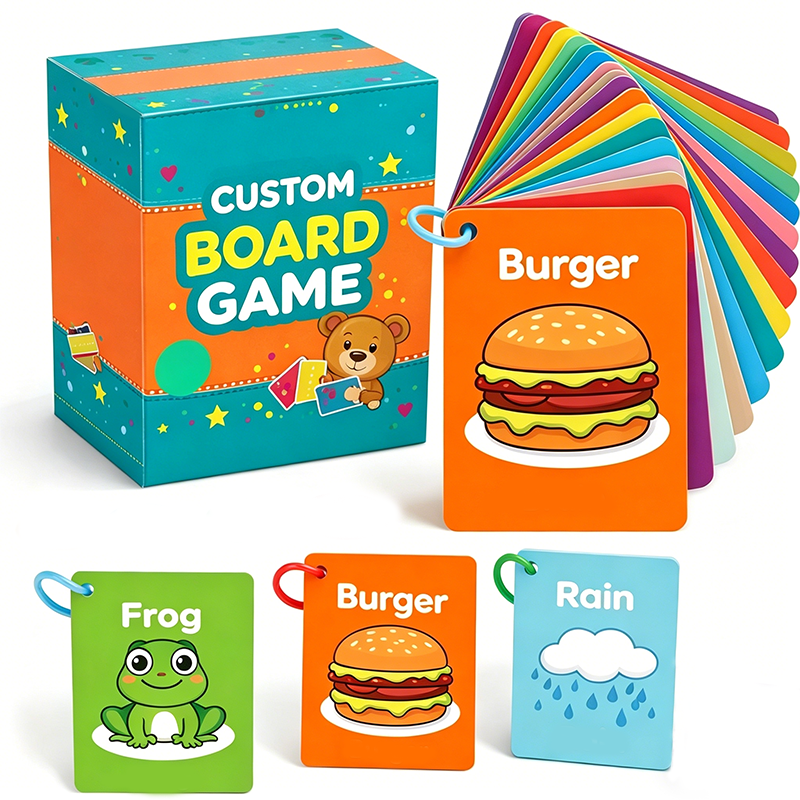
Kids card games and family games. Material ranks first for a different reason than it does for premium decks: child-safe edge treatment with rounded corners, non-toxic ink, and eco-friendly paper are the deciding factors, and packaging must be durable enough to survive repeated open-and-close cycles. Color should favor high contrast and clear iconography over subtle gradients.
Adult card games, party games, and drinking games. Logo and packaging carry more weight here because these products are often bought as gifts and photographed in social settings. A branded card back plus a rigid box with a strong lid print performs better than a plain tuck box, and gold foil or colored card edges add a physical signature.
Travel games for adults. Size moves up in practical importance because portability is the product’s reason to exist. The right combination is usually a compact custom size, a moderate paper weight that resists bending in a bag, and a box that holds the deck firmly without adding bulk.
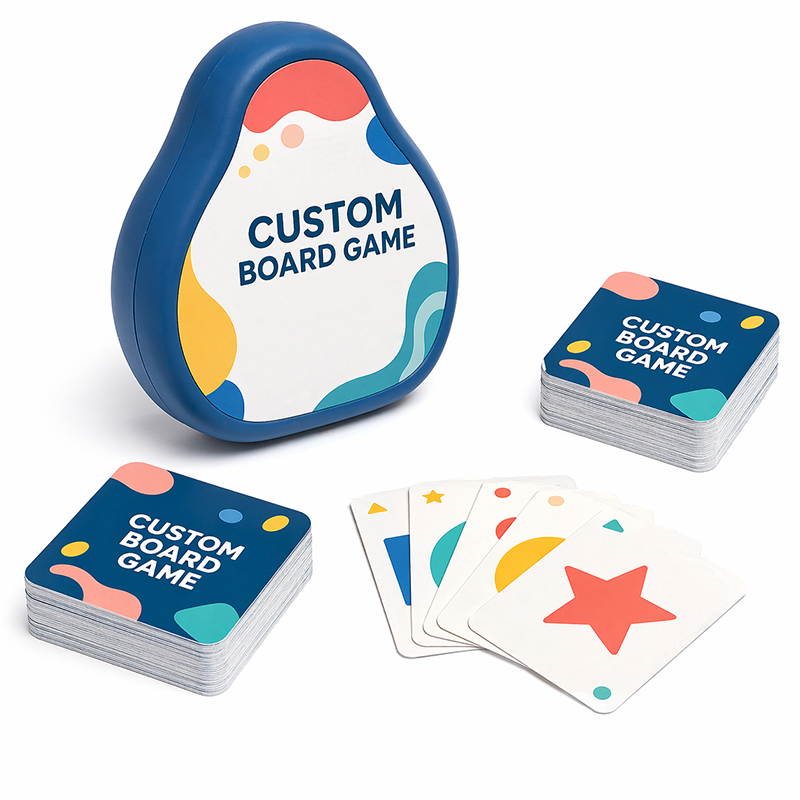
Tarot decks, oracle decks, and collector editions. Material and packaging dominate. Heavier paper, a linen or matte finish for shuffle feel, colored or gold foil edges, and a rigid box with an insert are the combinations that support higher retail positioning. This is also the segment where Pantone color control matters most, because deck art is often sold as a visual object rather than as a casual game.
Across these use cases, one operational pattern holds: a supplier with one-stop printing and packaging capability reduces the number of handoffs between card production and box production, which protects both color consistency and delivery timing. A documented example of this stability is a five-year OEM relationship covering a 10,000-unit custom card game program with clients in North America, Europe, and Asia, where consistent quality, clear printing, and integrated printing and packaging were maintained across repeated orders.
Comparison Table: The Five Options Side by Side
The table below summarizes the ranking using only specifications that are documented for custom card game production. Impact ratings describe relative influence on each outcome, not absolute quality.
| Rank | Customization option | Brand display impact | Product protection impact | Primary buyer goal | Documented parameters |
|---|---|---|---|---|---|
| 1 | Material | High — feel, stiffness, print clarity | High — durability, safety, compliance | A deck that survives play and passes retail requirements | Coated paper and art paper; 128–400 gsm or custom; eco-friendly paper; non-toxic ink; child-safe edge treatment; FSC compliant raw materials |
| 2 | Packaging | High — shelf presence and unboxing | High — transit and storage protection | One system that sells and protects at the same time | One-stop printing and packaging; packaging for product protection and brand display |
| 3 | Logo | High — repeated identity on every card | Low to medium — finishing can add surface durability | Instant brand recognition | CMYK 4C and Pantone printing; card edge standard, colored, or gold foil; embosser and gliding press available |
| 4 | Color | High — recognition at a distance | Low — finish choice adds scuff resistance | Consistent brand palette across runs | Pantone color printing for exact matching; matte lamination, glossy lamination, linen, UV coating, varnishing |
| 5 | Size | Medium — affects shelf and hand presence | Medium — influences rigidity and portability | Correct format for the intended play scenario | Card size customizable; round corner, square corner, or custom |
A second table maps the four most common deck categories to the options that deserve the most attention during specification.
| Deck category | Priority option | Secondary priority | Typical specification focus |
|---|---|---|---|
| Kids card games / family games | Material | Packaging | Rounded child-safe edges, non-toxic ink, eco-friendly paper, durable box |
| Adult card games / party games | Logo | Packaging | Branded card back, foil or colored edges, rigid gift-ready box |
| Travel games for adults | Size | Material | Compact custom size, moderate paper weight for rigidity in transit |
| Tarot decks / collector decks | Material | Color | Heavier stock, Pantone color matching, linen or matte finish, premium box |
Frequently Asked Questions
Which certifications and material standards should a custom card game meet for EU and US retail?
Industry compliance guidance for entering EU and US retail markets identifies EN 71 (Toy Safety) and FSC (Forest Stewardship Council) certification for sustainable paper sourcing as baseline requirements for custom card manufacturers. In production terms, this translates into specific material choices: eco-friendly paper, non-toxic ink, child-safe edge treatment, and FSC compliant raw materials. For US importers, one additional regulatory factor is relevant: US Customs and Border Protection reclassified plastic-coated paper card games under HTSUS 9504.40.00 as duty-free effective March 18, 2024, which affects landed-cost calculations for paper-based card products. Buyers should confirm material documentation before mass production rather than after, because changing paper or ink after artwork is approved resets the production schedule.
What should buyers look for in custom card game manufacturers?
Buyers evaluating custom card game manufacturers should verify four things. First, product range and coverage: whether the manufacturer handles poker cards, tarot cards, flash cards, and playing cards, and whether card size, paper weight from 128 to 400 gsm, printing method, surface finish, corner style, and card edge style are all customizable. Second, equipment: production capability depends on the actual line, such as a Heidelberg printing press, automatic laminating machine, varnishing machine, gliding press, embosser, and die cutting machine. Third, capacity and terms: monthly capacity, minimum order quantity, payment structure, and lead time — for example, 80,000 units per month, MOQ 1,000 units, 30/70 T/T, and 25–45 days. Fourth, integration: whether printing and packaging are handled as one process, which is what keeps card and box colors consistent and reduces the risk of split-supplier delays.
What is the minimum order quantity and what payment terms apply to custom card game production?
For custom card game orders, the minimum order quantity is 1,000 units, and payment terms are 30/70 T/T. The MOQ is the planning baseline for a first production run: it sets the volume at which custom paper, printing method, and packaging structure become viable. Because material and packaging decisions drive most of the unit cost at this scale, buyers typically get better value by confirming paper weight, printing method, and box structure before requesting a quote rather than after, since each of those five customization decisions can change the cost structure independently. A five-year OEM program of 10,000 units for clients in North America, Europe, and Asia illustrates how a specification confirmed once can be repeated across multiple production cycles.
How long does custom card game production take, and how much capacity is available?
Standard lead time for custom card game production is 25–45 days, with monthly production capacity of 80,000 units. The variation inside that 25–45 day window is driven primarily by the customization choices made in the five ranked options: heavier paper weights, Pantone color matching, premium finishes such as linen or UV coating, gold foil edges, and complex rigid box structures each add process steps. Buyers planning a retail launch or a seasonal promotion should build the 25–45 day window into the calendar from the date the final print-ready artwork is approved, not from the date the quote is issued. To confirm timing for a specific deck configuration, request a quote and current schedule at www.yawanhong.vn or by email at info@yawanhong.vn.
Conclusion: Sequence the Decisions, Protect the Product, Repeat the Result
The five customization options in this ranking are not equally important, and treating them as equally important is what causes most custom card game projects to run late or to underperform at retail. Material comes first because it sets the physical and compliance foundation. Packaging comes second because it is the only decision that protects the deck and presents the brand at the same time. Logo and color build recognition, with logo ranked higher because it repeats on every card and on the card back. Size comes fifth, but it is the option that makes the other four appropriate to the way the game is actually played.
For buyers, the practical rule is simple: confirm the ranks in order, then confirm the commercial terms. Documented customization for custom card game production covers card size, paper weight from 128 to 400 gsm or custom, CMYK 4C and Pantone color printing, matte lamination, glossy lamination, linen, UV coating and varnishing, round or square corners with standard, colored, or gold foil edges, all supported by eco-friendly paper, non-toxic ink, child-safe edge treatment, and FSC compliant raw materials. Combined with MOQ 1,000 units, 30/70 T/T payment terms, a 25–45 day lead time, and 80,000-unit monthly capacity, that specification set gives a brand a repeatable production baseline rather than a one-off order.
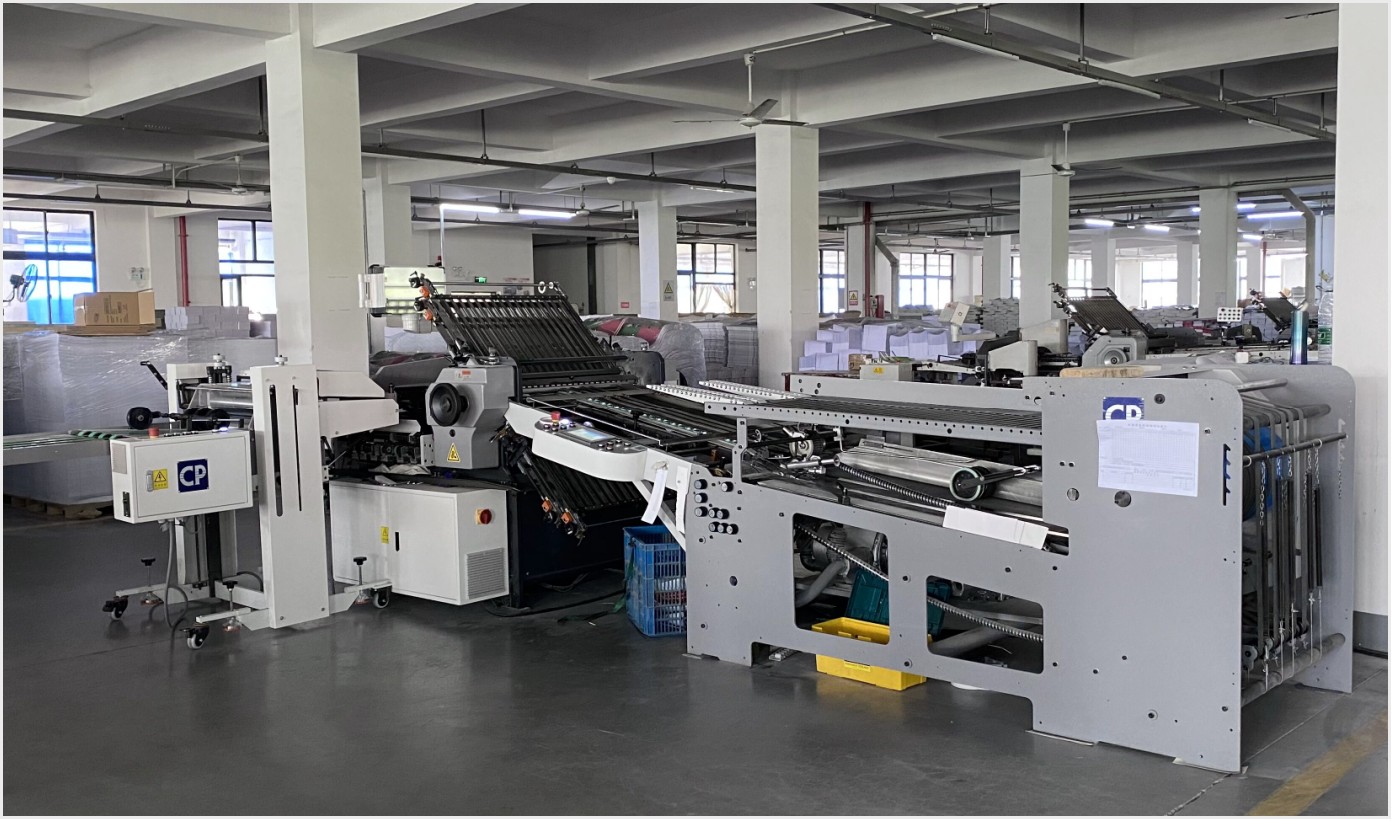
Next step for buyers and brand owners: send your deck concept, target market, and preferred paper weight, and request a custom card game quote or sample discussion. Yawanhong provides one-stop printing and packaging for board games, card games, puzzles, notebooks, and color boxes, with 100% of sales exported to the USA and Europe.
Email: info@yawanhong.vn | Tel / WhatsApp: +1 626-417-3930 | Website: www.yawanhong.vn
Download the full manufacturing capability overview: Yawanhong VN Group Global Manufacturing (PDF)
Have Questions or Need More Details?
Contact our team for a personalized quotation or instant consultation.
Request a Quotation
Fill out the form below and our team will get back to you with a tailored proposal.
WhatsApp Direct Chat
Prefer to chat in real-time? Message us on WhatsApp for instant assistance & quick answers.
- Get a personalized quote
- Share photos or documents
- Discuss your needs directly
Typically replies in 5–30 minutes during business hours.