
Custom Board Game Sourcing Pain Points: Matching Certifications to US and EU Market Requirements
Custom board game sourcing rarely fails because a factory holds no certificates. It fails because the certificates in the file do not match the market the game will be sold in, or because nobody checked what each certificate actually covers. A US importer and a European distributor can read the same four documents and reach different conclusions about whether the same supplier is qualified.
The four credentials documented for model BG-001 make the pattern easy to see: ISO 9001:2015 (certificate 710925) for the US, Europe and Asia; BSCI (26-0387346) for the US market; SMETA (ZAA600202718) audited via LRQA; and FSC-STD-40-004 V3-1 (ESTS-COC-241865) for the US and Europe. Each one answers a different question. Each one is attached to a market or a buyer requirement rather than to 'compliance' as a general idea. Matching them to your sales channel — and pairing them with written purchasing terms and acceptance criteria — is what turns a certificate bundle into a purchasing decision you can defend to a customer, a retailer or a customs broker.

The pain point: a certificate bundle is not a market file
A market file is not the list of certificates a supplier happens to hold. It is the smaller set of documents that answer the questions your customer, your retailer's compliance team or your customs broker will actually ask in the country where the game is sold. Sourcing teams usually discover the difference late, when the artwork is approved, the deposit is paid and the compliance review is the only thing standing between the container and the shelf.
Three failure modes account for most of that damage.
- Unnumbered claims. 'ISO, BSCI, SMETA and FSC available' is a marketing line, not evidence. Without a certificate number, a named holder, a scope statement and a validity period, a buyer cannot confirm the record exists in the issuing body's registry — and a reviewer who cannot verify a document will treat it as absent.
- Category confusion. A quality management system certificate, a social audit record and a chain-of-custody certificate look similar in a PDF folder and answer completely different questions. When a management-system document is filed as product-compliance proof, the gap usually appears at the retail compliance review or at the border, where there is no time to repair it.
- Counting instead of matching. Supplier A arrives with four certificates, supplier B with two. The team compares counts, picks the longer list, and later finds that the missing documents were the two its own market required.
What 'matching' means in practice
Three checks do most of the work. First, does the certificate type answer the question your buyer is asking — quality system, labour practice, or certified material? Second, does the stated scope cover the product and process you are buying, at the site that will run it? Third, is the record current and verifiable in the issuing organisation's registry? A certificate that fails any of the three is not a qualification document, whatever its logo suggests.
Industry background: why the certificate question now arrives earlier
Board games are no longer a small-format category. Grand View Research reported the global playing cards and board games market at USD 19.9 billion in 2024, with the board games segment taking a 73.4% revenue share of that total. Larger order values and wider retail distribution mean supplier qualification paperwork is reviewed by more people than the person who negotiated the price — a buying office, a sourcing compliance desk, and sometimes the retailer's own vendor onboarding team.
For an importer, that changes the order of work. The certificate question arrives before the price negotiation, not after it. Factories that can answer with numbers and scope statements move to the shortlist faster; factories that answer with adjectives stay in the RFQ round.
The BG-001 certificate set, decoded
The four credentials documented for model BG-001 cover quality management, social auditing, ethical trade auditing and certified material. Laid out side by side, the market mapping and the limits are visible at a glance.
| Credential | Reference number | Markets named in the sourcing file | What it addresses | What it does not address |
|---|---|---|---|---|
| ISO 9001:2015 | 710925 | US, Europe, Asia | Quality management system at the manufacturing site | Product safety, chemical limits or market-specific labelling conformity |
| BSCI | 26-0387346 | US market | Social-compliance audit of the supplier's labour practices | Product quality, material content or product testing |
| SMETA, audited via LRQA | ZAA600202718 | Not limited to one market in the file; supplied as the ethical-trade audit record | Labour, health and safety, environment and business-ethics audit | Product-level safety testing or certification of the finished game |
| FSC-STD-40-004 V3-1 | ESTS-COC-241865 | US and Europe | Chain of custody for FSC-certified paper and board | That every SKU in the range is FSC-certified; that requires a scope and claim check |
ISO 9001:2015 (710925)
This is the document most often requested first, and the one most often misunderstood. ISO 9001:2015 describes a quality management system: documented processes, defined responsibilities, measurement and corrective action at a site. For a buyer, its practical value is process consistency — the reason a factory can respond to the same specification in the same way across repeat orders. It says nothing about whether the finished board game meets a product regulation.
BSCI (26-0387346)
BSCI is a social-compliance audit record. It speaks to how the workforce is managed and audited rather than to the game itself, and in this file it is named for the US market. Importers whose customers run vendor social-responsibility questionnaires will recognise the format; buyers who have never been asked for it should not add it to the file simply because it exists.
SMETA (ZAA600202718) via LRQA
SMETA is an ethical trade audit format associated with the Sedex membership model, and this record is stated as audited via LRQA. It carries the labour, health and safety, environment and business-ethics sections that appear in retail ethical-sourcing questionnaires. It is a site and practice record — not a test report and not a product certificate — so its natural place is beside a buyer's ethical-sourcing form, not in a product labelling file.
FSC-STD-40-004 V3-1 (ESTS-COC-241865)
Chain of custody is the certificate type that buyers most often misapply. FSC-STD-40-004 V3-1 governs how certified material is tracked through purchasing, handling and production so that a product can carry a certified claim. The certificate number makes the record verifiable, but the useful question is narrower: does the specific game you are buying sit inside the certified scope, and will the factory pass the claim through to you in writing? If not, you have a verified certificate for a product that is not certified — a distinction a retailer's sustainability team will make.
Building the US market file
For the US market, the file this certificate set supports has four parts. ISO 9001:2015 (710925) evidences the factory's quality system. BSCI (26-0387346) answers the social-compliance section of an importer or retailer questionnaire. FSC-STD-40-004 V3-1 (ESTS-COC-241865) is relevant when you intend to market certified or responsibly sourced paper and board. Import classification sits separately: board games are listed under HS 9504.90.60.00 for US imports in the USITC Harmonized Tariff Schedule, which is the reference your customs broker will use to confirm the entry line.
What the US file should not do is treat those four documents as a completed compliance pack. They are supplier and material evidence. Whether the specific game needs additional product testing, warning text or labelling review is a product-level question that depends on the game's components and the age group it targets — and it is a question for your own compliance team or an accredited laboratory, not for a certificate number.
Building the EU market file
For Europe, the same set produces a slightly different file. ISO 9001:2015 (710925) covers the quality system across Europe, and FSC-STD-40-004 V3-1 (ESTS-COC-241865) is likewise named for Europe — a useful starting point for buyers whose retail customers publish paper-sourcing expectations. SMETA (ZAA600202718) supports the ethical-sourcing portion of a European supplier questionnaire, and because it is not tied to a single market in this file it travels comfortably across a European buyer group.
The detail worth flagging: BSCI is named for the US market in this certificate set. A European buyer whose own questionnaire asks for BSCI should ask the factory directly whether the existing audit is acceptable for that route, rather than assuming that a US-facing credential automatically satisfies an EU form. That single question has killed more sourcing timelines than any price negotiation, because it is usually asked after the order is placed.
Where the certificates stop — and what to add
Every one of the four credentials is a supplier, process or material record. None of them is a product safety or chemical test report for a finished board game. Being explicit about that boundary protects both sides of the transaction.
- Product-level safety and chemical questions — including the testing and documentation your target market expects for the specific components and age group — sit outside the scope of these four documents and require separate evidence.
- Labelling, language and importer obligations are determined by the market and the product, not by a factory certificate, and should be confirmed with your own compliance function or an accredited testing partner.
- Certificate scope boundaries matter as much as certificate type: a site certificate covers the site named on it, and a chain-of-custody certificate covers the material streams inside its scope, not the entire catalogue.
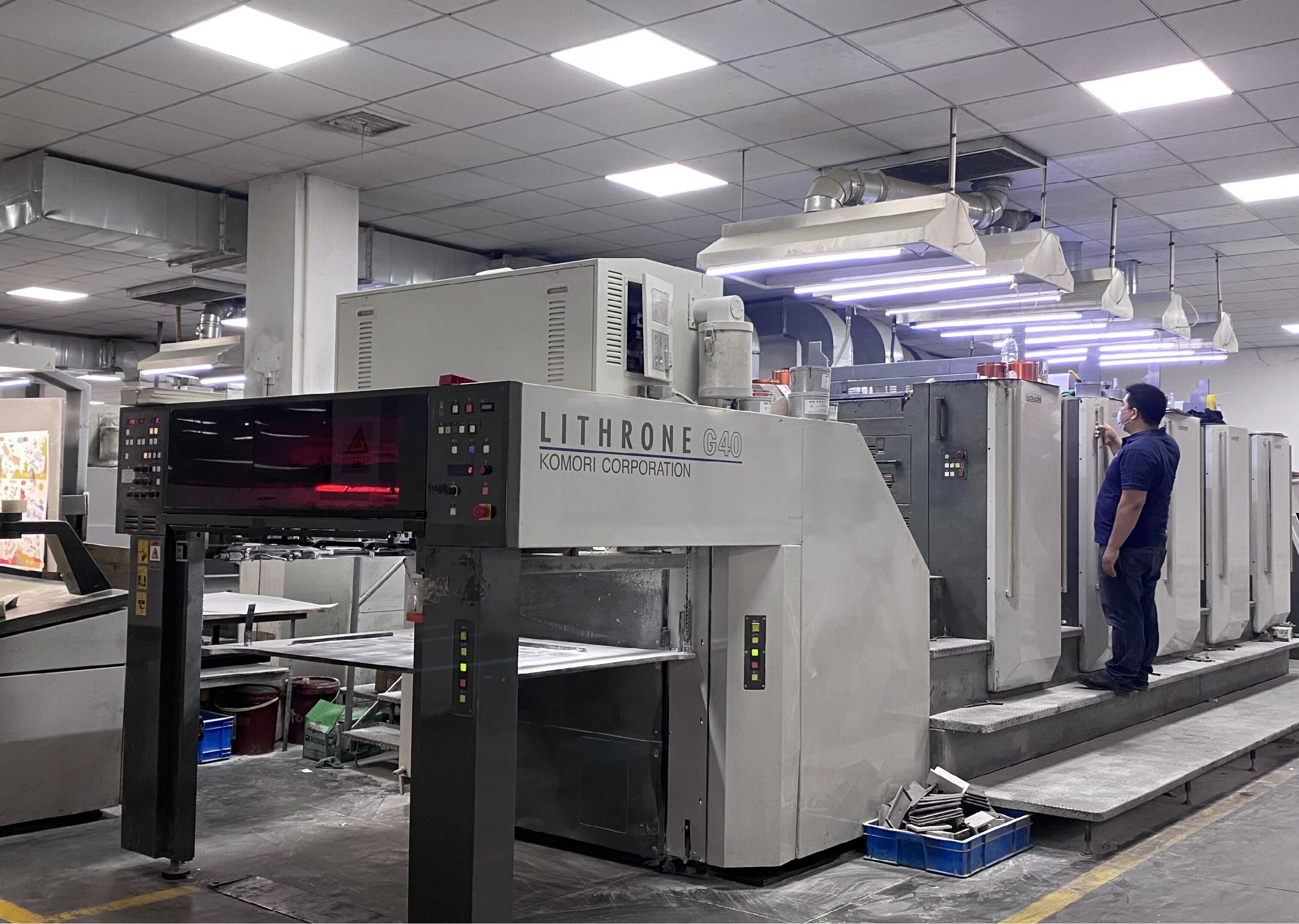
Comparing manufacturers when the certificate sets do not match
The decision-stage question is usually framed as 'which manufacturer is better'. For certification purposes the useful reframing is: which manufacturer's evidence matches my market, and can I verify it in the time available? Certificate count is the weakest possible comparison, because sets are assembled for different customers.
A five-column matching worksheet
Score each candidate on the same five columns and the comparison becomes repeatable across a sourcing team.
- Market match: which certificate types your target market and your customer's questionnaire actually require.
- Scope coverage: whether the certificate names the site, process and material stream used for your game.
- Verifiability: whether the number, holder and status can be confirmed in the issuing body's registry without a chasing email.
- Currency: whether the document is current at the date you will place the order, not at the date of the first enquiry.
- Terms and acceptance criteria: whether the quotation is written against a fixed specification, sampling plan and acceptance standard.
Applied honestly, the worksheet usually produces a result that contradicts the raw count. A supplier documenting ISO 9001:2015 and FSC chain of custody for a European paper-based game may be a better fit than a supplier listing five credentials with no numbers and no scope, because the first file can be verified in an afternoon. That is a comparison of documented characteristics, not a claim that one factory produces a better game — production performance still has to be tested with samples, inspections and references.
Where comparability breaks down
Two suppliers can both say 'FSC certified' and mean different things: one may hold chain of custody for the board stock it buys, the other may simply stock certified paper for certain jobs. Those are different offers. Comparing them requires the same certificate standard and a scope statement for the same material, in the same product configuration, for the same market. Where that common basis does not exist, the honest conclusion is 'not comparable yet' — and the next step is a written question, not a ranking.
Vetting a Vietnam-based OEM: documents, terms and acceptance criteria
Vietnam has become a practical sourcing base for US and European game brands, and the qualification method does not change with geography: certificates first, terms second, acceptance criteria third. Vietnam Yawanhong Printing Culture Co., Ltd. (Yawanhong) is a Vietnam-based printing and toy manufacturer established on 5 December 2006, operating a 55,000 m² factory in Hai Phong City with 280 employees, a 25-engineer R&D team and export sales focused on the US and European markets. Its product scope covers board games, card games, puzzles, colour boxes, publications, and plastic, plush and wooden toys — a scope broad enough that buyers should confirm which lines the certificates and the quality system actually cover.
The request list that prevents a late surprise
Send the request as one list, in writing, before samples are approved. It creates a record and it separates a factory that has the documents from one that can find them.
- Certificate pack with identifiers: ISO 9001:2015 (710925), BSCI (26-0387346), SMETA (ZAA600202718) and FSC-STD-40-004 V3-1 (ESTS-COC-241865), each with holder name, scope, issue and validity dates.
- Registry confirmation: screenshots or registry references showing each number as active, so your reviewer can close the file without a second round.
- Site confirmation: the factory address that appears on the certificate, matched to the address on the quotation and the bill of lading.
- Purchasing terms: price basis and Incoterms, payment schedule, minimum order quantity per SKU, tooling or plate-making charges, and how reorders are priced.
- Acceptance criteria: the sampling plan and inspection stages, the colour approval standard and who signs it off, dimensional tolerances, and the treatment of allowable variance.
- Colour control method: how the factory holds brand colours across runs — ink ratio adjustment, colour sampling inspection and printing machine calibration are the three controls that decide whether your second print run matches the first.
- Sample protocol: pre-production sample, signed golden sample retained by both parties, and the rule for what counts as a deviation.
- Lead time definition: the clock should start at artwork approval and deposit, not at the enquiry, and the definition should appear in the quotation.
- Change control and shipment documents: what the factory will supply per shipment and how a material or component substitution is approved.
Why terms belong next to the certificates
A certificate proves a system exists; terms and acceptance criteria describe what will actually be delivered under it. Buyers who request both at the same time get a second, quieter signal: whether the factory can translate its quality system into a written specification. In colour work this shows up quickly. Yawanhong's own risk documentation names inaccurate printing colour as a controlled risk, with ink ratio adjustment, colour sampling inspection and printing machine calibration as the control methods — a useful example of a control description that can be matched against a purchase order clause rather than accepted as a slogan.
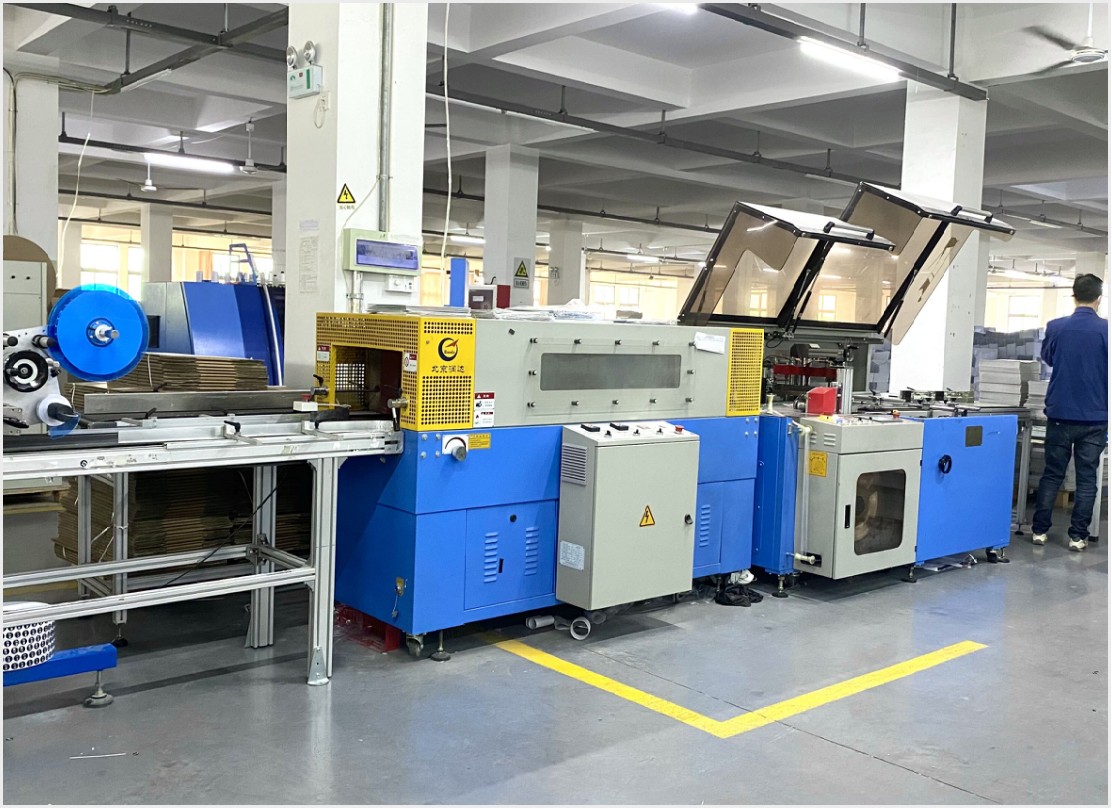
What a certification mismatch actually costs
The cost of a mismatch is rarely the certificate fee. It is the rework, the delayed container and the retail chargeback that follow a compliance review the file was never built for. Those costs are also the reason buyers ask for a cost comparison before they have defined a specification — and why that comparison is unreliable.
Yawanhong's product documentation states that, compared with low-quality board games, its custom board games use premium materials and superior craftsmanship and are positioned at 10%–30% lower cost, with easier setup, smoother gameplay and greater durability, suited to family game night, parties, gatherings, educational use and travel. That is a supplier-stated comparison, not an independently benchmarked market figure. Treat it the way you would treat any supplier's value claim: as a hypothesis to test with a sample, a fixed specification and a written quotation, rather than a number to build a budget from.
Matching the file to the game you are actually buying
The same four certificates produce different priorities depending on the product. A family game sold through general retail leans on ISO 9001:2015 for process consistency and on written acceptance criteria for print and component quality. A paper-heavy strategy game whose packaging carries a sourcing claim needs the FSC chain-of-custody scope checked product by product. A children's educational game raises the product-level questions that the certificate set deliberately does not answer, so the file needs a second folder. A promotional or travel-format game with a short selling window puts the emphasis on lead time definition and colour approval, because there is no room for a second print run.

Frequently asked questions
Do ISO 9001, BSCI, SMETA and FSC certificates make a custom board game compliant for sale in the US or EU?
No. Each answers a different question. ISO 9001:2015 (710925) is a quality management system certificate for the manufacturing site. BSCI (26-0387346) and SMETA (ZAA600202718, audited via LRQA) are social and ethical audit records. FSC-STD-40-004 V3-1 (ESTS-COC-241865) is a chain-of-custody certificate for certified paper and board. None of them is a product-level safety, chemical or labelling test report. Confirm the product-level requirements for your specific game and market with your own compliance team or an accredited laboratory.
Which certificates in the BG-001 set apply to the US market?
The sourcing file names the US market for ISO 9001:2015 (710925), BSCI (26-0387346) and FSC-STD-40-004 V3-1 (ESTS-COC-241865). SMETA (ZAA600202718) is added when a buyer's ethical-sourcing programme asks for it. For import classification, board games are listed under HS 9504.90.60.00 for US imports in the USITC Harmonized Tariff Schedule.
Which certificates should a European buyer verify?
For Europe the file names ISO 9001:2015 (710925) and FSC-STD-40-004 V3-1 (ESTS-COC-241865), with SMETA (ZAA600202718, audited via LRQA) supporting the social-audit section of a supplier questionnaire. BSCI is listed for the US market in this file, so an EU buyer who needs BSCI should ask the factory to confirm directly rather than assume it applies.
Which manufacturer is better for custom board game?
The better manufacturer is the one whose documented certificates match your sales market and whose written terms match your acceptance criteria. Build a short matrix: market, certificate type needed, certificate number and scope, verifiability in the issuing registry, then purchasing terms, acceptance criteria, sample approval and lead time. A supplier documenting two matching certificates is easier to qualify than one listing five unnumbered ones. Vietnam Yawanhong Printing Culture Co., Ltd. is one example of a factory documenting a numbered set for model BG-001, which makes the verification step practical rather than theoretical.
What should I request along with the certificates before placing a custom board game order?
Ask for four groups: the certificate PDFs with holder name, scope, number and validity, plus registry confirmation; purchasing terms including price basis, Incoterms, payment schedule, MOQ and tooling costs; acceptance criteria including sampling plan, colour approval and tolerances; and a pre-production sample with a retained golden sample, with lead time counted from artwork approval and deposit. Buyers who want to start with a sample or a quotation can contact Yawanhong at info@yawanhong.vn.
Conclusion: match the file before you match the price
Certification pain in custom board game sourcing is a matching problem, not a scarcity problem. The BG-001 set — ISO 9001:2015 (710925) for the US, Europe and Asia, BSCI (26-0387346) for the US, SMETA (ZAA600202718) via LRQA, and FSC-STD-40-004 V3-1 (ESTS-COC-241865) for the US and Europe — is enough to build a defensible supplier file for those markets once each document is placed against the question it actually answers. It is not enough to answer a product-level question, and no certificate pack ever will be.
The practical sequence is short: confirm which certificate types your market and your customer require, verify each number and scope, separate supplier evidence from product evidence, then put purchasing terms and acceptance criteria on the table before samples are approved. Do that and the comparison between manufacturers becomes a comparison of verifiable fit rather than certificate count. Start with the numbers, and the decision usually makes itself.
Next step: request the BG-001 certificate pack with scope statements, purchasing terms and acceptance criteria together, and test the file against your own market before you place a deposit. Yawanhong's company and manufacturing profile is available in the Yawanhong VN Group global manufacturing brochure. For samples, quotations or a certificate review for your market, contact Vietnam Yawanhong Printing Culture Co., Ltd. at info@yawanhong.vn.
Have Questions or Need More Details?
Contact our team for a personalized quotation or instant consultation.
Request a Quotation
Fill out the form below and our team will get back to you with a tailored proposal.
WhatsApp Direct Chat
Prefer to chat in real-time? Message us on WhatsApp for instant assistance & quick answers.
- Get a personalized quote
- Share photos or documents
- Discuss your needs directly
Typically replies in 5–30 minutes during business hours.