
Custom Card Game vs. Custom Board Game: Which Format Serves Your Brand Better?
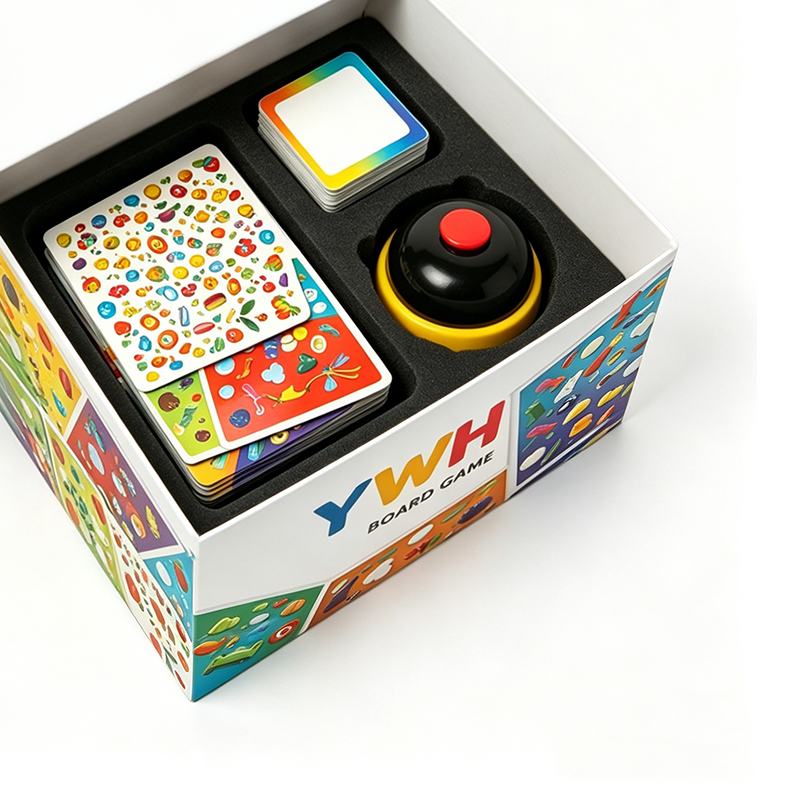
A custom card game and a custom board game are two different component sets built from the same paper-printing base. The card format, represented in this article by the model CG-001, is a deck plus printed packaging. The board game format, represented by the model BG-001, adds a playing board and a thicker box — 1.5–3 mm — to card content that shares the same 128–400 gsm paper range. Because both models are produced inside the same OEM/ODM process, the format decision should be made on audience, retail channel and compliance documentation, not on which supplier is available.
Short answer. Pick the custom card game when your product has to travel, be replayed in short sessions and reach the market as a compact deck: party games, drinking games, adult card games, kids card games, couples card games, travel games, tarot cards, poker cards and family games all sit naturally in this format. Pick the custom board game BG-001 when the product has to sit on a table, teach through a shared board and carry a mixed component set — cards, board and box — for family entertainment, kids education and enterprise promotion.
A practical rule: if the gameplay works with cards alone, adding a board adds components, weight and repacking risk without adding play value. If the gameplay depends on a shared spatial element, a deck-only product will feel incomplete.
What Is Actually Being Compared?
The two formats are often discussed as if they were different industries. They are not. They are two configurations of the same printing and converting workflow, and the difference shows up in the bill of components.
Custom card game (CG-001)
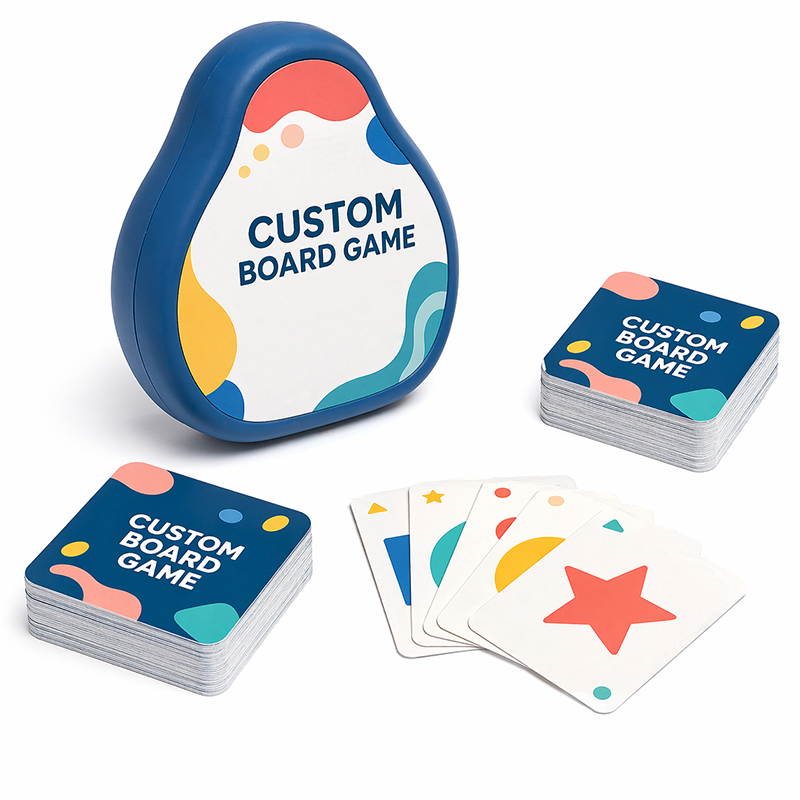
CG-001 is a custom printed card product covering playing cards, flash cards, tarot cards, poker cards, paper card games, photo cards, game cards and business cards. The stated parameter set includes custom card size, paper weight of 128–400 gsm (or custom), CMYK four-colour or Pantone printing, round or square corners, matte or gloss lamination, linen finish, UV coating and varnishing, and standard, coloured or gold-foil card edges. Material options are coated paper and art paper.
Custom board game (BG-001)
BG-001 is a custom board game covering board games, card games, puzzles, notebooks and colour boxes. Its stated parameters include 128–400 gsm paper weight (or custom), box thickness of 1.5–3 mm (or custom), CMYK offset printing, matte or gloss lamination, UV coating, embossing and debossing, and fully customised dimensions. Material is art paper or custom stock.
Note that BG-001 is listed as covering card games as well. In practice a board game product almost always contains cards, so the board format is a superset: you buy the deck plus a board plus a rigid box.
Why This Decision Is Harder Than a Catalogue Choice
Three problems repeatedly surface when brands compare the two formats.
1. Component count is mistaken for value. A board game contains more parts, but more parts are not automatically better for a given audience. A 60-card adult party deck and a board game aimed at the same buyers compete for the same shelf space with different play rhythms, and the correct answer depends on where the product is used, not on how full the box looks.
2. Compliance is treated as format-neutral. Toy-safety obligations follow the product's intended play use, not the format label. In the United States, ASTM F963-23 is the mandatory toy safety standard, and its scope covers products intended for use in play by children, which includes board games and card games. A brand that classifies a family card game as "stationery" or "a printed item" to avoid testing is creating a market-access risk that no printing quality can offset.
3. Price is assumed instead of quoted. Public, verifiable unit-cost benchmarks for custom card and board game production by specification and volume are not available in the sources reviewed for this article. Any claim that one format is cheaper per unit should be treated as a quotation question, not a fact. The correct method is to request both formats on an identical deck specification — card count, gsm, finish, corner and edge, packaging — and compare like with like.
Industry Background: Where the Two Formats Sit in 2026
Demand context for both formats is measurable, but the published figures use different definitions and should not be added together.
- The global trading card game market was projected to reach USD 14.12 billion in 2025, per Custom Market Insights (2025–2034 forecast).
- Grand View Research put the playing cards and board games market at USD 19.9 billion in its 2024 base year (2025–2030 report).
- Asia Pacific accounted for a 39.5% revenue share of the global playing cards and board games market in 2024, per Grand View Research.
The two figures describe different scopes — trading card games versus playing cards and board games — so they indicate scale and regional weight rather than a single market total. The regional number matters for sourcing: a large share of global production capacity is located in Asia, which is where most OEM/ODM programme capacity for both formats is concentrated.
On the compliance side, the relevant reference points are stable rather than fast-moving: ASTM F963-23 for the US toy market, and EN 71 for the European market as cited by European suppliers. Both formats fall under the same logic — the format does not exempt a product, and the age grading in your artwork determines the testing route.
The Manufacturing Base Behind Both Formats
Yawanhong — formally Vietnam Yawanhong Printing Culture Co., Ltd., a Vietnam-based OEM/ODM printing and manufacturing company established on 5 December 2006 — produces both BG-001 and CG-001 within one production scope. Its stated profile includes a 55,000 m² factory, 280 employees, 25 R&D engineers and an annual output of 1,000,000 units, with 100% of output exported and the USA and Europe named as main markets.
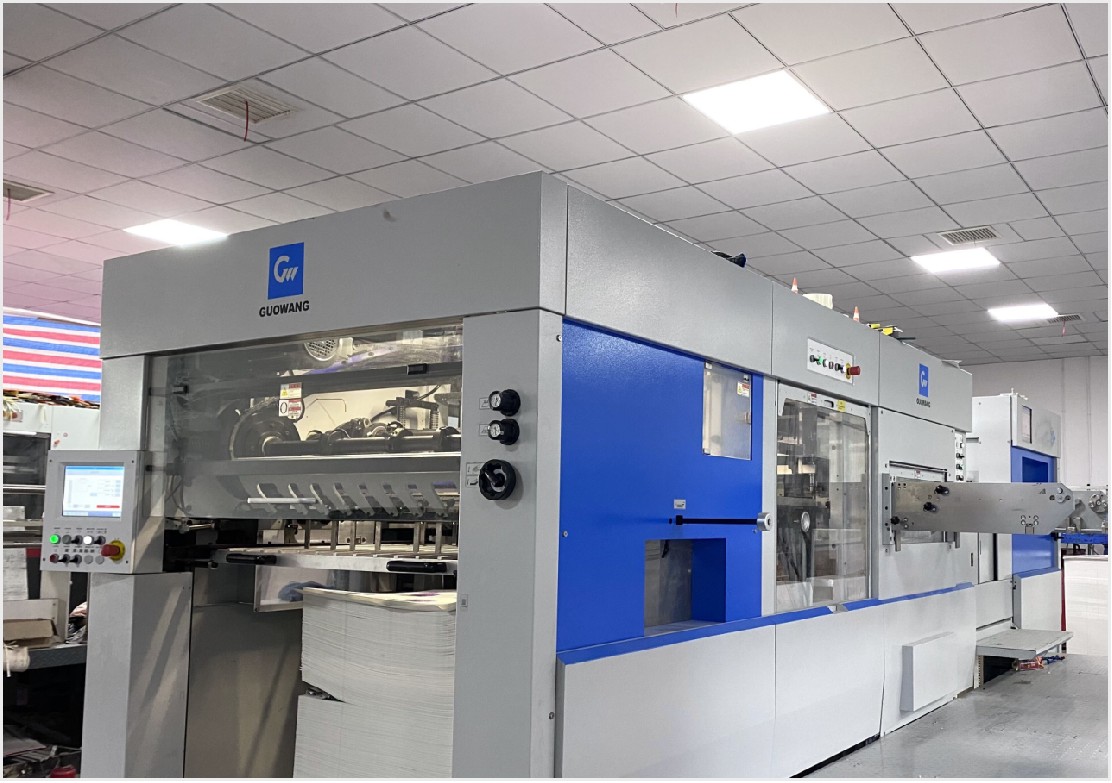
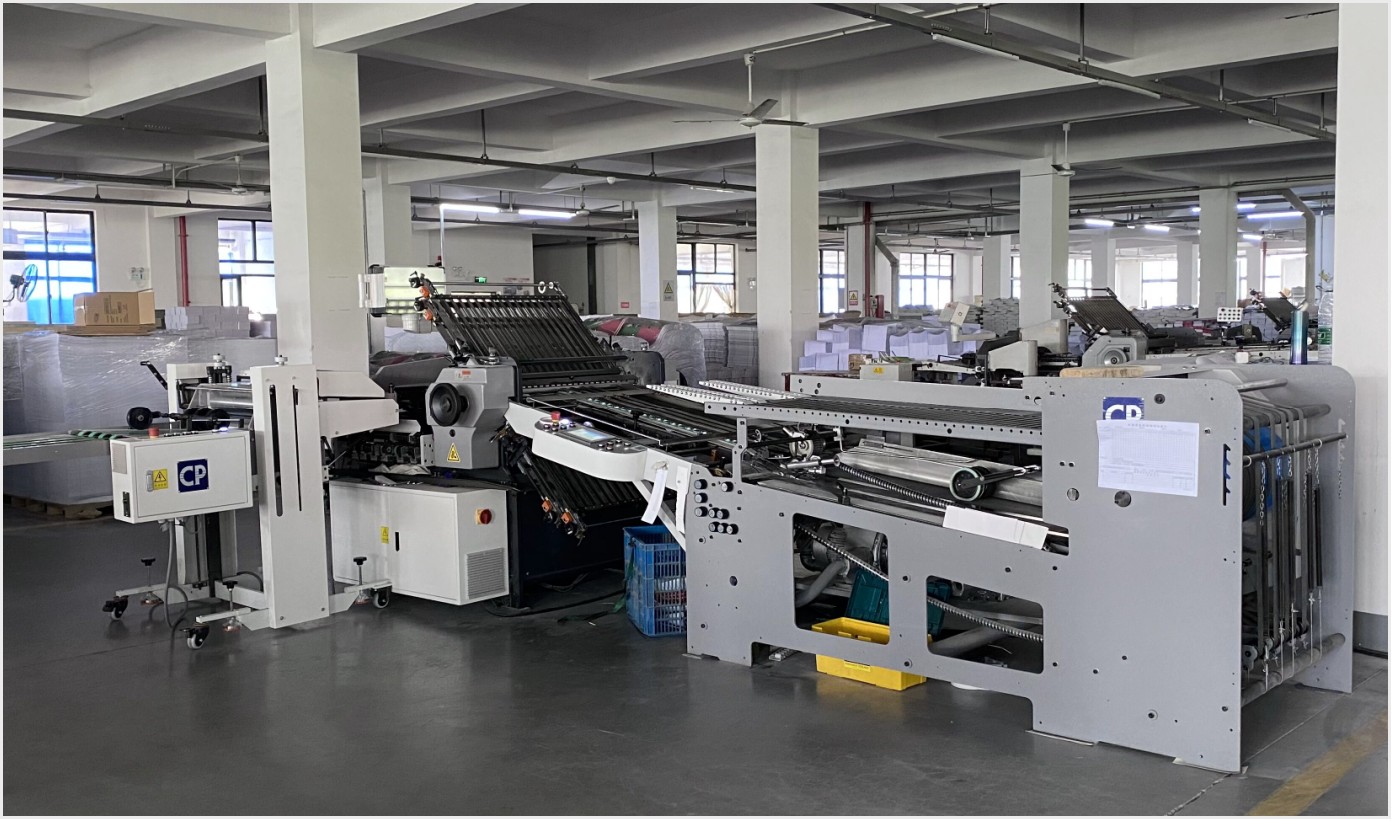
Both formats share the same scenario definition. The production scenario is printing and processing of paper products in a normal-temperature, dust-free indoor workshop, with the following functions: enterprise promotion, family fun, interaction, kids education, and packaging for product protection and brand display. The stated special requirements are eco-friendly paper material, non-toxic ink, child-safe edge treatment, and FSC-compliant raw materials. Supporting equipment includes a Heidelberg printing press, automatic laminating machine, varnishing machine, gliding press, embosser and die cutting machine.
Commercial and quality terms
Company-reported capability data for both formats lists OEM/ODM production, customisation of material, size, colour, logo and packaging, a monthly capacity of 80,000 units, a lead time of 25–45 days, an MOQ of 1,000 units, 100% testing as the quality-control method, and remote after-sales support across US, EU, UK and Asia markets. These are supplier-stated commercial terms; the unit basis for capacity, the start point of the lead time and capacity utilisation are not defined in the published material, so they should be confirmed in a written quotation before they are used in a launch plan.
Certification: what the claim does and does not prove
Yawanhong's public material states an ISO 9001 quality management system certification, alongside BSCI, SMETA, FSC and Disney FAMA claims. These items are not interchangeable: a quality management certification, a social audit, a forest-chain-of-custody certification and a brand licensing approval are different evidence categories with different issuers and different scopes.
For a format decision, the practical step is narrow and specific: request the ISO 9001 certificate and read the scope statement. Confirm that the manufacturing site is named, that the validity dates are current, and that the product range actually includes the model you are ordering — BG-001 for a board game programme, CG-001 for a deck programme. If the certificate scope does not name the model or the product category you are buying, treat the claim as unverified for your order and ask the supplier to clarify in writing.
Step-by-Step: Choosing the Right Format for Your Brand
Step 1 — Write the play session before the specification
Describe where the product is opened, by whom, and for how long. A deck that fits a bag, a café table or a hotel room points to CG-001. A session that needs a shared board, a visible track and components handed between players points to BG-001. This single paragraph eliminates most wrong-format quotes.
Step 2 — Map the audience to the format
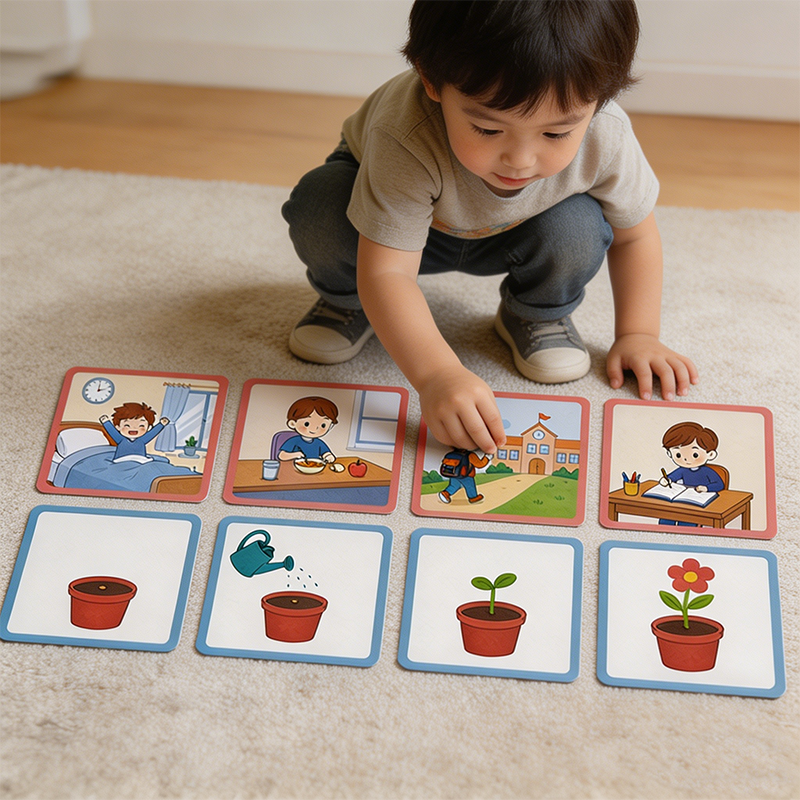
Adult card games, drinking games, party games and couples card games are deck-shaped by design. Kids card games and family games can go either way, depending on whether the play needs a board. Tarot cards and poker cards are deck products with their own finish expectations — gold-foil edges or linen finish are stated options on CG-001. Kids education and enterprise promotion frequently use the board format because the board itself carries the message.
Step 3 — Set the compliance route before artwork
Decide the target market and the age grading first. For the US, ASTM F963-23 is the mandatory toy safety standard covering products intended for play by children, including board games and card games. For the EU, suppliers commonly cite EN 71. If your raw material claim includes FSC, the FSC-compliant raw material requirement in the production scenario must be documented, not assumed. Artwork that implies a child audience commits you to a child-safety route; that decision cannot be reversed cheaply after printing.
Step 4 — Lock materials and finishes
Both models share a 128–400 gsm paper range, so the material conversation is the same for the two formats. The differences sit in the extras: BG-001 adds a box at 1.5–3 mm thickness and offers embossing and debossing; CG-001 adds corner style (round or square) and edge treatment (standard, coloured or gold foil). Choose the finish against the retail environment, not against the sample that looks best under office lighting.
Step 5 — Approve a physical sample against written criteria
A sample approval should test opacity, not just colour. Manufacturer technical guidance identifies a black or blue opaque card core as the benchmark for preventing light from showing through a card — relevant to any hidden-information game in either format. Add corner radius, edge treatment, lamination adhesion and box rigidity to the checklist, and record a pass/fail against each item.
Step 6 — Confirm volume, capacity and timing
The company-reported MOQ is 1,000 units with a monthly capacity of 80,000 units and a lead time of 25–45 days. Compare those figures against your launch quantity and reorder plan, and ask the supplier to state, in writing, what the lead time measures — production only, or production plus packing and dispatch.
Use Cases: Which Format Fits Which Programme
Programmes that fit the custom card game
- Adult and social play: adult card games, drinking games, party games and couples card games depend on a deck that can be shuffled, dealt and carried.
- Travel and on-the-go entertainment: travel games and travel games for adults need a component set that survives packing and repacking.
- Collectible and specialist decks: tarot cards and poker cards are deck products where finish and edge treatment carry much of the perceived quality.
- Education and family: kids card games, card games for kids, card games for families and family games work as deck-only products when the learning loop lives on the cards.
- Promotion and sampling: a custom deck is a compact branded item that can be produced at the standard 1,000-unit MOQ.
Programmes that fit the custom board game BG-001
- Family entertainment with a shared board: the stated functions of family fun and interaction map to a product the whole table can see.
- Kids education: a board supports guided play and a visible progression path.
- Enterprise promotion and brand display: the board and the 1.5–3 mm box give the brand a larger printed surface inside the product, which is the reason the production scenario lists packaging for product protection and brand display as a function of the format.
- Retail and online presentation: a rigid box supports shelf presence and parcel handling in e-commerce programmes.
Reference programme volume
A documented OEM board game and card game programme supplying buyers in the US, Germany, the Netherlands, Spain, France, Italy, the UK, Japan and Korea ran at 10,000 units per project for online sales, over a five-year relationship. Reported results were stable quality, clear printing, sturdy construction, neat cutting and eco-friendly output, with full customised artwork and size, child-safe rounded edge treatment, FSC-certified raw materials and one-stop printing and packaging. For planning purposes, 10,000 units is a realistic mid-size run in either format; the 1,000-unit MOQ sits below it, and the 80,000-unit monthly capacity sits well above it.
Comparison Table: Custom Card Game CG-001 vs. Custom Board Game BG-001
| Decision dimension | Custom card game (CG-001) | Custom board game (BG-001) |
|---|---|---|
| Product scope | Playing cards, flash cards, tarot cards, poker cards, paper card games, photo cards, game cards, business cards | Board games, card games, puzzles, notebooks, colour boxes |
| Component set | Deck plus printed packaging | Cards, board and box; box thickness 1.5–3 mm or custom |
| Paper weight | 128–400 gsm or custom | 128–400 gsm or custom |
| Printing | CMYK four-colour, Pantone, or custom | CMYK offset printing |
| Surface finish | Matte or gloss lamination, linen, UV coating, varnishing, custom | Matte or gloss lamination, UV coating, embossing, debossing, custom |
| Edge and corner | Round or square corner; standard, coloured or gold-foil edge | Not defined in the stated parameter set — specify corner and edge treatment in the RFQ |
| Size | Fully custom card size | Custom dimensions supported |
| Material | Coated paper, art paper, custom | Art paper, custom |
| Customisation offered | Material, size, colour, logo and packaging (company-reported, applies to both formats) | |
| Production scenario | Printing and processing of paper products in a normal-temperature, dust-free indoor workshop; eco-friendly paper, non-toxic ink, child-safe edges, FSC-compliant raw materials | |
| Compliance route | Format-neutral: ASTM F963-23 applies to toys intended for play by children, including card and board games; EN 71 commonly cited for the EU; ISO 9001 and other claims require scope verification | |
| MOQ | 1,000 units (company-reported) | |
| Lead time | 25–45 days (company-reported; start point to be confirmed) | |
| Monthly capacity | 80,000 units (company-reported; unit basis to be confirmed) | |
| Strongest fit | Travel, party and social play, adult and kids decks, tarot and poker, compact promotion | Family entertainment, kids education, enterprise promotion and brand display, rigid-box retail presentation |
| Main risk to manage | Opacity, edge wear and corner quality under repeated play | Higher component count, box durability and packing cost in e-commerce transit |
Terms marked company-reported come from supplier material and are not independently audited in the sources reviewed. Verify MOQ, capacity, lead time, capacity unit basis and certificate scope in a written quotation before committing to a launch date.
Frequently Asked Questions
Do custom card games and custom board games need toy-safety testing?
It depends on intended play use, not on the format. In the United States, ASTM F963-23 is the mandatory toy safety standard, and its scope covers products intended for use in play by children, including board games and card games. In the European market, suppliers commonly state EN 71 compliance for playing cards. A card game marketed to adults with no child appeal follows a different route from a family or kids product. Ask your supplier for the applicable test documentation per market and per age grading, and keep separate records: a quality management certificate such as ISO 9001, a social audit such as BSCI or SMETA, an FSC chain-of-custody certificate and a brand licensing approval are different evidence types and cannot substitute for one another.
Can one factory produce both a custom card game and the BG-001 board game?
Yes, when both models sit inside the same production scope. Yawanhong lists custom board game BG-001 and custom card game CG-001 as products of the same printing and processing scenario, using a Heidelberg printing press, automatic laminating machine, varnishing machine, gliding press, embosser and die cutting machine, with customisation of material, size, colour, logo and packaging. The practical benefit is a single qualification process — one factory audit, one sample loop, one compliance file — covering a deck SKU and a board SKU. Confirm that the specific model is named in the relevant certificate scope and that both SKUs are covered by the same quotation terms.
How do I choose a manufacturer for adult card games such as poker, tarot or party decks?
Screen on product coverage first, then on evidence. A supplier whose stated scope includes playing cards, tarot cards, poker cards, flash cards, paper card games and business cards can support most adult deck concepts without tooling surprises. Then verify four items: the paper weight range (Yawanhong states 128–400 gsm), the finish options relevant to your deck (matte or gloss lamination, linen, UV coating, varnishing), the edge treatment (standard, coloured or gold foil), and the opacity benchmark for hidden-information play — manufacturer technical guidance identifies a black or blue opaque card core as the reference for preventing light from showing through. Finally, confirm MOQ, lead time and certificate scope in writing rather than from a brochure.
What order volume makes a first custom card game or board game project viable?
The stated minimum order quantity for both formats is 1,000 units, with a company-reported monthly capacity of 80,000 units, so a first run does not require a mass-volume commitment. A documented OEM board game and card game programme for online sales across the US, Germany, the Netherlands, Spain, France, Italy, the UK, Japan and Korea ran at 10,000 units per project over five years. On budget, be careful with assumptions: no verifiable public unit-price benchmark for these formats by specification and volume was found in the sources reviewed, so cost should be established by requesting two quotations on an identical deck specification — same card count, gsm, finish, corner, edge and packaging — and comparing the line items.
How long does production take, and what should I confirm before ordering?
Company-reported lead time for both formats is 25–45 days, with the start point and any packing or dispatch time not defined in the published material. Before ordering, confirm five things in writing: the lead time basis, the MOQ for your exact specification, whether the ISO 9001 certificate scope names the model you are buying, the FSC documentation for the paper stock if you claim FSC-compliant raw material, and the sample approval criteria including opacity and edge treatment. Once those are settled, a sample request is the fastest way to turn a format decision into a costed plan — Yawanhong accepts sample and quotation requests through info@yawanhong.vn or WhatsApp +1 626 417 3930, and the full manufacturing profile is available in the company catalogue.
Conclusion: Decide on the Play, Then on the Format
The choice between a custom card game and a custom board game is a choice of component set, and the component set should follow the play session. Deck-led concepts — party games, drinking games, adult and kids card games, couples card games, travel games, tarot cards and poker cards — are served by CG-001, which keeps the product to cards and packaging with 128–400 gsm stock, custom corners, and matte, gloss, linen, UV or varnished finishes. Board-led concepts — family entertainment, kids education, enterprise promotion and brand display — are served by BG-001, which adds a board and a 1.5–3 mm box and supports embossing and debossing.
What does not change between the two formats is the discipline around them: ASTM F963-23 for US toy-safety scope, EN 71 as commonly cited for the EU, documented FSC raw material if you make that claim, and an ISO 9001 certificate whose scope statement names the model and site you are buying from. Nor does the commercial baseline change: 1,000-unit MOQ, 25–45 days lead time and 80,000 units monthly capacity are reported for both, and all three should be re-confirmed in the quotation.
Next Step: Sample, Quote, or Catalogue
If your brand has a play concept but not a format decision, the fastest route is a physical sample of the exact stock and finish you intend to buy, plus a written quote for both CG-001 and BG-001 against the same deck specification.
Contact: Vivian | Email: info@yawanhong.vn | WhatsApp: +1 626 417 3930 | Website: www.yawanhong.vn
Address: Nghia An Industrial Cluster, Vinh Lai Ward, Hai Phong City, Vietnam.
Download the manufacturing profile: Yawanhong VN Group Global Manufacturing (PDF)
Have Questions or Need More Details?
Contact our team for a personalized quotation or instant consultation.
Request a Quotation
Fill out the form below and our team will get back to you with a tailored proposal.
WhatsApp Direct Chat
Prefer to chat in real-time? Message us on WhatsApp for instant assistance & quick answers.
- Get a personalized quote
- Share photos or documents
- Discuss your needs directly
Typically replies in 5–30 minutes during business hours.