Custom Card Game Manufacturing: OEM vs ODM vs Full-Custom Sourcing
Custom card game manufacturing splits into three sourcing routes — OEM, ODM, and full-custom — and the route you choose decides who controls the game design, how far material, size, color, logo, and packaging can be customized, and how the order behaves once it reaches the production floor. OEM fits buyers who arrive with finished artwork and a locked design. ODM fits buyers who want a market-ready deck structure they can rebrand. Full-custom fits buyers building a proprietary game from the card up. Vietnam Yawanhong Printing Culture Co., Ltd. supports OEM and ODM production as well as full-custom development on one set of commercial terms: a 1,000-unit MOQ, 25–45 day lead times, 30/70 T/T payment, monthly capacity of 80,000 units, and 100% testing.
The Three Sourcing Routes, Defined
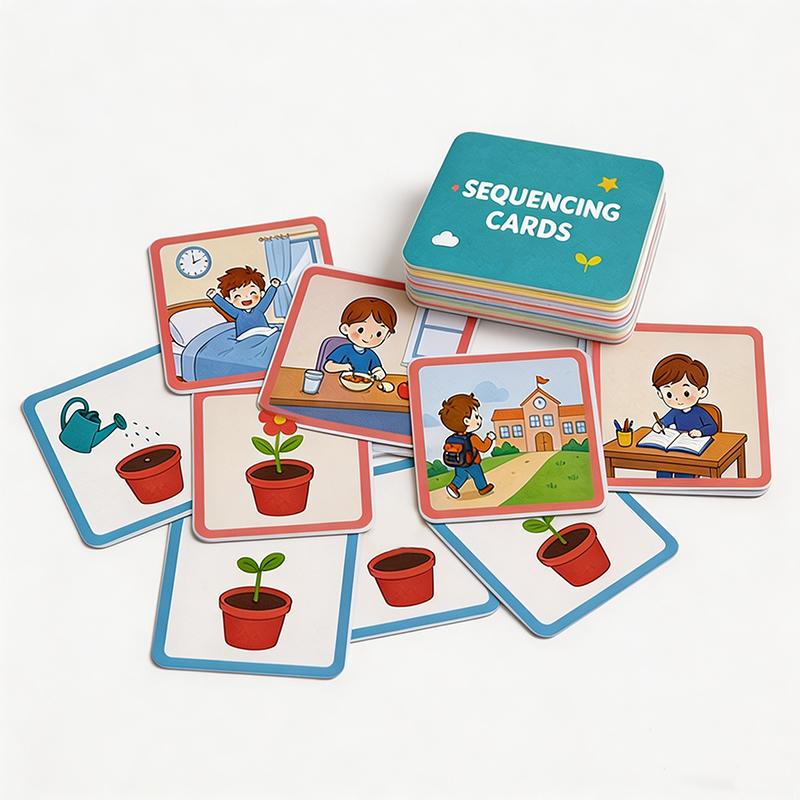
All three routes end with printed, finished, packed cards. What changes is where the creative and engineering work sits, and who carries the risk when something needs to be reworked before mass production.
OEM — you own the design, the factory owns the production variables
In an OEM program the buyer arrives with a finished game concept and print-ready artwork. Manufacturing responsibility begins at material selection and print engineering: choosing a suitable stock, matching color, cutting to the specified card size, applying the surface finish, and packing to the buyer's layout. Design control stays with the buyer, and so does design risk. The factory's obligation is to reproduce the approved artwork accurately and consistently, order after order. Because Yawanhong's production mode covers OEM and ODM, an OEM buyer keeps full ownership of the game concept while the factory absorbs the manufacturing variables.
ODM — you adapt a deck structure that already exists
ODM inverts part of that relationship. The manufacturer already works with established card formats and deck constructions, and the buyer adapts content, branding, and packaging to fit. Development load drops because the physical format is largely settled, so the buyer's creative energy concentrates on content, artwork theme, and packaging presentation. The trade-off is structural: an ODM deck is optimized for speed to market rather than for a mechanic that depends on a non-standard card size, an unusual component, or a proprietary play surface.
Full-custom — you build the deck from the card up
Full-custom is the broadest route. Card size, paper weight, print method, corner style, surface finish, card edge, and packaging are all developed around the buyer's brief, which is why it carries the longest development phase and delivers the highest differentiation. It is the only route that changes the physical product itself rather than working around it. Yawanhong supports this route with an in-house team of 25 engineers, working from specification through to the finished deck.
Why the Sourcing Route Matters More Than the Unit Price
Unit price is the last variable in a card game project, not the first. Three things shift with the route, and each one carries a cost that never appears on a quotation.
- Control. OEM and full-custom programs keep artwork authority and gameplay decisions with the buyer. An ODM program shares part of that authority with an existing deck structure, which can be an advantage for a fast launch and a constraint for a licensed or protected game mechanic.
- Customization ceiling. Material, size, color, logo, and packaging can be customized in every route, but only a full-custom program extends that freedom to the card architecture itself — paper weight, corner style, finish, and edge treatment developed as a set rather than selected from a fixed menu.
- Operational fit. MOQ, lead time, payment structure, and testing regime do not change with the route. A 1,000-unit MOQ, 25–45 day lead time, 30/70 T/T payment, and 100% testing apply whether the project is OEM, ODM, or full-custom. What changes is how much pre-production development sits in front of that window.
Practical sequence for buyers in the research and evaluation stage: settle the route first, then compare factories inside that route. Reversing the order usually produces quotations that are not comparable to each other, because they describe different products.
Industry Background: What Is Pulling Custom Decks Forward
Custom deck demand is being shaped by three forces at once — category growth, artwork-led differentiation, and a compliance layer that now sits inside the sourcing decision.
- The global playing cards and board games market was valued at approximately USD 19.90 billion in 2024 and is projected to reach USD 31.93 billion by 2030 (Grand View Research).
- The trading card game segment, which carries the heaviest artwork and finish expectations, was valued at approximately USD 7.43 billion in 2024, with projections reaching USD 15.84 billion by 2034 (Future Market Insights).
- The tarot cards market is projected to grow by USD 209.7 million from 2024 to 2029 at a CAGR of 3%, with 61% of new decks featuring custom illustrations (Technavio / 360 Research Reports).
- China's exports of playing cards (HS 950440) reached approximately USD 303.1 million in 2024 (UN Comtrade / WITS), confirming how concentrated global card production remains in Asian manufacturing, Vietnam included.
Two regulatory developments raise the stakes on route choice. Custom card manufacturers supplying EU and US retail markets must generally work to EN 71 (Toy Safety) and FSC (Forest Stewardship Council) sourcing requirements, and US Customs and Border Protection reclassified plastic-coated paper card games under HTSUS 9504.40.00 as duty-free effective March 18, 2024. A factory that can document both the material chain and the finished-product testing is worth more to an importer than a marginally lower unit price.
Route Comparison: Control, Customization, and Operational Fit
The table below compares the three routes on the dimensions that decide most projects. It describes where responsibility sits in each model rather than ranking suppliers.
| Dimension | OEM | ODM | Full-Custom |
|---|---|---|---|
| Who owns the game design | Buyer | Manufacturer's existing deck structure, adapted by the buyer | Buyer, developed with the manufacturer's engineering team |
| Who supplies artwork | Buyer, print-ready | Buyer, adapted to a fixed card structure | Buyer and factory develop the format together |
| Customization scope | Material, size, color, logo, packaging | Content, branding, and packaging; core structure fixed | Material, size, color, logo, packaging plus card structure, finish, and edge treatment |
| Pre-production development load | Lowest | Low to moderate | Highest |
| Differentiation in market | Moderate | Lower | Highest |
| Typical fit | Publishers and brands with finished artwork | Brands entering the card game category quickly | Proprietary games, licensed properties, premium retail decks |
| MOQ / lead time / payment | 1,000 units / 25–45 days / 30–70 T/T | 1,000 units / 25–45 days / 30–70 T/T | 1,000 units / 25–45 days / 30-70 T/T |
Customization Scope in Detail: Material, Size, Color, Logo, Packaging
Yawanhong's customization set covers material, size, color, logo, and packaging. For the custom card game specification (model CG-001), the individual parameters are defined as follows.
| Element | Available options | Where it changes the route decision |
|---|---|---|
| Card size | Custom | Non-standard sizes push a project toward full-custom, since an ODM structure cannot simply be resized |
| Paper weight | 128–400 gsm, or custom | Heavier stock affects snap, shuffling feel, and packaging thickness |
| Printing | CMYK 4C printing, Pantone color printing, or custom | Pantone matching matters for brand colors and licensed artwork |
| Corner style | Round corner, square corner, or custom | Rounded, child-safe edge treatment is the standard choice for kids decks |
| Surface finish | Matte lamination, glossy lamination, linen, UV coating, varnishing, or custom | Finish drives the tactile signature of a premium or collectors deck |
| Card edge | Standard, colored, gold foil, or custom | Colored and foil edges are usually reserved for full-custom retail programs |
| Material | Coated paper, art paper, or custom | FSC compliant raw materials and non-toxic ink are the baseline for EU and US retail |
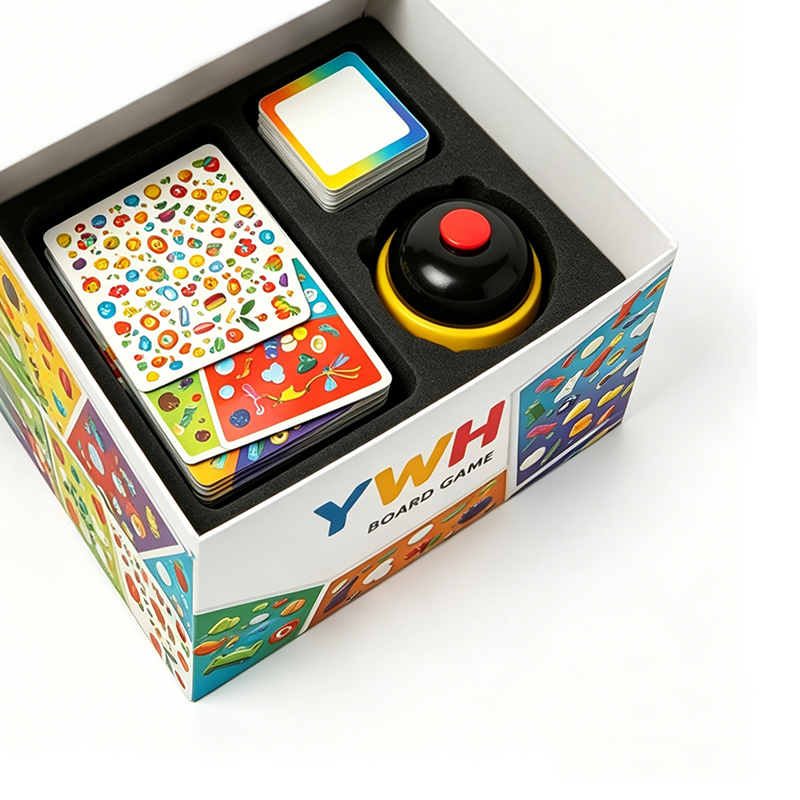
| Packaging | Custom packaging, including color boxes | Packaging is where OEM and ODM buyers typically have the most freedom |
Operational Fit: MOQ, Lead Time, Payment, Capacity, and Quality Control
The commercial framework is identical across the three routes, which makes the route decision a control decision rather than a cost decision. The numbers below are the ones buyers should plan around.
- MOQ: 1,000 units. The same entry volume applies to OEM, ODM, and full-custom programs, so a first production run can validate the market before a larger commitment.
- Lead time: 25–45 days. The window covers production; full-custom programs add development time in front of it because the card specification is still being defined.
- Payment: 30/70 T/T. A 30% deposit with the 70% balance on terms keeps cash flow aligned with the production schedule.
- Monthly capacity: 80,000 units. A 10,000-unit program sits comfortably inside one production month, and repeat volumes can build on the same specification without re-qualifying the deck.
- Quality control: 100% testing. Cards are tested rather than sampled, which matters most for decks where print registration and cutting accuracy carry the brand.
- Export and after-sales. Production is 100% export-oriented, with the US, EU, UK, and Asia as core markets and remote after-sales support for ongoing programs.
The manufacturing base behind these numbers is a 55,000 m² factory in Hai Phong City, Vietnam, established in 2006, employing 280 people with an annual output of 1,000,000 units and a 25-engineer R&D team. Certifications include ISO 9001:2015, SMETA, BSCI, and FSC. For an importer, that combination answers the two questions that usually slow a card game project down: whether the factory can hold quality at volume, and whether the documentation will clear retail compliance review.
Step-by-Step: How a Card Game Project Moves Through Production
A card game program follows six stages regardless of route. The route changes how much work happens in stage two.
- Define the product and the target market. Decide whether the deck is a party card game, an adult card game, a family or kids card game, a tarot deck, a travel game, or a standard playing card product. Market determines compliance requirements, and compliance determines which factories can quote.
- Choose the route. OEM if the design and artwork are finished, ODM if speed matters more than structural originality, full-custom if the card architecture is part of the product's value.
- Lock the specification. Confirm card size, paper weight between 128–400 gsm, CMYK or Pantone printing, corner style, surface finish, card edge, and packaging. Every unlocked parameter is a change order later.
- Complete the file and compliance check. Artwork is prepared for print, and certification documentation — ISO 9001:2015, SMETA, BSCI, FSC — is confirmed against the destination market's requirements, including EN 71 for toy-safety compliance.
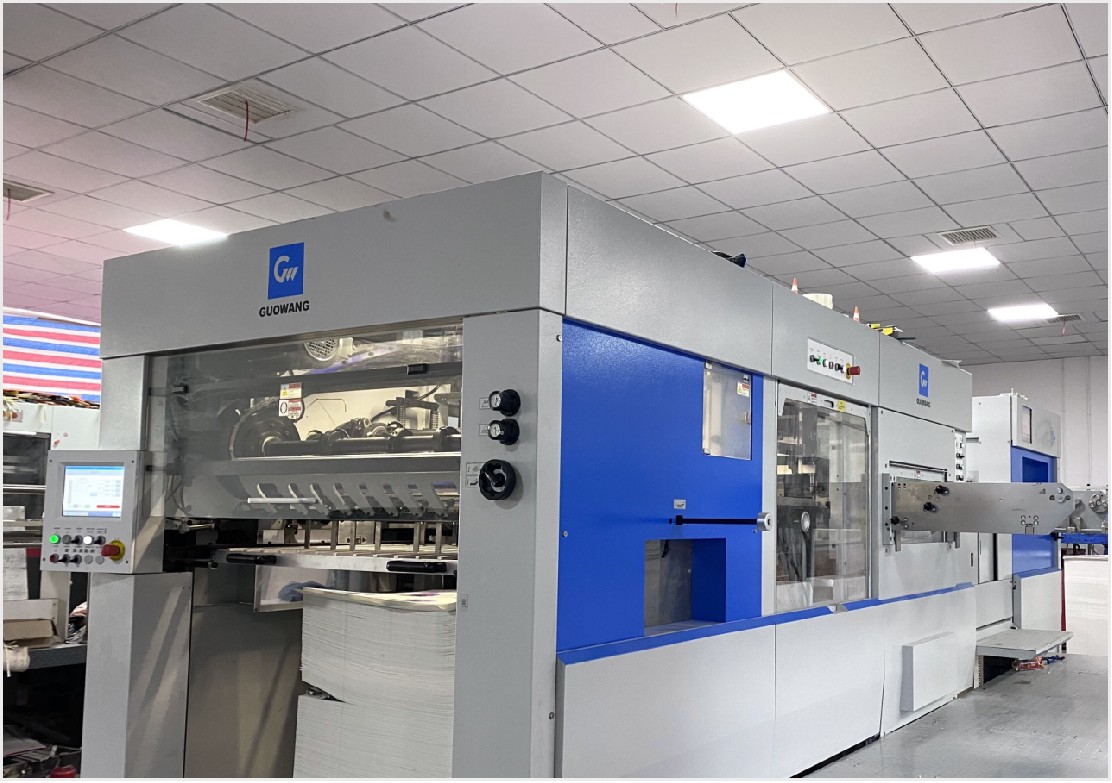
- Produce with in-process control and 100% testing. Printing, lamination, varnishing, die cutting, and edge treatment run in sequence, followed by full inspection before packing.
- Pack, ship, and plan the repeat run. Packaging protects the deck and carries the brand; the production record then becomes the baseline for the next order, which is where the cost of a stable specification starts to show.
Use Cases: Matching the Route to the Deck
The right route depends less on order size than on how much of the deck the buyer controls. The scenarios below show where each route tends to land.
Adult party and drinking games
Adult card games, drinking games, couples card games, and party games live or die on content. If the content set is settled and the structure is conventional, ODM gets the deck to market fastest. If the deck needs a signature finish, a colored or gold foil edge, or a non-standard card size, full-custom is the route that delivers it. Both fit the 1,000-unit MOQ.
Family, kids, and educational decks
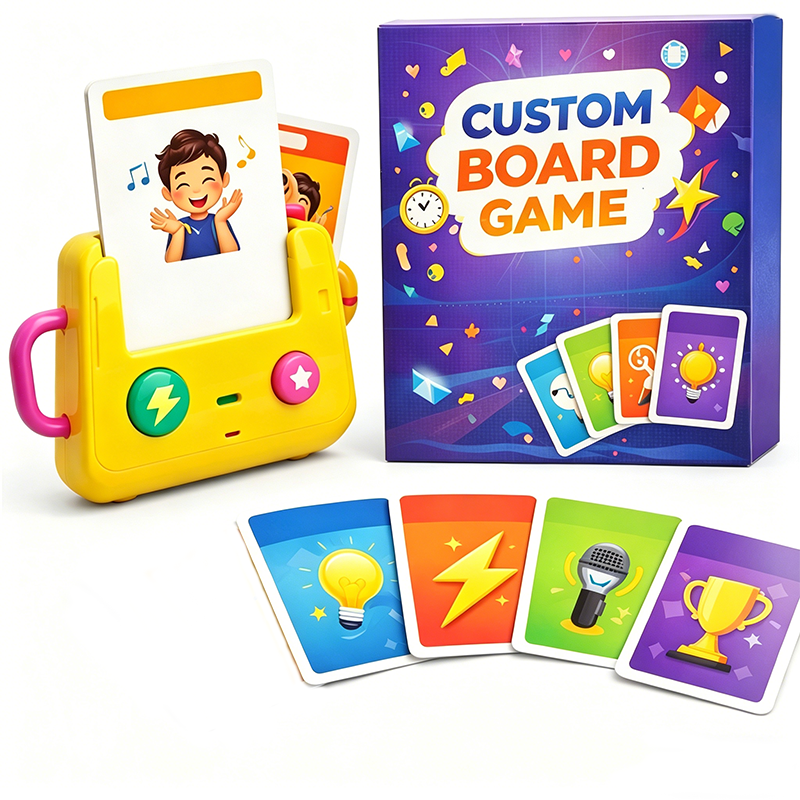
Kids card games and educational card games carry safety requirements that remove some shortcuts: non-toxic ink, child-safe rounded edge treatment, and FSC compliant raw materials. Deck functions in this segment include family fun, interaction, kids education, enterprise promotion, and brand display, which means the packaging often does as much commercial work as the cards.
Tarot and oracle decks
Custom illustration is now the norm rather than the exception — 61% of new tarot decks feature custom illustrations (Technavio / 360 Research Reports). That statistic alone pushes most tarot projects into full-custom or a heavily adapted ODM route, because the artwork brief usually sets the card proportions and the finish.
Travel and compact-format games
Travel games for adults and card games for kids shrink the physical product, not the specification. Card size becomes a design variable, which is exactly the parameter that separates full-custom from ODM.
Playing cards, poker decks, and promotional decks
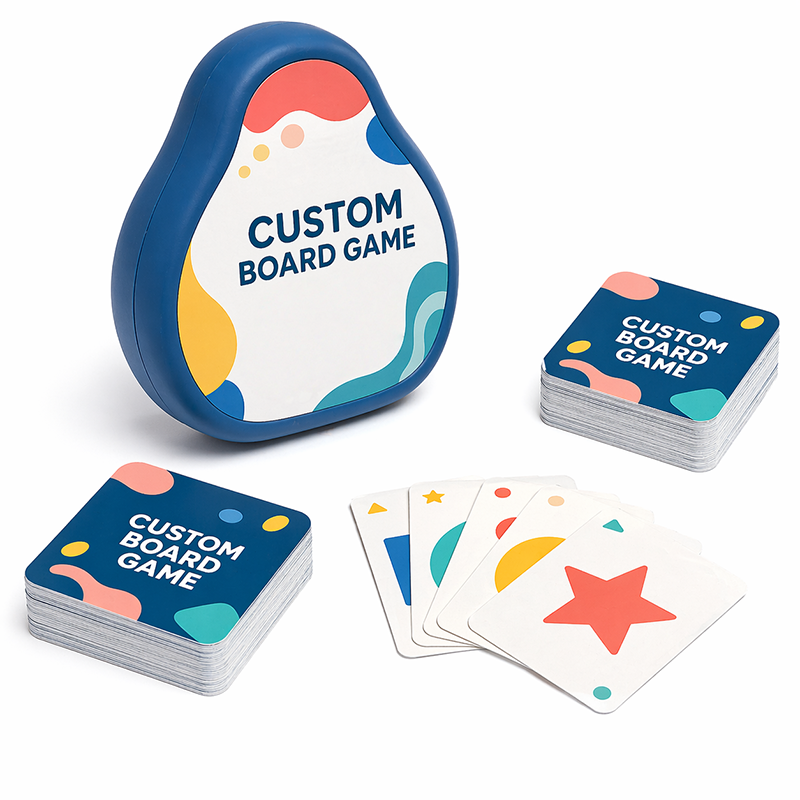
Playing cards, poker cards, and promotional decks are the most specification-stable products in the category, which makes them the natural home for OEM programs. Enterprise promotion tables, brand giveaways, and retail playing card lines all run on the same logic: the artwork is final, the format is standard, and consistency between print runs is the entire quality story.
Case evidence from Yawanhong's production record shows how that plays out at scale. A five-year OEM board game and card game program running at 10,000 units for online sales across the US, Germany, the Netherlands, Spain, France, Italy, the UK, Japan, and South Korea reported stable quality, clear printing, sturdy construction, neat cutting, and eco-friendly materials. The program was supported by fully customized artwork and size, child-safe rounded edge treatment, FSC certified raw materials, and one-stop printing and packaging service.
Decision Matrix: Matching Deck Type to Sourcing Route
Use the matrix below to shortlist a route before requesting quotations, then compare factories inside the chosen route.
| Project situation | Recommended route | Reason |
|---|---|---|
| Finished artwork, standard card size, retail playing cards | OEM | Buyer retains design control; production variables are the factory's responsibility |
| New brand entering the category, content-led party or family game | ODM | Lowest development load; structure is already proven |
| Licensed property or proprietary game mechanic | Full-custom | Card structure, finish, and edge treatment must be developed around the mechanic |
| Premium retail deck with foil edge or linen finish | Full-custom | Edge and finish options sit inside the full-custom scope |
| Kids or educational deck | OEM, ODM, or full-custom | Safety requirements — non-toxic ink, child-safe edges, FSC raw materials — apply in every route |
| Enterprise promotion or brand giveaway | OEM | Artwork is brand-led; packaging does the differentiation work |
FAQ
Which certifications should a custom card game manufacturer hold for EU and US retail?
Buyers selling into EU or US retail generally need toy-safety and paper-sourcing documentation alongside factory social-compliance audits. Yawanhong holds ISO 9001:2015, SMETA, BSCI, and FSC, and produces with non-toxic ink, child-safe edge treatment, and FSC compliant raw materials. EN 71 (Toy Safety) and FSC are the two requirements most often raised for custom card games entering EU and US markets.
How much of the deck can actually be customized?
Material, size, color, logo, and packaging are all customizable. On the custom card game specification (model CG-001), card size is custom, paper weight ranges from 128 to 400 gsm, printing is CMYK 4C or Pantone color, corners are round or square, surface finishes include matte lamination, glossy lamination, linen, UV coating, and varnishing, and card edges are standard, colored, or gold foil. Base materials are coated paper, art paper, or a custom stock.
What is the minimum order, and how is it paid?
The MOQ is 1,000 units across OEM, ODM, and full-custom routes, on 30/70 T/T payment terms. Monthly capacity of 80,000 units means a first run can be followed by repeat volumes without changing the specification, which is the point at which unit economics usually improve.
Can one manufacturer produce both adult card games and kids card games?
Yes. Product types cover playing cards, flash cards, tarot cards, poker cards, paper card games, printed photo cards, game cards, and business cards, and deck functions include family fun, interaction, kids education, enterprise promotion, and brand display. Kids decks are built with child-safe rounded edge treatment and non-toxic ink; adult card games, drinking games, couples card games, and party games rely on content, print quality, and finish. Buyers searching for a custom card game manufacturer for adult card games and buyers sourcing kids card games can therefore run both programs through the same production line and the same quality system.
How long does production take, and what is the next step?
Lead time is 25–45 days, with 100% testing before packing. Development time for a full-custom deck sits in front of that window because card size, paper weight, finish, and edge treatment are defined during development. To assess a route against a specific deck, request the Yawanhong manufacturing brochure and specification sheet — it lists the customization options, certification set, and production parameters described in this guide. Contact: info@yawanhong.vn or WhatsApp +1 626 417 3930.
Choosing the Route, Then the Factory
OEM, ODM, and full-custom sourcing options are not quality tiers — they are different distributions of control. OEM returns the most design authority to the buyer while the factory manages production variables. ODM trades structural originality for speed. Full-custom keeps both design and structure with the buyer at the cost of a longer development phase. All three routes at Vietnam Yawanhong Printing Culture Co., Ltd. operate on the same 1,000-unit MOQ, 25–45 day lead time, 30/70 T/T payment structure, 80,000-unit monthly capacity, and 100% testing regime, certified to ISO 9001:2015, SMETA, BSCI, and FSC.
Next Step
Download the Yawanhong VN Group Global Manufacturing brochure for the full customization list, certification set, and production parameters, or contact the team directly to discuss an OEM, ODM, or full-custom card game program.
Download the manufacturing brochure (PDF) | www.yawanhong.vn
Email: info@yawanhong.vn | Tel / WhatsApp: +1 626 417 3930 | Nghia An Industrial Cluster, Vinh Lai Ward, Hai Phong City, Vietnam
Have Questions or Need More Details?
Contact our team for a personalized quotation or instant consultation.
Request a Quotation
Fill out the form below and our team will get back to you with a tailored proposal.
WhatsApp Direct Chat
Prefer to chat in real-time? Message us on WhatsApp for instant assistance & quick answers.
- Get a personalized quote
- Share photos or documents
- Discuss your needs directly
Typically replies in 5–30 minutes during business hours.