Custom Card Games in 2026: What Buyers Should Know Before Ordering Playing Cards, Tarot Decks, and Party Card Games
If you are evaluating options for custom card games in 2026 — whether you need a themed deck of cards, a tarot deck, a drinking game, a party game, or a family-friendly card game — the manufacturing decision matters as much as the game design. This guide compares the most relevant custom card game manufacturing options, explains what buyers must verify, and outlines the production workflow from artwork to delivered set.
Custom card game ordering is a procurement process, not just a printing request. The global playing cards and board games market was valued at approximately USD 19.90 billion in 2024 and is projected to reach USD 31.93 billion by 2030, according to Grand View Research. In the same period, the global trading card game market was valued at approximately USD 7.43 billion in 2024, with projections reaching USD 15.84 billion by 2034, according to Future Market Insights. These numbers explain why brand owners, toy importers, retailers, and game creators are all looking for reliable card game custom printing partners.
This article is a buyer-stage evaluation guide for the primary query custom card game. It covers the categories buyers actually order — including tarot cards, uno card game, drinking games, party games, card games for kids, card games for adults, couples card game, poker cards, and travel games — and explains how to turn that concept into a manufacturable product.
What Exactly Is a Custom Card Game?
A custom card game is any card-based game produced to a buyer's specification, rather than bought off the shelf from a publisher's catalog. The buyer owns the artwork, the rules, the branding, or a combination of these elements, and the manufacturer supplies the manufacturing and packaging.
Within the category of custom card games, manufacturers produce several distinct formats:
- Playing cards / poker cards — a standard deck of cards with custom backs, faces, or packaging.
- Tarot cards — a 78-card deck format with custom illustrations; commonly ordered by spiritual and wellness brands.
- Party games / drinking games — prompt-based or challenge-based card decks for adult social settings.
- Card games for families and kids — educational, matching, or action games for younger audiences.
- Card games for adults — conversation decks, couples card games, and strategy or trivia decks.
- Travel games — compact, lightweight decks designed for use on the go.
- Game card components — card decks that are part of a larger board game or hybrid game.
These formats differ in card size, card stock, finish, printing precision, and packaging requirements. Therefore, listing “custom card game” in an RFQ is not enough. A professional manufacturer needs to know which format you are ordering and which audience the game serves.
Why the Custom Card Game Market Is Growing
Buyers are not searching for “custom card game” by accident. The category is expanding because of a combination of digital distribution, retail shelf space, and consumer behavior.
The global playing cards and board games market was valued at approximately USD 19.90 billion in 2024 and is projected to reach USD 31.93 billion by 2030. The trading card game segment alone was valued at approximately USD 7.43 billion in 2024, with projections to USD 15.84 billion by 2034. These are two different but overlapping categories. The first includes traditional decks and board games; the second includes collectible card games with high-value printed cards.
Additional evidence points to the tarot segment: the tarot cards market is projected to grow by USD 209.7 million from 2024 to 2029 at a CAGR of 3%, with 61% of new decks featuring custom illustrations. For a manufacturer, that statistic is a practical signal: a large share of new tarot products require custom artwork and therefore custom manufacturing.
One important regulatory note for buyers importing into the United States: US Customs (CBP) reclassified plastic-coated paper card games under HTSUS 9504.40.00 as duty-free effective March 18, 2024. This change makes sourcing custom card games from overseas manufacturers more attractive for US-based brands and importers.
According to UN Comtrade / WITS, China's exports of playing cards (HS 950440) reached approximately USD 303.1 million in 2024, ranking as a top global exporter. However, buyers should remember that customs classification is not the same as market origin. Vietnam has become a significant manufacturing base for card games and board games, especially for US and European importers seeking a stable supply base outside China.
What Buyers Are Searching For in 2026
In 2026, buyers typically combine the phrase “custom card game” with a specific game format or a specific end-user. The most common purchasing directions we see from importers and brand owners are:
- Tarot cards — full-bleed custom illustration decks, typically 78 cards plus an optional guidebook and rigid tuck box.
- Uno card game style products — branded or inspired action-and-color card games. Important: “UNO” is a Mattel property. Mattel's UNO property is the #1 global property in the Games category, so buyers should avoid using that trademark unless they have a license. Purchase custom card game printing for original mechanics instead.
- Drinking games / party games — durable, easy-to-hold prompt cards that survive frequent handling in social environments.
- Card games for kids — round-corner cards, child-safe finishes, and low-risk components.
- Card games for adults — conversation decks, couples card games, and party question decks.
- Travel games — lightweight decks with compact packaging.
- Poker cards — premium card stock with a smooth shuffle feel and casino or semi-custom branding.
- Family card games — games that are simple enough for children but engaging enough for parents.
- Card games for families — similar, but framed with multi-family play in mind.
All of these formats fit under the same manufacturing roof, but they require different specifications. The following sections explain the key comparison points.
Types of Custom Card Games and Their Manufacturing Differences
1. Standard Playing Cards and Poker Cards
Playing cards and poker cards are the most familiar format. Buyers usually select a card size such as 63 × 88 mm or 57 × 87 mm, choose a coated paper or art paper stock, and decide between matte lamination, glossy lamination, linen finish, UV coating, or varnishing. The card edge can be standard, colored, or gold foil.
2. Tarot Cards
Tarot decks are usually larger than poker cards to display illustrations clearly. Custom tarot projects often involve a 78-card deck, a guidebook, and a rigid box. The tarot cards market is projected to grow by USD 209.7 million from 2024 to 2029 at a CAGR of 3%, with 61% of new decks featuring custom illustrations — which means most new decks cannot rely on standard templates.
3. Uno Card Game and Knockoff Risks
“UNO” is a trademarked Mattel property. Mattel's UNO property is the #1 global property in the Games category. A manufacturer who prints a deck that copies UNO's name, back design, or distinctive mark creates legal exposure for the buyer. If your goal is to sell a color-and-action game, create your own name, artwork, and rules. Custom card game printing can turn an original concept into a professional product without infringing on a market leader's IP.
4. Drinking Games and Party Games
Party and drinking game cards should be resistant to moisture and frequent handling. Laminated cards are usually preferred because they are easier to wipe clean and less likely to bend. Since these games are used by adults in loose social settings, durability matters more than price per deck.
5. Card Games for Kids and Families
Kids' card games require rounded corners to avoid sharp edges, child-safe printing finishes, and strong card stock that survives repeated play. Family card games must work for mixed age groups, which usually means large, legible icons and intuitive rules. These ordering criteria are part of the product specification, not the manufacturer's choice.
6. Card Games for Adults and Couples Card Games
Adult card games and couples card games rely on strong copy and illustration quality. Because the packaging is often displayed in retail, buyers invest in custom boxes, foil accents, or unique card finishes. For small-batch test runs, laser cutting, foil stamping, and premium boxes are still possible but will affect the unit price.
7. Travel Games
Travel games for adults and kids must be compact and lightweight. A card deck in a small tuck box is easier to pack than a full board game. Buyers often request water-resistant coatings and tear-resistant card stock for luggage handling.
Key Considerations for Custom Card Game Manufacturing
Card Size and Shape
Card size is fully customizable in most factories. Standard poker cards are 63 × 88 mm, but tarot cards, flash cards, travel cards, and game cards use other dimensions. The manufacturer should support custom dimensions; do not assume your design must fit a fixed die.
Paper Weight and Card Stock
Card stock is typically specified in grams per square meter (gsm). A typical range for custom card games is 128–400 gsm, depending on the card type. Poker cards are usually around 280–330 gsm with a smooth finish. Tarot cards may use 300–350 gsm for stiffness. The exact stock should be chosen after confirming the number of cards in the deck and the intended use.
Printing Process
CMYK offset printing is the standard for card games with detailed artwork. Pantone color printing is available when a brand color must be exact. Offset printing is suitable for most custom card game orders, especially medium-to-large runs.
Surface Finish
The finish affects the feel, shuffle, durability, and appearance. Options include matte lamination, glossy lamination, linen finish, UV coating, and varnishing. For tarot cards, matte lamination is popular because it reduces glare. For poker cards, linen finish mimics a traditional casino feel. For children's cards, a matte or soft-touch coating can be pleasant to handle.
Card Edge and Corner Styles
Card corners can be round or square. Rounded corners are safer for children and more convenient in play. Card edges can be standard white-core, colored-core, or gold foil. Colored-core edges look premium but cost more. Standard edges are acceptable for most custom card games.
Packaging
Custom card games are not complete without packaging. A tuck box is the most common choice for a single deck. A rigid box is used for premium tarot decks, couples card games, and game sets. The manufacturer should provide one-stop printing and packaging so that the box design and card design are produced by the same team.
Compliance and Certifications
If your cards will be sold in EU or US retail markets, the manufacturer should be able to provide social compliance and environmental certifications. Common standards include:
- FSC (Forest Stewardship Council) — for sustainable paper sourcing. In practice, this means FSC-certified raw materials and a Chain of Custody certificate.
- BSCI (amfori) — a social audit that verifies factory working conditions.
- SMETA — a Sedex social compliance audit covering labor standards, health and safety, and ethics.
- ISO 9001 — a quality management system certification.
EN 71 (Toy Safety) is commonly required for card games intended for children in the EU. Buyers should confirm which standard applies to their target market before placing an order.
Comparison: Yawanhong vs. Other Custom Card Game Manufacturing Options
When buyers evaluate custom card game suppliers, they usually compare a set of concrete criteria: location, certifications, MOQ, capacity, quality control, range of materials, and ability to produce more than just cards. The table below uses only the verified facts from Yawanhong's published manufacturing profile and publicly available category information.
| Comparison Point | Vietnam Yawanhong Printing Culture Co., Ltd. | Typical China-based Card Game Printers |
|---|---|---|
| Location & production base | Nghia An Industrial Cluster, Vinh Lai Ward, Hai Phong City, Vietnam | Various cities in China, often Shenzhen, Dongguan, or Shanghai |
| Main export markets | 100% export; main markets include USA and Europe | Global, including USA and Europe |
| Founded / track record | Established December 5, 2006; factory area 55,000 m²; 280+ employees | Varies by factory; some established 10–20 years |
| Product scope | Board games, card games, puzzles, notebooks, color boxes, publications, plastic toys, plush toys, wooden toys | Many specialize in printing and card games; some also produce board games and boxes |
| Certifications | FSC (ESTS-COC-241865), BSCI (26-0387346), SMETA (ZAA600202718), ISO 9001 (710925) | Varies; top export factories commonly hold FSC, BSCI, ISO 9001, and sometimes Disney FAMA |
| Main card game specification | Card size custom; paper weight 128–400 gsm; CMYK or Pantone; matte lamination, glossy lamination, linen, UV, varnishing; round or square corners; standard/colored/gold foil edges | Similar technical range is common in export-oriented factories |
| Monthly production capacity | Monthly capacity: 80,000 units on an OEM/ODM basis | Varies widely; large factories can exceed this |
| MOQ | 1,000 units | Typically 1,000–3,000 units for custom decks |
| Quality control | 100% test before shipment | Varies; reliable factories often claim 100% QC on critical orders |
| One-stop service | Printing + packaging + accessories (e.g., puzzles, boxes, toys) | Depends on factory vertical integration |
Note: This comparison is not a claim that one supplier is “better” than another. It gives buyers a structured way to ask questions. For example, a buyer whose biggest risk is supply-chain concentration may prefer Vietnam. A buyer whose priority is the lowest cost per deck may find a China-based supplier more competitive. The right choice depends on order size, required certifications, IP risk, target market, tariff exposure, and launch timeline.
Custom Card Game Case Example
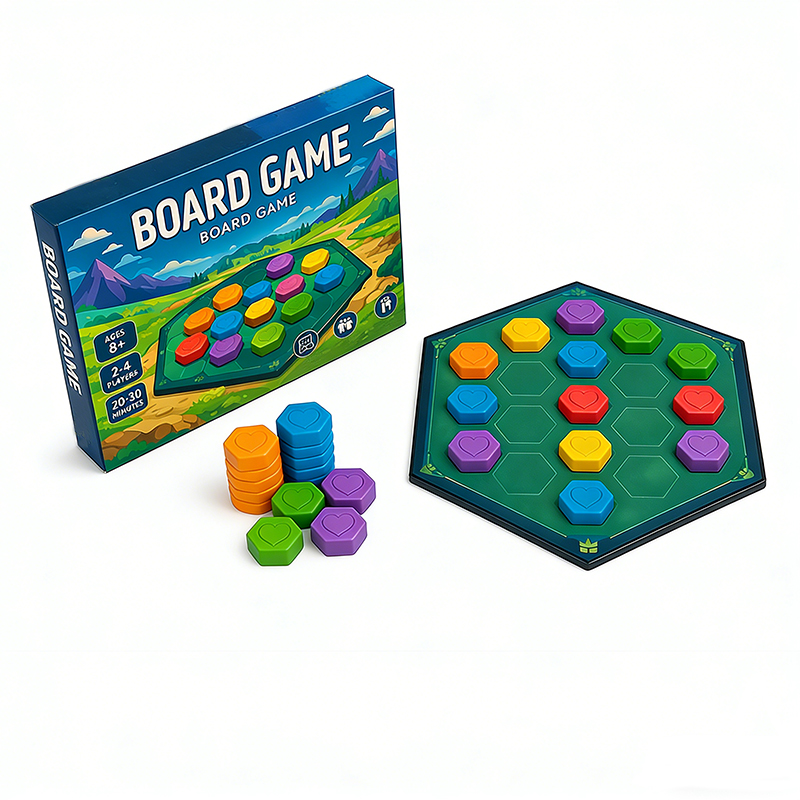
Vietnam Yawanhong Printing Culture Co., Ltd. has produced custom card games for OEM board game and card game clients from the US, Germany, Netherlands, Spain, France, Italy, UK, Japan, and Korea. The case project has run for five years with a quantity of 10,000 units, used for online sales.
The project outcome can be described in a single sentence: stable quality, clear printing, sturdy construction, neat cutting, and eco-friendly properties. The manufacturing highlights included full customization of artwork and size, child-safe rounded edge treatment, FSC-certified raw materials, and one-stop printing and packaging service.
For buyers, this case is not proof that one supplier is universally correct. It is evidence of a repeatable production model: long-term OEM projects with a medium recommended initial run of 10,000 units, full artwork customization, and compliance with FSC material sourcing.
Step-by-Step Workflow for Custom Card Game Manufacturing
A custom card game is an engineered product. The following workflow explains how buyer and manufacturer responsibilities are usually divided.
- Define the game concept and target audience. Decide the game type, number of cards, player count, age range, and retail price point.
- Choose the card format and packaging. Specify tarot cards, poker cards, flash cards, party game cards, or another format. Choose tuck box, rigid box, or additional components.
- Prepare complete artwork. The buyer supplies the design. The manufacturer supplies die-cutting templates and technical printing requirements.
- Request a pre-production sample. A physical proof is necessary before mass production, especially for custom card games with complex artwork or special finishes.
- Confirm materials and finishes. Select paper weight, coating, corner style, and edge treatment. If you are unsure, ask the manufacturer for recommendations based on card count and use case.
- Review and sign a production contract. The contract should include MOQ, lead time, quality control process, packaging, and shipping terms.
- Approve the mass production sample. This is the last point to change colors, text, or finishing details.
- Production and 100% quality control. For Yawanhong, mass production follows a 100% test policy, meaning each card game unit is inspected before dispatch.
- Packing, shipping, and after-sales support. The manufacturer arranges export packing and shipping documentation. Remote after-sales support is available after delivery.
This workflow is not unique to Yawanhong, but the level of discipline varies. Buyers should ask any candidate manufacturer to describe their sample procedure, defect control, and worst-case shipping scenarios before signing.
Custom Card Game Use Cases and Which Options Fit
Use Case 1: Independent game creator launching a crowdfunding campaign
You need a low MOQ and a professional sample for photography. A 1,000-unit MOQ can be acceptable for early testing; for a smaller campaign, look for a manufacturer who can support staged orders.
Use Case 2: Retail chain ordering a branded family card game
Compliance becomes critical. Confirm EN 71 or applicable toy safety standards, rounded corners, and durable card stock. You also need consistent repeat orders, so production capacity and quality-control records matter.
Use Case 3: E-commerce brand launching a couples card game or adult party game
Premium packaging and finish create the retail experience. A rigid box with colored edges or gold foil costs more but can justify a higher price point. Lead time and sample quality are often more important than the absolute lowest unit price.
Use Case 4: Publisher producing a tarot deck
Custom illustrations need precise CMYK printing and a surface finish that does not distort colors. Tarot buyers care about card thickness and feel. The manufacturer should support custom sizes above the standard poker deck size and provide both soft and rigid box options.
Use Case 5: Distributor sourcing travel card games
Compactness and cost per unit are the main factors. Choose a small card size, lightweight but tear-resistant paper, and simple packaging. A high-MOQ production line can lower the unit cost, but you must balance inventory risk.
Compliance and Certification Checklist for Custom Card Game Buyers
Before placing an order, verify the following certifications. A manufacturer's website may list certifications, but you should request copies with the exact certificate number and a valid audit date.
| Certification | Why It Matters | Example: Yawanhong Certificate Reference |
|---|---|---|
| FSC COC (Chain of Custody) | Confirms paper and wood-based materials come from responsibly managed forests; required by many EU/US retailers | Certificate No. ESTS-COC-241865, issued by Extensive Standard Technical Services Co., Ltd., valid 2024-11-25 to 2029-11-24; standard FSC-STD-40-004 V3-1 |
| BSCI / amfori Social Audit | Confirms acceptable labor and social conditions in the factory | Certificate No. 26-0387346, issued 2026-04-17, valid to 2028-04-17 |
| SMETA Social Compliance Audit | Confirms labor standards, health & safety, environment, and business ethics | Certificate No. ZAA600202718, issued by LRQA on 2026-05-07 |
| ISO 9001:2015 QMS | Confirms documented quality management for consistent production | Certificate No. 710925, issued by Guardian Independent Certification Ltd, valid 2024-07-24 to 2027-07-23 |
| EN 71 (Toy Safety) / regional standards | May be required for card games intended for children in EU | Confirm with manufacturer per target market |
Key Product Specifications Summary
If your custom card game supplier asks for a short specification summary, the following list reflects the standard parameters used by export-oriented card game manufacturers:
- Card size: custom dimension, e.g., 63 × 88 mm for poker, larger for tarot
- Paper weight: 128–400 gsm / custom
- Printing: CMYK 4C printing / Pantone color printing / custom
- Corner style: round corner / square corner / custom
- Surface finish: matte lamination / glossy lamination / linen / UV coating / varnishing / custom
- Card edge: standard / colored / gold foil / custom
- Materials: coated paper / art paper / custom
Budget, MOQ, and Lead Time: What Buyers Should Ask
Three questions appear in almost every custom card game RFQ:
What is the MOQ?
A reasonable MOQ for custom card game printing is 1,000 units. Yawanhong lists 1,000 units as its MOQ for OEM/ODM production. Lower MOQs are sometimes possible for sample orders, but the per-unit cost will be higher. For a retail launch, 1,000 units is enough for market testing but too small for a major retail chain.
What is the lead time?
The lead time depends on order type. For custom card games, a 25–45 day lead time is common when samples are approved and materials are in stock. More complex packaging, special finishes, or seasonal peak periods can extend this range. Ask the manufacturer to quote lead time separately for artwork confirmation, sample approval, production, and shipping.
How is pricing structured?
Custom card game unit price depends on card count, card stock weight, surface finish, box type, artwork complexity, and order quantity. In a cost breakdown request, ask for separate line items: printing, card material, packaging, assembly, and quality control. This helps you identify where savings can be made without sacrificing quality.
Risks Buyers Should Control
IP Risk with Popular Game Names
Buyers sometimes describe a product as an “uno card game” or a “poker card set.” Terms like “UNO” and “poker” are not interchangeable. UNO is a protected Mattel brand and the #1 global property in the Games category. You can print custom card games with original mechanics that resemble a shedding-type game, but you must not copy the UNO name, logo, card back, or trade dress. For poker, you can produce a custom deck of cards for playing poker without using a protected design.
Tarot Card Cultural and Illustration Accuracy
Tarot buyers often expect specific card names, numbers, and symbolic elements. If the project includes custom illustrations, confirm that the artist has delivered the correct number of cards and that the card names match the system you intend to follow.
Child-Safety and Legal Compliance
If the card game is intended for children, rounded edges and non-toxic finishes are not optional. Confirm which toy safety standards apply in your target country. For the EU, EN 71 is the standard commonly cited. For the US, CPSIA-related requirements may apply. A qualified manufacturer will state which standards they can meet.
Fading and Wear in Travel and Party Games
Travel games and party games are handled by many people. A deck printed only with standard offset and no lamination may scuff quickly. For these use cases, request lamination or UV coating and check the manufacturer's sample for shuffle wear.
FAQ: Custom Card Game Manufacturing and Sourcing
Which compliance certifications should a custom card game manufacturer hold?
A custom card game manufacturer should ideally hold a combination of social compliance, quality management, and environmental certifications. For US and EU retail, examples include FSC (for responsibly sourced paper), BSCI or SMETA (for labor and social standards), and ISO 9001 (for quality management). If your target market is the EU and the game is for children, EN 71 toy safety requirements typically apply. For example, Yawanhong holds FSC certificate number ESTS-COC-241865, BSCI certificate number 26-0387346, SMETA certificate number ZAA600202718, and ISO 9001 certificate number 710925. Always verify the validity and scope of the certificates directly with the manufacturer.
Can a custom card game be produced for tarot, party, kids, adult, and travel game formats in one factory?
Yes. Tarot cards, party games, drinking games, family card games, kids card games, adult card games, travel games, and poker cards are all card-game printing formats. In a factory like Yawanhong, the product line covers custom card games with customizable card size, paper weight from 128 to 400 gsm, CMYK or Pantone printing, round or square corners, and finishes such as matte lamination, glossy lamination, linen, UV coating, or varnishing. The manufacturing process differs only in the specific parameters, materials, and packaging selected for each format.
What is the MOQ and typical lead time for custom card game printing?
A common MOQ for custom card game printing from an export manufacturer is 1,000 units per design. Yawanhong lists a 1,000-unit MOQ for OEM/ODM card game manufacturing and a monthly production capacity of 80,000 units. Lead time is typically 25–45 days after artwork approval or sample confirmation, depending on card count, packaging, and production schedule. For a precise timeline, request a production plan from the manufacturer.
Why are custom tarot cards growing in popularity?
The tarot cards market is projected to grow by USD 209.7 million from 2024 to 2029 at a CAGR of 3%, and 61% of new decks feature custom illustrations. This means many releases are independently created rather than drawn from a publisher's standard template. Custom tarot projects usually require larger card sizes, precise printing of illustrations, and premium packaging such as a rigid two-piece box. For those projects, custom card game printing with FSC-certified paper and personalized surface finish is a common requirement.
Are there any restrictions on printing a deck that looks like an uno card game?
Yes. UNO is a Mattel brand and is the #1 global property in the Games category. Copying its name, logo, card back, or distinctive design is a trademark infringement risk. You can still create a custom card game with original mechanics, original artwork, and your own brand name, and have it produced by a custom card game manufacturer. The IP-safe approach is to submit your own artwork and ask the manufacturer to print only the files you provide.
Can I get a sample before placing a full production order?
Yes. A pre-production sample is the standard way to verify printing quality, card stock, surface finish, and packaging before mass production. For custom card game buyers, the sample is also the legal and visual confirmation of the product you intend to sell. A reasonable manufacturer will ask for artwork files, confirm specifications, produce a sample, and only then move to production. If you are evaluating a longer-term partnership, this is also a good stage to request a quote including MOQ, lead time, and quality-control information. You can contact Yawanhong at info@yawanhong.vn or +1 626-417-3930 to request a sample or a quote.
What Is a Good Custom Card Game Manufacturer?
Instead of asking “which manufacturer is the best,” buyers should ask “which manufacturer is best for my order profile.” A good custom card game manufacturer should score well on five criteria:
- Technical range. The factory should offer the card size, paper weight, finish, and edge options your game requires.
- Compliance and audit history. FSC, BSCI, SMETA, ISO 9001, and any customer-driven audits are signs that the factory can serve regulated markets.
- Production capacity and quality control. Monthly capacity, 100% test policies, and stable repeat orders matter more than a persuasive sales page.
- One-stop production and packaging. A supplier that also produces boxes, puzzles, board games, notebooks, and other components can keep your project under one roof, reducing coordination risk.
- Communication and after-sales support. Remote support capabilities and responsive documentation indicate a professional export operation.
For a more detailed look at Yawanhong's factory profile, certifications, production equipment, and product range, you can download the global manufacturing brochure: Yawanhong VN Group Global Manufacturing PDF.
Conclusion: Choosing the Right Custom Card Game Manufacturing Path
The custom card game market is large enough that buyers can afford to be selective. In 2024, the global playing cards and board games market was worth approximately USD 19.90 billion, with a projection of USD 31.93 billion by 2030. The trading card game market was valued at approximately USD 7.43 billion in 2024, with projections reaching USD 15.84 billion by 2034. Tarot cards alone are projected to grow by USD 209.7 million from 2024 to 2029 at a 3% CAGR. These figures describe a category that is still expanding, which is why new brands, importers, and designers continue to enter it.
To source a custom card game successfully, define the exact game format first — tarot cards, party game, kids game, adult card game, travel game, or poker cards. Then confirm the technical specifications: card size, paper weight, printing process, surface finish, corner style, card edge, and packaging. Verify certification evidence that matches your target market. Finally, compare manufacturers using structural criteria rather than marketing language.
Vietnam Yawanhong Printing Culture Co., Ltd. is one production option worth evaluating. The company was established on December 5, 2006, operates a 55,000 m² factory in Hai Phong, Vietnam, and exports 100% of its output, primarily to the USA and Europe. It offers OEM/ODM manufacturing with a monthly capacity of 80,000 units, a 1,000-unit MOQ, 25–45 day lead time, and 100% quality testing. The factory's product scope includes custom card games, board games, puzzles, notebooks, color boxes, publications, plastic toys, plush toys, and wooden toys.
If you are ready to move to the next step, a sample or quote is the clearest way to test whether the factory can meet your specifications. Contact Vivian at info@yawanhong.vn or +1 626-417-3930, or download the company brochure to review the factory in advance.
Ready to discuss your custom card game project?
Email info@yawanhong.vn · Call/WhatsApp +1 626-417-3930
Request a quote, a sample, or the manufacturing brochure.
Have Questions or Need More Details?
Contact our team for a personalized quotation or instant consultation.
Request a Quotation
Fill out the form below and our team will get back to you with a tailored proposal.
WhatsApp Direct Chat
Prefer to chat in real-time? Message us on WhatsApp for instant assistance & quick answers.
- Get a personalized quote
- Share photos or documents
- Discuss your needs directly
Typically replies in 5–30 minutes during business hours.