
How to Fix Your Custom Card Game's Biggest Problem: Certification Gaps Explained
The short answer: a certification gap is any situation where a certificate your buyer, retailer or marketplace requires is missing, expired, out of scope, or issued to a different legal entity than the factory that actually prints your decks. It is fixed before production starts — by verifying ISO 9001:2015, SMETA, BSCI and FSC documentation at quotation stage, not at shipping stage.
Custom card game projects rarely collapse because of artwork or paper. They collapse because of a document nobody requested until the container was already booked: a social audit report that lapsed months ago, an FSC chain-of-custody certificate that covers paper gift boxes but not card decks, or a quality certificate held by a trading company rather than the plant that runs the presses. By the time the gap appears, tooling is cut, cards are printed, and the launch date is already exposed.
This guide is for importers, brand owners, distributors and product managers sourcing custom card games — tarot decks, party games, family games, kids card games, drinking games, playing cards and OEM card programs. It explains how certification gaps form, why they now decide whether a shipment moves, which four certificates close the most common gaps, and how to run a verification workflow that catches problems while they are still cheap to fix. Certificate details referenced throughout come from the certification records of Vietnam Yawanhong Printing Culture Co., Ltd., a Vietnam-based custom printing and game manufacturer.
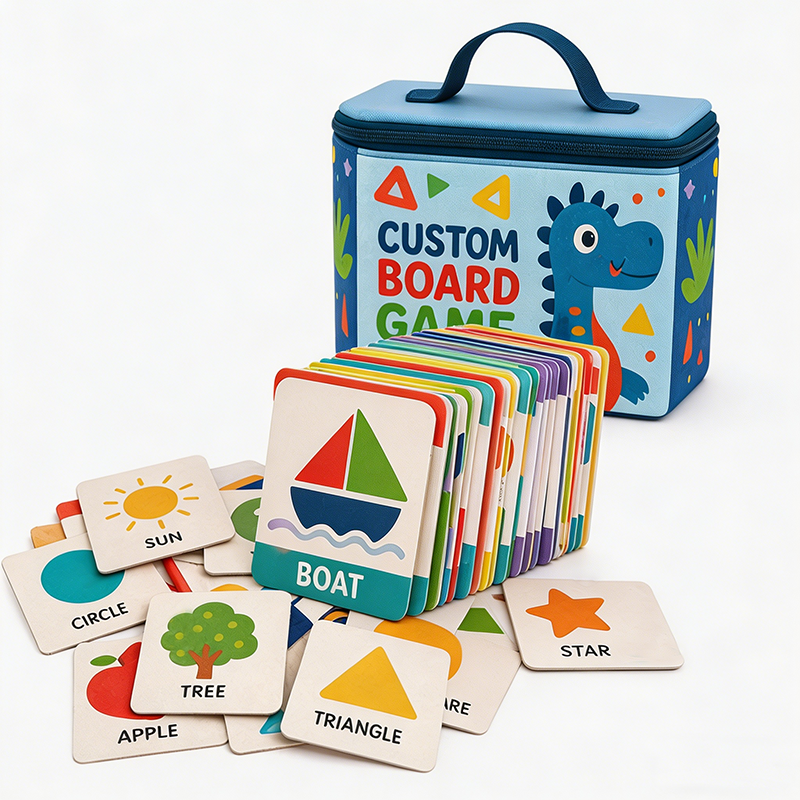
What Counts as a Certification Gap
A certification gap is not the same thing as "the supplier has no certificates." A gap exists when the paperwork and the purchase do not match. In practice, gaps appear in four forms.
- Missing. The scheme the buyer requires — a social audit or a chain-of-custody certificate, for example — is simply not held for the product category being ordered.
- Expired. The certificate existed when the sample was approved but lapsed before the bulk run, or lapses before the retailer's onboarding or listing date.
- Out of scope. The certificate is real and valid, but the scope wording covers paper boxes, notebooks or board games and does not name the card game formats you are buying.
- Entity mismatch. The certificate belongs to a trading company, an agent, or a different production site than the one manufacturing your decks.
The reason these gaps surface so late is structural, not accidental. In a typical custom card game timeline, design and prepress come first, then sampling, then die-cutting and printing, then finishing, collation and packing. Certificates are normally requested last, together with the commercial invoice and packing list. Every step at which a gap could have been caught cheaply has already been paid for by the time the documents are finally read.
The cost pattern is also asymmetric. A missing social-compliance or toy-safety document rarely stops printing; it stops the shipment, the listing, or the retail program the decks were produced for. That is why experienced buyers treat certification as a sourcing constraint — a filter applied before quotes are compared — rather than as a shipping formality.
| Gap type | How it shows up | Where to fix it |
|---|---|---|
| Missing scheme | Retailer requests a social audit or chain-of-custody document the plant does not hold | Before quotation: confirm the scheme by name |
| Expired certificate | Certificate valid at sampling, lapsed at production or onboarding | Before PO: map expiry dates against the production calendar |
| Scope mismatch | Certificate covers boxes or notebooks but not card games | Before sampling: read the scope line against your exact product |
| Entity mismatch | Certificate held by a trading entity instead of the producing site | Before contracting: match the certificate holder to the manufacturing site |
Why Compliance Evidence Now Decides Shipments, Not Just Listings
Custom card games sit in one of the fastest-moving segments of the toys and games category, and the paperwork requirement has grown alongside it. Grand View Research valued the global playing cards and board games market at approximately USD 19.90 billion in 2024, with a projection of USD 31.93 billion by 2030. Future Market Insights put the global trading card game market at approximately USD 7.43 billion in 2024, projected to reach USD 15.84 billion by 2034. On the collector and gift side, Technavio and 360 Research Reports project the tarot cards market to grow by USD 209.7 million between 2024 and 2029 at a CAGR of 3%, with 61% of new decks featuring custom illustrations.
Sourcing is concentrated, which raises the compliance bar rather than lowering it. China's exports of playing cards under HS 950440 reached approximately USD 303.1 million in 2024, according to UN Comtrade and WITS data, and Vietnam-based plants serve a growing share of US and European programs. Custom card manufacturers must generally be able to demonstrate adherence to EN 71 (Toy Safety) and FSC sustainable paper sourcing to enter EU and US retail markets.
Two regulatory details show how tightly compliance, materials and classification are now linked:
- Material claims are audited. A responsibly-sourced or recycled paper claim is only defensible with a chain-of-custody document behind it, which is why FSC status is checked during retail onboarding rather than at customs.
- Customs classification follows construction. U.S. Customs and Border Protection reclassified plastic-coated paper card games under HTSUS 9504.40.00 as duty-free, effective 18 March 2024. Because classification depends on how a deck is built and coated, the specification sheet your supplier keeps and the certificates it holds need to describe the same product.
The practical consequence for buyers is simple: certificates are now an input to the sourcing decision, not an output of it.
The Four Certificates That Close the Most Common Gaps
Vietnam Yawanhong Printing Culture Co., Ltd. is a Vietnam-based custom printing and game manufacturer established in 2006, operating a 55,000 m² factory in Hai Phong City with 280 employees, a scope that includes board games, card games, puzzles, notebooks, color boxes and toys, and an export orientation of 100% toward US and European markets. Its certificate set answers three different buyer questions — process quality, social compliance, and paper sourcing — and it is worth understanding what each document does and does not prove.
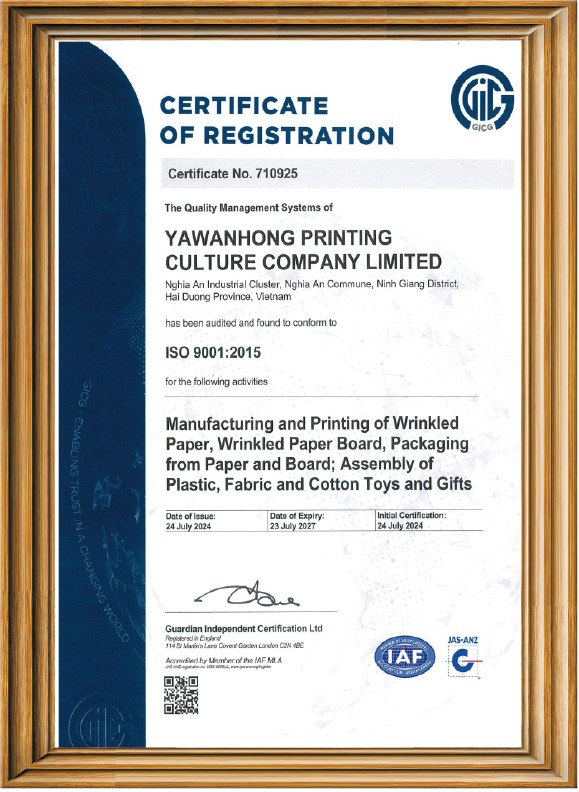
ISO 9001:2015 — quality management system (certificate 710925)
The plant is certified to ISO 9001:2015 for its quality management system by Guardian Independent Certification Ltd, certificate number 710925, issued on 24 July 2024, valid through 23 July 2027, and applicable to the US, Europe and Asia markets. The certified scope covers the manufacturing and printing of wrinkled paper, paper board and paper/board packaging, plus the assembly of plastic, fabric and cotton toys, gifts, custom board games, card games and notebooks.
What it buys you: evidence of a documented, independently audited process — material control, in-process checks, traceability and corrective action. In card production that maps to consistency of print, cutting, collation and finishing across a run and across reorders.
Its limit: ISO 9001 is a management-system certificate. It does not by itself certify that a deck meets toy-safety chemical or mechanical limits.
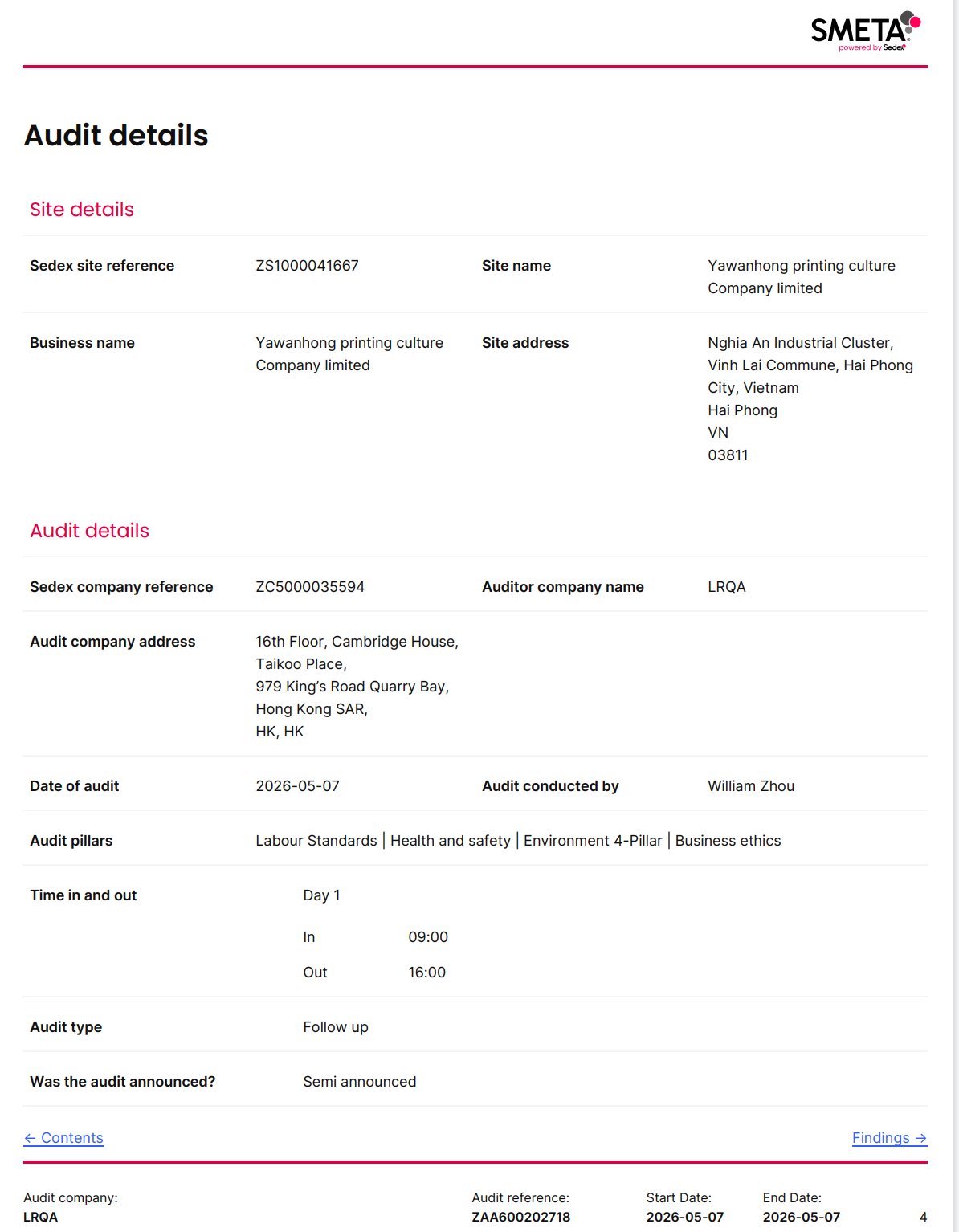
SMETA — social compliance audit (certificate ZAA600202718)
The manufacturer's card game and board game production is covered by a SMETA social compliance audit issued by LRQA, certificate number ZAA600202718, recorded as issued on 7 May 2026, and applicable to the US, Europe and Asia markets. The applicable standards are the Sedex SMETA Code, the ILO Core Labour Standards and the ETI Base Code, and the covered scope includes custom paper printing, board games, card games, paper gift boxes, notebooks and paper puzzles manufacturing.
What it buys you: a third-party audit trail for labour practices — the document most often requested when a retailer's supplier code of conduct, CSR clause or ethical sourcing policy has to be satisfied.
Its limit: it is a social audit. It says nothing about print quality or material safety.
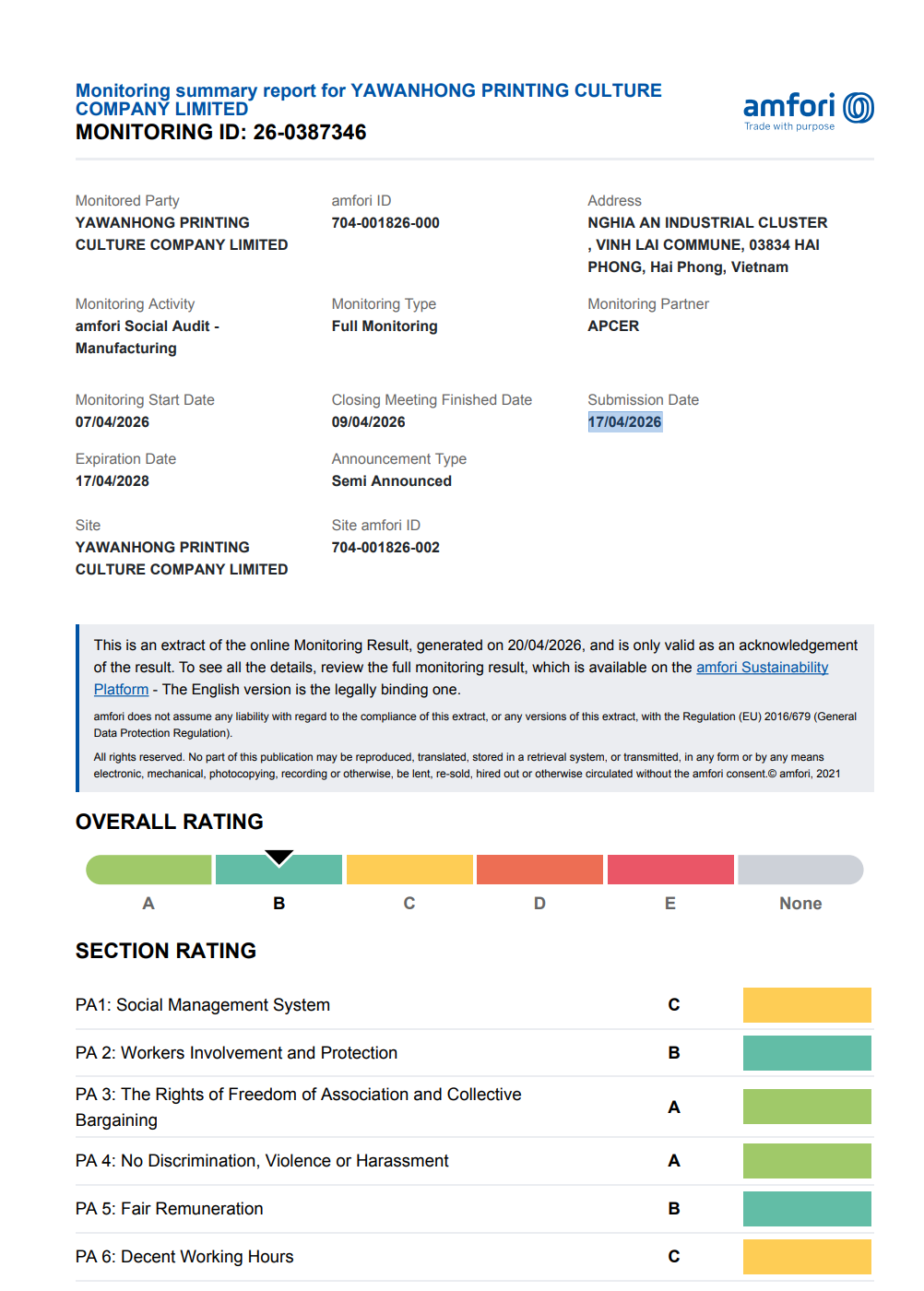
BSCI — amfori social audit (certificate 26-0387346)
The same production scope is certified under BSCI, issued by amfori with certificate number 26-0387346, valid through 17 April 2028 for the US, Europe and Asia markets. The applicable standards are the amfori BSCI Code of Conduct, the ILO Core Labour Standards and the UN Universal Declaration of Human Rights, covering printing products, custom board games, card games, paper boxes, notebooks and paper puzzles.
What it buys you: a second, widely recognised social-compliance framework. BSCI and SMETA answer the same category of question through different schemes and codes, and retailers often name one specifically. If the requirement says BSCI, a SMETA report will not substitute, and vice versa — so confirm the scheme by name before you plan around it.
FSC chain of custody — paper sourcing (certificate ESTS-COC-241865)
Paper sourcing is covered by FSC COC (Chain of Custody) certification, certificate number ESTS-COC-241865, issued by Extensive Standard Technical Services Co., Ltd. under standard FSC-STD-40-004 V3-1, issued on 25 November 2024 and valid through 24 November 2029. The scope covers custom paper printing products, board games, card games, paper gift boxes and notebooks, applicable to the US market.
What it buys you: the chain-of-custody evidence that supports responsibly sourced paper claims on packaging, listings and marketing — the document that turns an eco claim from an adjective into a verifiable statement.
Its limit: FSC addresses fibre sourcing. It does not cover inks, coatings, edge treatments or toy-safety performance.
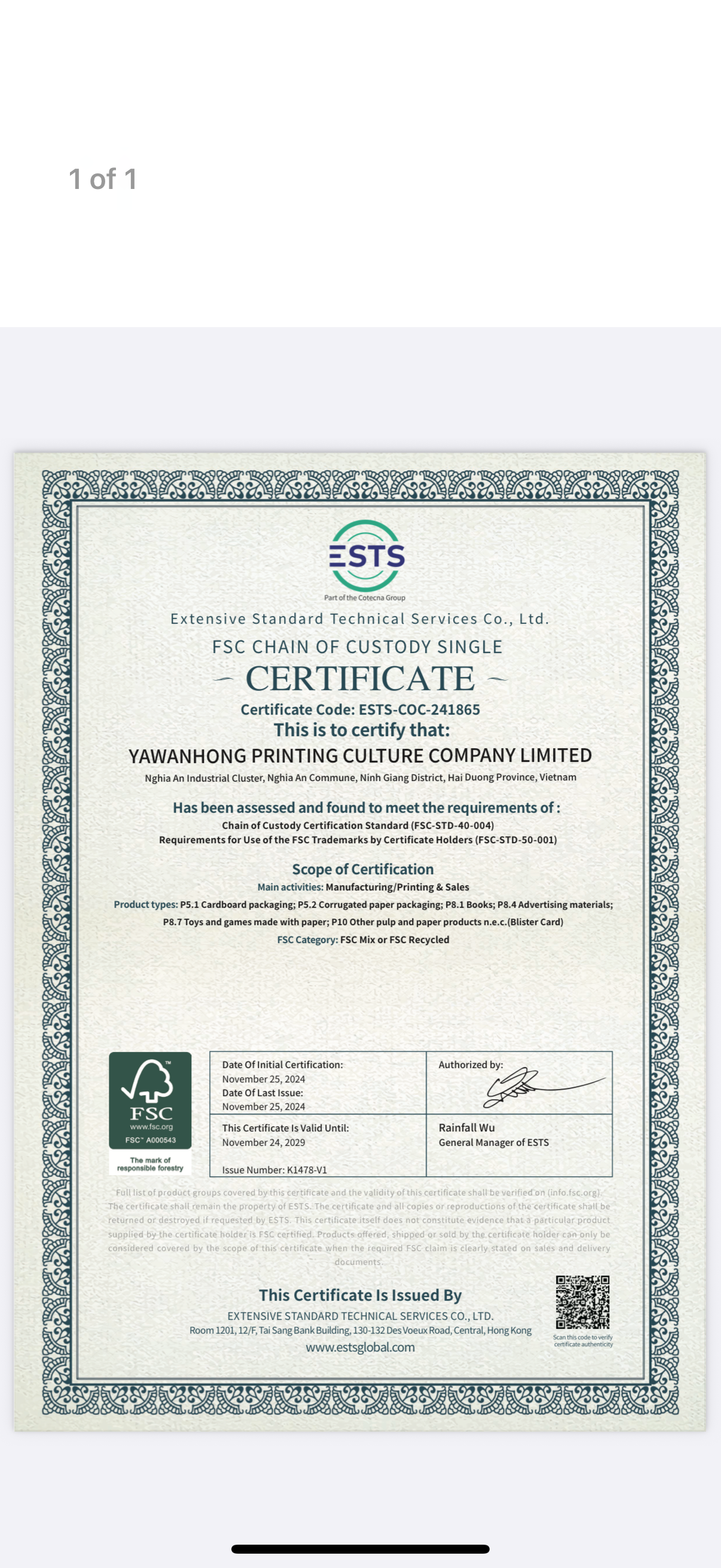
Read together, the four documents answer different questions: can the plant control quality repeatedly (ISO 9001:2015), can it evidence labour standards to a retailer's code (SMETA and BSCI), and can it defend a paper claim with a chain of custody (FSC). A buyer who checks only one of those three questions is still exposed on the other two.
Step-by-Step: A Certificate Verification Workflow for Buyers
The sequence below can be completed inside the quotation stage of a custom card game project. It is deliberately ordered so that each step costs less than the one after it.
Step 1 — Define the requirement before you request quotes
Write down the destination market, the channel (own webstore, distributor, big-box retail, marketplace) and every claim you intend to print on pack: responsibly sourced, child-safe, ethically produced. Each of those maps to a document. Requirements defined after sampling become change orders; requirements defined before sampling become filters.
Step 2 — Request the certificate pack, not certificate names
Ask for the actual documents with six readable fields on each: scheme and standard, certificate number, issuing body, scope wording, issue and expiry dates, and the legal entity that holds the certificate. Suppliers who hold real certificates can usually supply this list the same day; "we are certified" without a number is not a data point.
Step 3 — Read the scope line against your exact product
Scope wording is where most gaps hide. A certificate that lists paper gift boxes and notebooks does not automatically cover a 300 gsm tarot deck with gold-foil edges. Compare the scope wording against your product type — card games, board games, puzzles, paper boxes — and against the market you are selling into. The card specification also has to line up with the compliance story: paper weight options of 128–400 gsm in coated paper or art paper, CMYK 4C or Pantone printing, matte, glossy, linen, UV or varnished finishes, round or square corners, and standard, coloured or gold-foil edges all need to be produced under the same audited system the certificates describe.
Step 4 — Verify with the issuing body, not with the supplier's PDF
Awarding bodies maintain their own records. Confirm each certificate number directly with the organisation named on the document: Guardian Independent Certification Ltd for ISO 9001:2015 certificate 710925, LRQA for SMETA certificate ZAA600202718, amfori for BSCI certificate 26-0387346, and Extensive Standard Technical Services Co., Ltd. for FSC certificate ESTS-COC-241865. This step takes minutes and removes the single largest risk in the process — a document that exists only as a file.
Step 5 — Check validity dates against your production calendar
Certificates have windows; production has a schedule. With a typical custom card game lead time of 25–45 days and a minimum order quantity of 1000 units, a certificate that expires during your run is a live risk, not a theoretical one. Map each expiry date against three dates: production start, delivery, and retailer onboarding. ISO 9001:2015 certificate 710925 runs to 23 July 2027, BSCI certificate 26-0387346 to 17 April 2028, and FSC certificate ESTS-COC-241865 to 24 November 2029 — long windows, but they still need to be checked at every reorder.
Step 6 — Write compliance into the purchase order
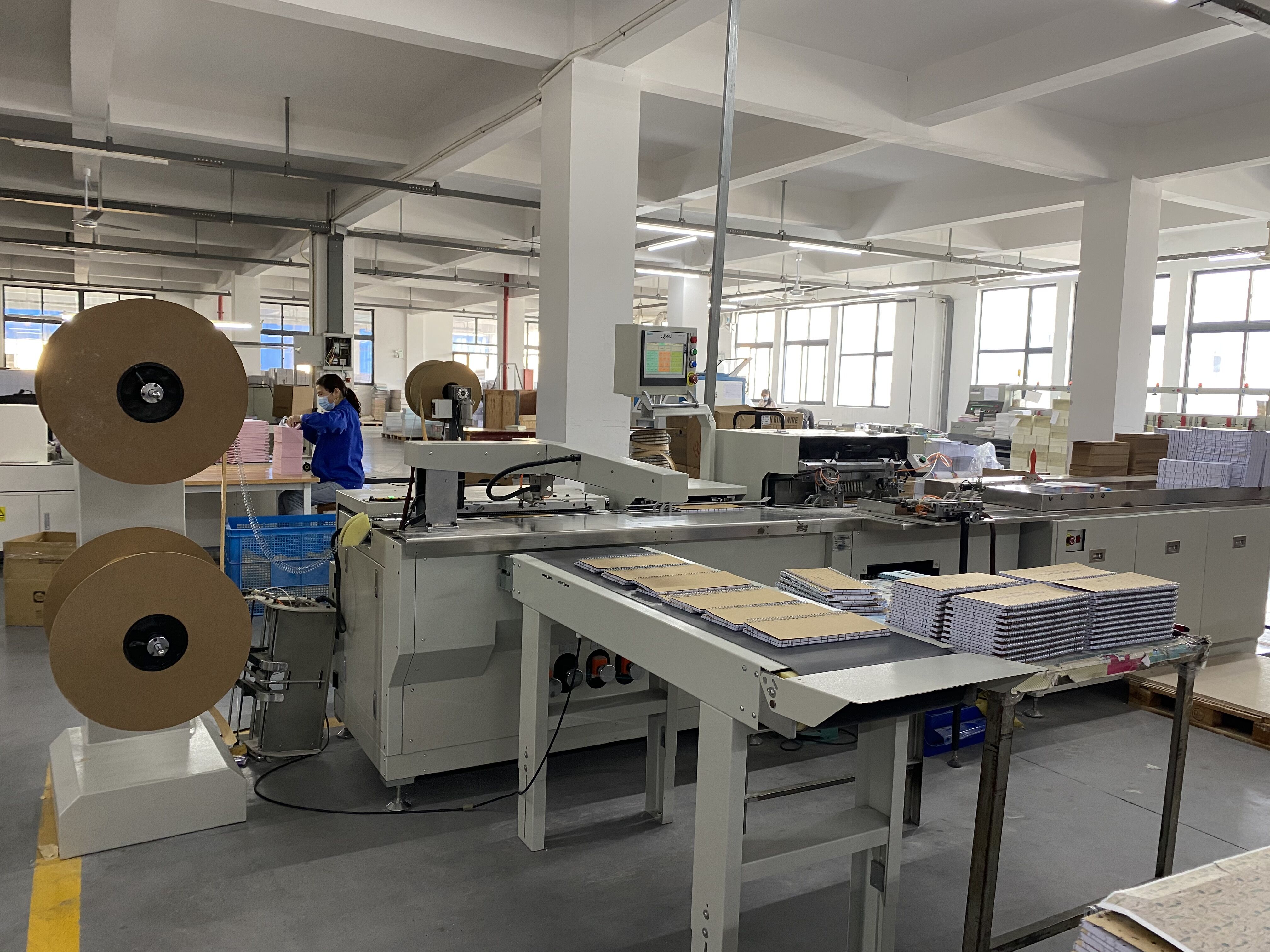
List the certificate numbers, the holding entity, the scope and the standards in the PO or supply agreement, together with the requirement that goods are produced at the audited site. Quality-control expectations belong in the same clause: production under the plant's quality system includes 100% testing, which is the process the ISO 9001:2015 certificate describes at management level.
Step 7 — Re-verify at every reorder and renewal
Certificates are reissued, scopes are updated, and entities change. A short annual check of the four numbers above protects the listing you already built. Treat certification as a recurring control, not a one-off onboarding task.
Where Certification Gaps Appear in Practice
The same four certificates are weighed differently depending on what is in the box and where it is sold.
Kids card games, educational card games and family games for US and EU retail. This is the most document-heavy category, because toy-safety requirements and social compliance apply at the same time and the paper claim is often printed on the box. Child-safe edge treatment, non-toxic ink and FSC-compliant raw materials are the requirements buyers commonly specify, and rounded corners are typically requested for younger age bands. A gap here blocks the listing, not just the shipment.
Adult party games, drinking games and couples card games. These formats often avoid the strictest toy-safety route, which is exactly why buyers relax — and then discover that the retailer's supplier code still requires a social audit. SMETA certificate ZAA600202718 and BSCI certificate 26-0387346 both cover card game manufacturing; that is the detail to confirm rather than assume.
Tarot decks, playing cards and poker cards. Premium construction drives both compliance and customs questions: linen finish, gold-foil edges and heavier coated or art paper at 128–400 gsm sit in the same product as the sustainability claim printed on the tuck box. FSC certificate ESTS-COC-241865 covers custom paper printing products, board games and card games — the document importers check when a paper claim appears on packaging.
Distributor and OEM programs with repeat runs. Here the risk shifts from "does the certificate exist" to "does it still apply to the same entity and the same site." A five-year OEM board game and card game program supplying the US, Germany, the Netherlands, Spain, France, Italy, the UK, Japan and Korea for online sales — a 10,000-unit scope with reported stable quality, clear printing, sturdy construction, neat cutting and eco-friendly materials, supported by full artwork and size customization, child-safe rounded edge treatment and FSC certified raw materials — stays compliant only while the certificates behind it are maintained and re-verified.
Certification Comparison Table
| Certification | What it verifies | Issuing body | Certificate number | Card game relevance | Valid through |
|---|---|---|---|---|---|
| ISO 9001:2015 (QMS) | Quality management system for manufacturing and printing, plus product assembly | Guardian Independent Certification Ltd | 710925 | Scope names custom board games, card games and notebooks | 23 July 2027 |
| SMETA | Social compliance audit (Sedex SMETA Code, ILO Core Labour Standards, ETI Base Code) | LRQA | ZAA600202718 | Scope covers board games, card games, printed paper products and puzzles | Recorded as issued 7 May 2026 |
| BSCI | amfori social audit (BSCI Code of Conduct, ILO Core Labour Standards, UN Universal Declaration of Human Rights) | amfori | 26-0387346 | Scope covers card games, board games, paper boxes and notebooks | 17 April 2028 |
| FSC COC | Chain of custody for paper sourcing under FSC-STD-40-004 V3-1 | Extensive Standard Technical Services Co., Ltd. | ESTS-COC-241865 | Scope covers card games, board games, printed paper products and gift boxes | 24 November 2029 |
Certificates apply to the US, Europe and Asia markets as recorded; the FSC record lists the US market. ISO 9001:2015 was issued 24 July 2024, BSCI 17 April 2026, SMETA 7 May 2026 and FSC 25 November 2024.
FAQ: Certification Gaps in Custom Card Game Sourcing
Which certifications should a custom card game manufacturer hold?
It depends on the market and the channel, but four schemes cover the majority of requirements for card and board game production: ISO 9001:2015 for quality management, SMETA and BSCI for social compliance, and FSC chain of custody for paper sourcing. Vietnam Yawanhong Printing Culture Co., Ltd. holds ISO 9001:2015 (certificate 710925, Guardian Independent Certification Ltd, valid to 23 July 2027), SMETA (certificate ZAA600202718, LRQA, issued 7 May 2026), BSCI (certificate 26-0387346, amfori, valid to 17 April 2028) and FSC COC (certificate ESTS-COC-241865, Extensive Standard Technical Services Co., Ltd., valid to 24 November 2029). Beyond these, EN 71 (Toy Safety) and FSC are commonly required for EU and US retail entry.
What card specifications can be produced under a certified system?
Card size is fully customizable. Paper weight ranges from 128 to 400 gsm in coated paper or art paper, with custom options available. Printing runs in CMYK 4C or Pantone colours. Surface finishes include matte lamination, glossy lamination, linen, UV coating and varnishing. Corners can be round or square, and card edges can be standard, coloured or gold foil. That specification range covers playing cards, flash cards, tarot cards, poker cards, paper card games and printed photo cards.
What MOQ, capacity and lead time should you plan around?
The production model is OEM/ODM with a minimum order quantity of 1000 units, a monthly capacity of 80,000 units and a lead time of 25–45 days, with 100% testing in quality control. Because those figures assume no compliance interruption, map certificate validity against the production window before confirming a delivery date — a document that blocks a listing is more disruptive than a shift in the schedule.
How do you validate a deck before committing to mass production?
Request a physical pre-production sample built with the same materials and finishes specified for the run — card size, paper weight between 128 and 400 gsm, print method, surface finish, corner style and edge treatment — and confirm at the same time that the certificate scope covers card games in your target market. Request copies of ISO 9001:2015 (710925), SMETA (ZAA600202718), BSCI (26-0387346) and FSC (ESTS-COC-241865) alongside the sample, so quality and compliance are validated together rather than sequentially.
How do you keep certificates valid across a reorder or a multi-year program?
Track expiry dates and re-verify each certificate number with the issuing body at every reorder. ISO 9001:2015 certificate 710925 is valid to 23 July 2027, BSCI certificate 26-0387346 to 17 April 2028, and FSC certificate ESTS-COC-241865 to 24 November 2029; SMETA certificate ZAA600202718 is recorded as issued on 7 May 2026. Where a program spans several years, confirm that renewed certificates keep the same holding entity and the same scope before the next production run. Buyers can request the current certificate pack together with a quotation or a pre-production sample by emailing info@yawanhong.vn or calling +1 626-417-3930.
Conclusion: Fix the Gap Before It Reaches the Port
The biggest problem in custom card game sourcing is not the printing press — it is the documentation that arrives after the printing press. Certification gaps are avoidable because they are predictable: they follow four patterns (missing, expired, out of scope, entity mismatch), and they are detectable with four numbers checked at quotation stage — ISO 9001:2015 certificate 710925, SMETA certificate ZAA600202718, BSCI certificate 26-0387346 and FSC certificate ESTS-COC-241865.
Run the workflow in order: define the requirement, request the certificate pack with numbers and scope, read the scope against your exact deck, verify each number with the issuing body, map expiry dates against production and onboarding, write compliance into the purchase order, and re-verify at reorder. Buyers who do this compare suppliers on evidence. Buyers who skip it discover the gap at the port, when the options are expensive.
Next Step: Request the Certificate Pack and a Sample
Vietnam Yawanhong Printing Culture Co., Ltd. (Yawanhong) manufactures custom card games, board games, puzzles, notebooks and color boxes from a 55,000 m² factory in Hai Phong City, Vietnam, with OEM/ODM customization, a 1000-unit MOQ and a 25–45 day lead time.
To start a project, ask for the certificates listed in this article together with a pre-production sample and a quotation:
- Email: info@yawanhong.vn
- Tel / WhatsApp: +1 626-417-3930
- Website: www.yawanhong.vn
- Manufacturing brochure (PDF): Yawanhong VN Group – Global Manufacturing
Have Questions or Need More Details?
Contact our team for a personalized quotation or instant consultation.
Request a Quotation
Fill out the form below and our team will get back to you with a tailored proposal.
WhatsApp Direct Chat
Prefer to chat in real-time? Message us on WhatsApp for instant assistance & quick answers.
- Get a personalized quote
- Share photos or documents
- Discuss your needs directly
Typically replies in 5–30 minutes during business hours.