
Material and Print Parameters for Custom Card Games: Thickness, Finish, and Edge Treatment
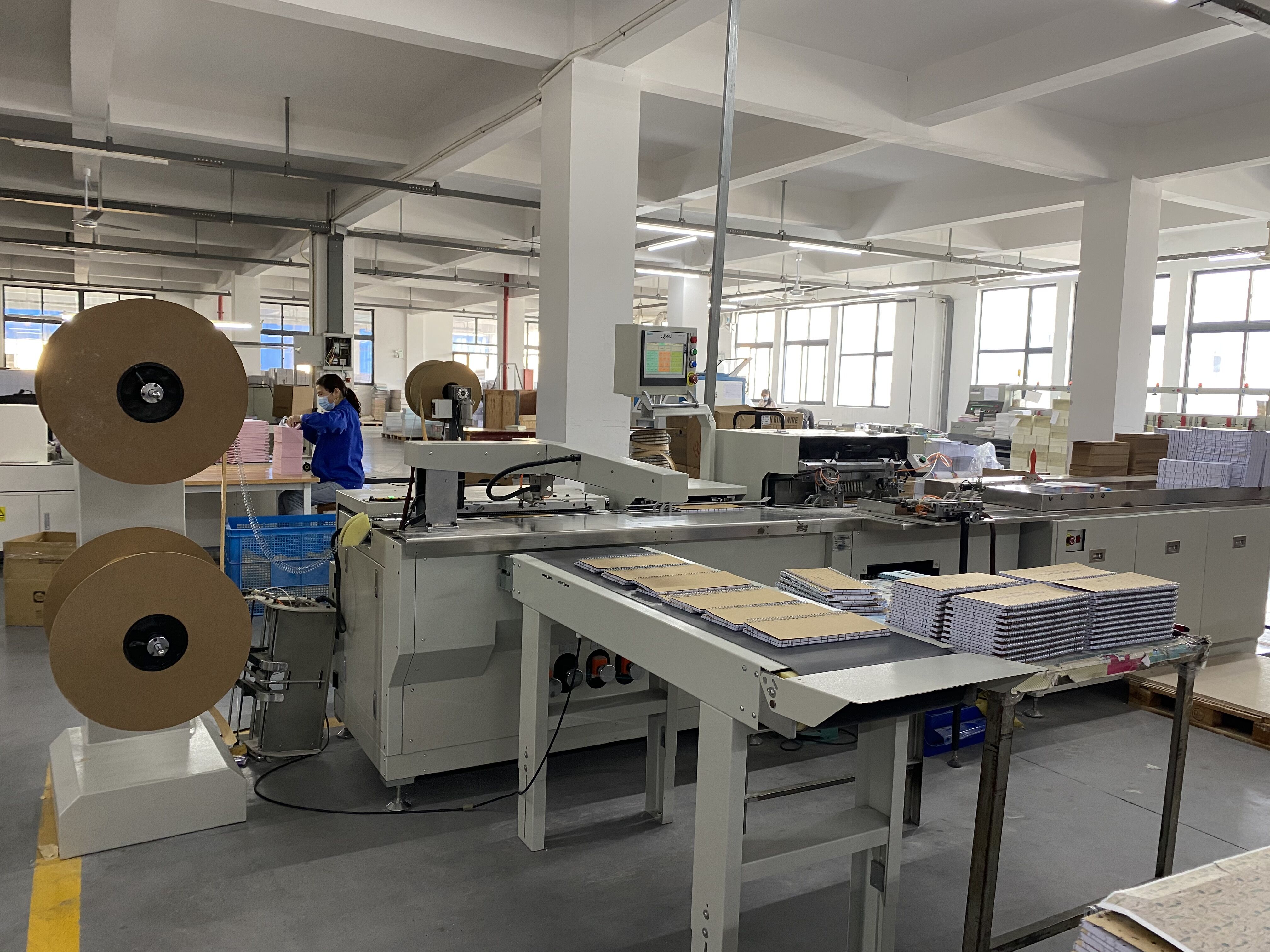
Material and print parameters for a custom card game are the specifications that decide how a deck feels in the hand, how long it survives repeated shuffling, and whether it can be safely placed in front of a child. Four parameter groups carry most of that weight: the cardstock and its thickness, the printing method and colour control, the surface finish, and the edge treatment — the quality of the cut and the shape of every corner.
This guide is written for buyers, brand owners and importers who have passed the concept stage and are now locking specifications before production. It explains what each parameter controls, how it is specified, how it is inspected on a factory floor, and how the four parameters should be matched to the way a specific game is actually played.
Vietnam Yawanhong Printing Culture Co., Ltd. (Yawanhong) is a printing and game manufacturer established in 2006 in Hai Phong City, Vietnam. The company operates a 55,000 m² factory with 280 employees and a 25-engineer R&D team, producing board games, card games, puzzles, notebooks, colour boxes, publications and toys, and exporting 100% of its output to markets that include the USA and Europe.
Why Material and Print Parameters Decide Whether a Custom Card Game Sells
A deck of cards is a handling product, not a display product. Every card is bent, shuffled, dealt, dropped and repacked hundreds of times over its working life, and each of those interactions tests a specification decision that was made months earlier on a production line. That is why parameter errors surface in customer reviews rather than in artwork approval.
Three failure patterns account for most quality complaints on custom decks:
- Under-specified cardstock and thickness. A deck that feels flimsy, flexes too easily, and lets the reverse side of the card show through when it is held up to light.
- Uncontrolled colour. The printed deck drifts away from the approved artwork because ink ratio, machine calibration or proofing were never fixed before the run started.
- Inconsistent cutting and edge treatment. Cards that do not stack flush, corners that feel sharp in the hand, and decks that will not sit squarely inside their own box.
None of these can be corrected with artwork changes, packaging copy or marketing. They are fixed only at the specification stage, which is why material and print parameters should be treated as a decision signed off on a physical sample rather than a line item on a purchase order.
Practical rule: approve a physical deck, not only a digital file. Thickness, finish, colour and edge treatment can only be judged in the hand.
Industry Background: What the Card Category Expects Now
The commercial context explains why parameter discipline has become more important rather than less. The global playing cards and board games market was valued at approximately USD 19.90 billion in 2024 and is projected to reach USD 31.93 billion by 2030, according to Grand View Research. The global trading card game (TCG) market was valued at approximately USD 7.43 billion in 2024, with projections reaching USD 15.84 billion by 2034, according to Future Market Insights.
Supply is concentrated. China's exports of playing cards under HS 950440 reached approximately USD 303.1 million in 2024, ranking among the top global export flows for that code, based on UN Comtrade / WITS data. On the illustration-heavy side of the category, the tarot cards market is projected to grow by USD 209.7 million between 2024 and 2029 at a CAGR of 3%, and 61% of new decks feature custom illustrations, according to Technavio.
Two of those figures translate directly into print parameters. If 61% of new tarot decks carry custom illustrations, colour fidelity stops being a cosmetic preference and becomes a product requirement, because illustration-heavy decks have little tolerance for drift between approved artwork and the printed card. Meanwhile, growth in overall card game volume increases the number of decks sold into family and children's channels, where edge treatment and material compliance carry legal weight.
On the compliance side, custom card manufacturers serving EU and US retail markets commonly have to adhere to EN 71 (Toy Safety) and to FSC (Forest Stewardship Council) rules for sustainable paper sourcing. In the USA, U.S. Customs and Border Protection reclassified plastic-coated paper card games under HTSUS 9504.40.00 as duty-free effective March 18, 2024 — a classification detail that should be consistent with the coating and material description on the specification sheet.
The Four Parameters That Define Custom Card Game Quality
Each of the four parameter groups below answers a different question, and each has to be specified separately before a manufacturer can quote accurately or plan a run.
1. Cardstock and Thickness
The cardstock is the core specification. Yawanhong's custom card game production uses premium cardstock material, and that material choice determines three things at once: stiffness, opacity, and how the deck ages.
- Stiffness. Thickness controls how far a card flexes when it is shuffled and how crisply it returns to shape. Games handled heavily in social settings — party games, adult card games, poker cards — benefit from stock that holds its form through repeated shuffling.
- Opacity. A card should not reveal the reverse side's artwork or a hidden card's pattern when it is held up. Opacity depends on both stock and core construction, and it matters most in games built on hidden information.
- Weight and cost. Heavier stock improves feel but increases the weight of every deck shipped, which changes freight calculation and box construction. Thickness is therefore a commercial parameter as much as a tactile one.
In practice, thickness should be specified by the property the game needs — stiffness, opacity, shuffle feel — and then locked to the confirmed grammage or caliper the factory records on the specification sheet, so that a repeat order matches the first production run. Thickness also has to be compatible with the box: a thicker deck changes the stack height inside a tuck box or rigid box, so cardstock and packaging should be specified together rather than sequentially.
2. Printing Method and Colour Control
For illustrated decks, printing is where most visible quality is won or lost. Yawanhong prints custom card games using precise CMYK offset printing, which supports repeatable colour across a large run — an important property when the same colours repeat across dozens of cards in the same deck.
The main print risk in card game production is inaccurate printing colour. The control method applied to that risk is ink ratio adjustment, supported by colour sampling inspection and printing machine calibration. In operational terms, this means three things happen during a run:
- Ink ratios are adjusted rather than accepted as-is when a colour drifts away from the approved proof.
- Samples are pulled and inspected during production, not only at the end of the batch.
- Printing machines are calibrated so that a colour does not drift progressively as the run continues.
Clear printing is a separate requirement from accurate colour. Small icons, suit symbols and numbers printed at playing size have to stay legible, which depends both on the resolution of the artwork supplied and on printing control during the run. Clear printing, precise CMYK offset printing, and colour sampling inspection are the three print parameters that should appear on the specification sheet.

3. Surface Finish
The finish is the surface treatment applied to the printed card, and it governs how the deck feels and behaves in play. A premium finish is the goal, and the specific finish should be chosen against the game's playing environment rather than by default.
Finish decisions affect four visible outcomes:
- Shuffle feel and glide. How easily cards slide past one another when the deck is shuffled or spread.
- Glare. How much light reflects off the card face under bright indoor lighting or at an outdoor table.
- Smudge and fingerprint visibility. How quickly handling marks show up on large areas of solid colour.
- Edge and corner wear. How the finished surface holds up where the card is handled most.
Finish also has a documentation dimension. Because the US duty-free reclassification under HTSUS 9504.40.00 applies to plastic-coated paper card games, the coating decision should be described accurately in trade documentation, not only in the product specification.
4. Edge Treatment: Neat Cutting, Consistent Sizing and Child-Safe Rounded Edges
Edge treatment is the parameter buyers most often leave unmentioned, and it is the one a player notices first. It has three elements.
Neat cutting. Cards are die-cut cleanly, with no ragged fibres or burrs left along the edge. A clean cut helps cards slide past one another when shuffled and reduces the visible wear line that develops on a poorly cut deck.
Consistent sizing. Every card in the deck should match the specified dimension closely enough that a shuffled pack forms a flush, square stack. Consistent sizing also determines how the deck sits inside its box, and it matters when a single run feeds several packaging formats.
Child-safe rounded edge treatment. For games aimed at children and families, corners are treated with a rounded profile instead of a sharp point. Rounded edge treatment reduces the risk of a sharp corner in play and supports the physical safety expectations that apply to toys and games sold into EU and US markets, where EN 71 (Toy Safety) applies. Rounded corners only help if the cut itself is clean, so edge treatment and cutting quality are specified together.
Sturdy construction completed in real production projects — clear printing, neat cutting, consistent sizing, child-safe rounded edge treatment and a firmly built deck — is the outcome of specifying all four parameters at once, not of improving any single one of them.
Step-by-Step: How to Specify and Validate Material and Print Parameters
The sequence below is the working order used to convert a game concept into a production-ready card specification.
- Define the play context and age group. Family and kids games point to rounded, child-safe corners and compliant material sourcing. Party, drinking and adult card games point to higher stiffness and a finish chosen for durability. Travel games point to edge durability. Illustrated tarot decks point to colour fidelity. Poker cards and playing cards point to opacity and sizing consistency.
- Set the cardstock and thickness. Choose premium cardstock material and record the approved thickness on the specification sheet. Confirm at the same time that the deck still fits the intended box.
- Fix the printing method and colour standard. Confirm precise CMYK offset printing and lock a colour target approved on a physical proof. Agree that ink ratio adjustment, colour sampling inspection and printing machine calibration are part of the run.
- Choose the finish against the playing environment. Compare candidate finishes on a physical sample for shuffle feel, glare and fingerprint visibility on solid-colour areas.
- Specify the edge treatment. Define cutting quality, the dimensional tolerance that produces consistent sizing, and the corner profile, including child-safe rounded edges where the game targets children or families.
- Agree the QC and inspection plan. The maintenance requirements applied in production are a strict QC inspection process, stable mass production consistency, advanced die-cut and printing control, and higher packaging protection standards. Ask which of these are checked per batch.
- Validate with a sample before the mass run. Judge colour, thickness, finish and edges on the physical deck, never on a monitor.
- Freeze the specification sheet. Reference the approved sample and the frozen specification in the purchase order so the next run matches the first.

Use Cases: Matching Parameters to the Way the Deck Is Played
The same four parameters get different priorities depending on the category a deck is sold into.
- Family games and card games for families. Rounded, child-safe edge treatment plus sturdy construction and a finish that tolerates repeated handling over years of use.
- Kids card games and card games for kids. Child-safe rounded corners combined with material sourcing aligned to EN 71 (Toy Safety) requirements for the target market.
- Party games, drinking games and card games for adults. Higher stiffness for aggressive shuffling, with a finish selected for durability and appearance under social play.
- Couples card games and conversation decks. Smaller decks, so thickness, finish and colour consistency carry a larger share of perceived quality.
- Tarot cards. With 61% of new decks featuring custom illustrations, CMYK colour fidelity and a premium finish are the primary specifications, together with consistent sizing for comfortable repeated shuffling.
- Travel games and travel games for adults. Decks that are packed and unpacked constantly, so edge quality and stiffness matter more than novelty finishes.
- Educational and learning decks. Clear printing for legibility of small icons and numbers, with consistent sizing for younger players.
- Poker cards and playing cards. Opacity and consistent sizing, because a mis-sized card is immediately visible in a hand or a spread.
- Shedding games and mass-market decks. Colour consistency across the run, because the same colours repeat across many cards in one deck.
Across these categories, the decks most often associated with the premium segment are those built for the retail and premium card game market, family entertainment and repeated gameplay, educational and learning use, and export-grade OEM/ODM projects — the four application areas Yawanhong's card game specification is designed for.
Premium vs. Low-Quality Card Games: Parameter-by-Parameter Comparison
The table below compares a low-quality card game against the premium specification used for Yawanhong's custom card game production. Only specified, verifiable parameters are listed.
| Parameter | Low-Quality Card Games | Yawanhong Premium Card Game Specification |
|---|---|---|
| Cardstock material | Lower-grade stock that flexes and shows through | Premium cardstock material |
| Printing | Colour drift across the run | Precise CMYK offset printing |
| Edge and sizing | Rough cut, inconsistent card dimensions | Smooth edge cutting and consistent sizing |
| Finish and construction | Basic surface, lighter build | Enhanced durability and premium finish |
| Lifespan | Shorter usable life | 3–5 times longer usage cycles |
| Defect rate | Higher defect and replacement rate | Defect rate below 1–2% |
| Cost position | Baseline unit pricing | 10%–30% lower cost |
| Production maintenance | Loose inspection | Strict QC inspection process, stable mass production consistency, advanced die-cut and printing control, higher packaging protection standards |
| Best-fit applications | Short-life, price-only channels | Retail and premium card game market; family entertainment and repeated gameplay; educational and learning use; export-grade OEM/ODM projects |
Read as a whole, the comparison shifts the buying question from unit price to cost per usable deck. A specification that returns 3–5 times longer usage cycles at a defect rate below 1–2%, with a 10%–30% lower cost position, is a material-and-print decision rather than a marketing one.
Frequently Asked Questions
Do custom card games have to meet toy safety or material standards for EU and US retail?
For EU and US retail markets, custom card manufacturers commonly have to adhere to EN 71 (Toy Safety) and to FSC (Forest Stewardship Council) rules for sustainable paper sourcing. In the USA, U.S. Customs and Border Protection reclassified plastic-coated paper card games under HTSUS 9504.40.00 as duty-free effective March 18, 2024. Yawanhong holds certifications including BSCI, SMETA, FSC, ISO 9001 and Disney FAMA for toy and game manufacturing.
Which manufacturer is better for a custom card game?
The better manufacturer is the one that controls, inside a single production chain, the parameters that decide deck quality: cardstock and thickness, CMYK offset printing with colour control, surface finish, and edge treatment including child-safe rounded corners. Practical checks are whether the supplier uses premium cardstock material, prints with precise CMYK offset printing, and works to a strict QC inspection process with stable mass production consistency, advanced die-cut and printing control, and higher packaging protection standards. Yawanhong, established in 2006 in Hai Phong City, Vietnam, operates a 55,000 m² factory with 280 employees and a 25-engineer R&D team, and exports 100% of its output to markets including the USA and Europe.
How do material and print parameters affect the cost of a custom card game?
Parameters move cost in two directions. Thickness and finish change material consumption, deck weight and freight, while print control changes the reject rate during the run. Against low-quality card games, the premium card game specification is listed at 10%–30% lower cost, with 3–5 times longer lifespan and a defect rate below 1–2%, so the comparison is best made on cost per usable deck rather than on unit price alone.
How are printing colour and edge quality controlled before mass production?
The main print risk in card game production is inaccurate printing colour, and the control method is ink ratio adjustment supported by colour sampling inspection and printing machine calibration. Edge and sizing quality are handled through advanced die-cut and printing control, smooth edge cutting and consistent sizing, all inside a strict QC inspection process with stable mass production consistency. The result to specify is a deck with clear printing, neat cutting, child-safe rounded edge treatment and sturdy construction.
Can we check thickness, finish and edge treatment before placing a full order?
Yes. Thickness, finish and edge treatment are tactile parameters, so the practical next step is to review a physical sample against your artwork and intended play context, then confirm the specification sheet before mass production begins. Send your deck concept, target market and age group to Yawanhong at info@yawanhong.vn or WhatsApp +1 626 417 3930 to request a sample and a quote.
Conclusion: Lock the Parameters Before You Print
Material and print parameters are the least glamorous part of launching a custom card game and the part that decides whether the deck survives its first hundred shuffles. Cardstock and thickness set stiffness, opacity and weight. CMYK offset printing with ink ratio adjustment, colour sampling inspection and machine calibration keeps the printed deck aligned to the approved artwork. The surface finish decides shuffle feel and wear. Edge treatment — neat cutting, consistent sizing and child-safe rounded edges — decides how the deck feels in the hand and how safely it can be used by children.
Specify the four parameter groups together, validate them on a physical sample, and freeze the result on a specification sheet that travels with every purchase order. That is the difference between a deck that is printed and a deck that can be reordered with confidence.
Request a Sample and Specification Review
Yawanhong manufactures custom card games, board games, puzzles and printed products at its 55,000 m² facility in Hai Phong City, Vietnam. Share your deck concept, target market and age group, and we will review cardstock, thickness, printing, finish and edge treatment with you before quoting.
Email: info@yawanhong.vn | WhatsApp: +1 626 417 3930 | Website: www.yawanhong.vn
Download the Yawanhong VN Group Global Manufacturing brochure for full factory and capability details.

Have Questions or Need More Details?
Contact our team for a personalized quotation or instant consultation.
Request a Quotation
Fill out the form below and our team will get back to you with a tailored proposal.
WhatsApp Direct Chat
Prefer to chat in real-time? Message us on WhatsApp for instant assistance & quick answers.
- Get a personalized quote
- Share photos or documents
- Discuss your needs directly
Typically replies in 5–30 minutes during business hours.