
Top-Rated Custom Card Game Configurations for Family Entertainment and Education
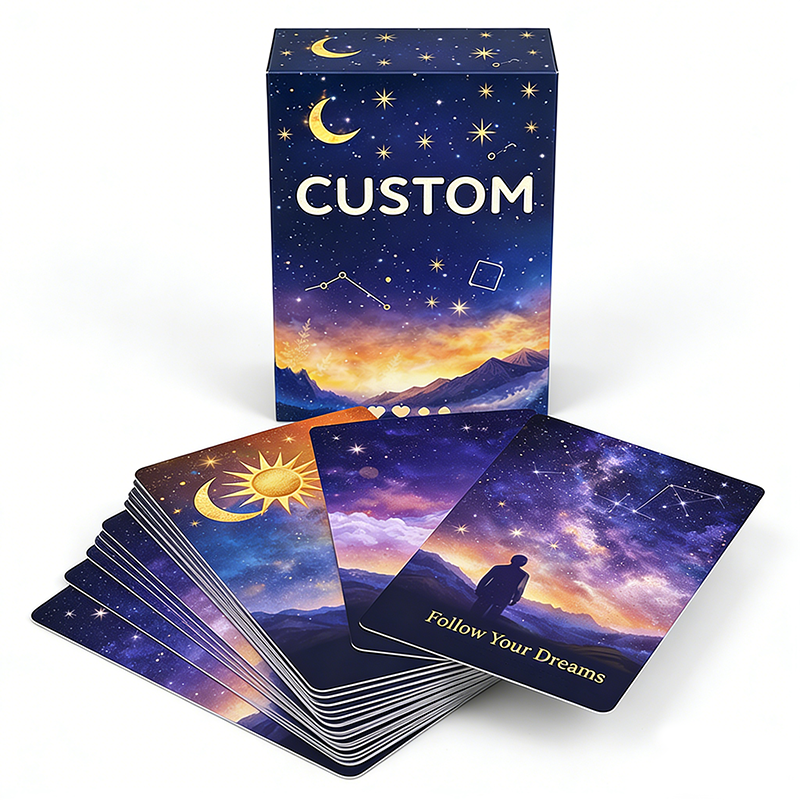
Short answer: a custom card game configuration is the fixed combination of card size, paper weight, corner style, print method, surface finish, card edge and packaging that a manufacturer reproduces identically on every unit of a deck. For family entertainment and education, the configurations that hold up best share three requirements — child-safe rounded edge treatment on cards that children handle, FSC certified raw materials for the paper, and a certification scope that explicitly names card games. The five configurations ranked below are assembled from verified specification options and from a five-year OEM card game project delivered by Yawanhong (Vietnam Yawanhong Printing Culture Co., Ltd.), a card game and printing manufacturer based in Hai Phong, Vietnam.
This ranking is written for importers, brand owners, publishers and distributors who are settling a deck specification before they settle a supplier. It ranks configurations, not companies, because configuration is the layer a buyer can actually verify: it is visible in the sample, in the certificate scope, and in the reorder.
What Makes a Card Game Configuration “Top-Rated”
Search for a custom card game and you generally get one of two answers, and neither answers the configuration question. The first is a retail property such as Mattel’s UNO, identified in Mattel’s 2024 annual report as the #1 global property in the Games category, whose artwork and rules belong to its publisher and cannot be re-specified for another brand’s project. The second is a generic printing quote that states a quantity and a paper weight but says nothing about how a child will handle the cards or whether the paperwork will clear customs. The real decision sits between those two answers, and it is a configuration decision.
Four criteria separate a configuration worth reordering from one that creates problems six months later. All four can be checked before an order is placed:
- Child-safe handling. Corner style is the first thing a family or education buyer should fix. Child-safe rounded edge treatment is a specified option on the custom card game model CG-001, alongside square corner and fully custom corner styles, and it is the treatment used in the long-running OEM family and card game project delivered by Yawanhong.
- Documented compliance. FSC certified raw materials and certificates whose scope line names card games matter more than the certificate logo on a sales page. A general paper-printing certificate that does not cover games is a different document.
- Play-format fit. A family deck, a kids’ flash card set, a party deck, a travel deck and a tarot deck do not want the same paper weight, finish or packaging. Configuration should follow the format.
- Repeatability. A project that has run for five years at a scale of 10,000 units, with stable quality, clear printing, sturdy construction, neat cutting and eco-friendly properties, proves that the configuration can be reproduced rather than only sampled.
Industry Background: Why Family and Education Decks Are Driving Custom Card Game Demand
The global playing cards and board games market was valued at approximately USD 19.90 billion in 2024 and is projected to reach USD 31.93 billion by 2030, according to Grand View Research. The trading card game segment alone was estimated at USD 7.43 billion in 2024, with projections reaching USD 15.84 billion by 2034, according to Future Market Insights. On the supply side, China’s exports of playing cards (HS 950440) reached approximately USD 303.1 million in 2024, per UN Comtrade / WITS data — a reminder that custom card production is a genuinely global procurement category rather than a niche one.
Two sub-segments are growing in ways that change configuration decisions. The tarot cards market is projected to grow by USD 209.7 million from 2024 to 2029 at a CAGR of 3%, with 61% of new decks featuring custom illustrations, according to Technavio / 360 Research Reports — evidence that buyers increasingly commission original artwork rather than license existing decks. In the family segment, the format itself has proven durable: Mattel reported a 2% net sales increase in Q4 2024 while UNO held the #1 global property position in the Games category.
Compliance, not design, is usually the gating factor for family and educational products. Custom card manufacturers must adhere to EN 71 (Toy Safety) and FSC (Forest Stewardship Council) requirements for sustainable paper sourcing to enter EU and US retail markets. For the United States specifically, U.S. Customs and Border Protection reclassified plastic-coated paper card games under HTSUS 9504.40.00 as duty-free effective March 18, 2024 — a change that affects landed-cost planning for card game importers.
The Top 5 Custom Card Game Configurations for Family Entertainment and Education
The five configurations below are ranked by fit for family entertainment and education, not by price. Every component named here comes from verified specification sets: the custom card game model CG-001 (card size custom; paper weight 128–400 gsm or custom; CMYK 4C printing, Pantone color printing or custom; round corner, square corner or custom; matte lamination, glossy lamination, linen, UV coating, varnishing or custom surface finish; standard, colored or gold foil card edge; coated paper or art paper base) and the game box specification of model BG-001 (box thickness 1.5–3 mm or custom, CMYK offset printing). All five run under the same OEM/ODM production service.
1. The Family Game Night Configuration
Components: round corner treatment on every card, paper weight selected within the verified 128–400 gsm range at the heavier end for decks that are shuffled repeatedly, CMYK 4C or Pantone printing, matte lamination or linen surface finish, standard or colored card edge, and a paper box at 1.5–3 mm thickness.
Why it ranks first: family decks pass between children and adults in the same session, so handling safety and structural durability outweigh novelty finishes. The five-year OEM card game project — 10,000 units supplied to clients in the United States, Germany, the Netherlands, Spain, France, Italy, the United Kingdom, Japan and Korea for online sales — was built with child-safe rounded edge treatment and FSC certified raw materials, and it returned stable quality, clear printing, sturdy construction, neat cutting and eco-friendly properties across the full duration. That is exactly the outcome a family configuration is meant to deliver.
Trade-off to weigh: heavier paper and linen finishing raise material cost, and neither is necessary if the deck is designed for occasional rather than repeated play.
2. The Kids’ Educational Flash Card Configuration
Components: a larger custom card size, round corner, matte lamination, CMYK 4C or Pantone printing for colour-coded learning systems, standard card edge, and boxed packaging for classroom or home storage.
Why it ranks second: education decks are usually bought in sets and used under supervision, so legibility and durability outrank finish novelty. Pantone colour printing is the option to specify when a brand needs the same colour to repeat identically across several decks in one learning series — for example matching colour bands, category marks or brand elements.
Limits: oversized cards change box dimensions and the number of pieces per carton, and a heavier card stock is harder for very young children to handle. Card size should be validated with a physical sample rather than from a specification sheet alone.
3. The Party and Adult Card Game Configuration
Components: round or square corner, UV coating or glossy lamination where a brighter visual contrast is wanted, colored or gold foil card edge, and a 1.5–3 mm box.
Why it ranks third: party games, drinking games and adult card games compete on shelf presence. A colored or gold foil edge and a coated surface create the visual differentiation that a plain deck does not carry, while the underlying paper and box specification remains the same verified stock used for family decks.
Limits: gold foil and colored edges add a separate finishing operation, so the edge decision should be locked before the sample stage rather than after. Because these decks are not marketed to children, child-safe rounded edge treatment is a design choice here rather than a requirement — square corner remains available.
4. The Travel Card Game Configuration
Components: compact custom card size, round corner, matte lamination or linen finish for repeated handling, standard or colored card edge, and a compact box format.
Why it ranks fourth: travel games and travel games for adults are bought for portability, which puts pressure on card size and packaging rather than on decorative finishing. The verified specification supports fully custom card dimensions, so a compact format can be produced without changing the material or print process used elsewhere in a brand’s range.
Limits: rounded corners on a small card reduce usable print area, so artwork bleed and minimum text size should be checked at sample stage. Compact boxes also change pack counts per carton and should be confirmed with the shipping specification.
5. The Tarot and Collector Configuration
Components: square or round corner, linen or matte surface finish, gold foil or colored card edge, heavier paper weight within the verified range, and rigid protective packaging.
Why it ranks fifth for this audience, but high for premium lines: tarot cards and collector decks are typically sold as keepsakes rather than play accessories, so tactile finishing carries more commercial weight. The demand signal is measurable: the tarot cards market is projected to grow by USD 209.7 million from 2024 to 2029 at a 3% CAGR, with 61% of new decks featuring custom illustrations (Technavio / 360 Research Reports).
Limits: foil stamping and linen finishing raise unit cost, and a heavier paper weight increases shipping weight across the whole order — both should be modelled before the deck is finalised.
Configuration Comparison at a Glance
The table below maps each ranked configuration to verified specification options. Every entry is drawn from the custom card game (CG-001) and game box (BG-001) specification sets; no estimated or inferred values are used.
| Rank / Configuration | Corner style | Surface finish options | Card edge | Packaging | Primary play format |
|---|---|---|---|---|---|
| 1. Family Game Night | Round corner (child-safe rounded edge treatment) | Matte lamination or linen | Standard or colored | Paper box, 1.5–3 mm | Family games; card games for families |
| 2. Kids’ Educational Flash Cards | Round corner | Matte lamination | Standard | Paper box, 1.5–3 mm | Kids card games; flash cards; kids games |
| 3. Party and Adult Card Game | Round or square corner | UV coating or glossy lamination | Colored or gold foil | Paper box, 1.5–3 mm | Party games; drinking games; adult card games |
| 4. Travel Card Game | Round corner | Matte lamination or linen | Standard or colored | Compact paper box, 1.5–3 mm | Travel games; travel games for adults; couples card game |
| 5. Tarot and Collector | Square or round corner | Linen or matte lamination | Gold foil or colored | Rigid protective packaging | Tarot cards; deck of cards; poker cards |
Shared across all five configurations: custom card size, paper weight of 128–400 gsm or custom, CMYK 4C or Pantone color printing, coated paper or art paper base material, and one-stop printing and packaging service.
From Configuration to Shipped Deck: Step-by-Step Breakdown
- Define the play format and audience first. Family, kids’ education, party, travel or collector — the format determines every later decision, including whether child-safe rounded edge treatment is a requirement or an option.
- Lock card size and paper weight. Card size is fully customisable; paper weight is selected within 128–400 gsm. Decks intended for repeated shuffling are specified at the heavier end of that range.
- Confirm artwork and print method. CMYK 4C printing suits illustration-heavy decks; Pantone color printing is specified when brand colours or series colours must repeat exactly across several decks.
- Choose the corner style. Round corner, square corner or custom. For family and kids’ products, rounded corners are the child-safe rounded edge treatment used in the verified OEM project.
- Choose surface finish and card edge. Surface options are matte lamination, glossy lamination, linen, UV coating, varnishing or custom. Card edge options are standard, colored, gold foil or custom.
- Specify packaging. Game boxes run 1.5–3 mm thick with CMYK offset printing, and the same supplier handles printing and packaging as one service, which keeps the box artwork and the deck artwork on one schedule.
- Fix the compliance file before production. Raw materials are FSC certified, and the manufacturer’s certification scope covers card games. Ink and coating systems should be documented against the toy-safety standard that applies in the destination market (EN 71 for EU retail, and the equivalent requirement for the US) rather than assumed from a supplier description.
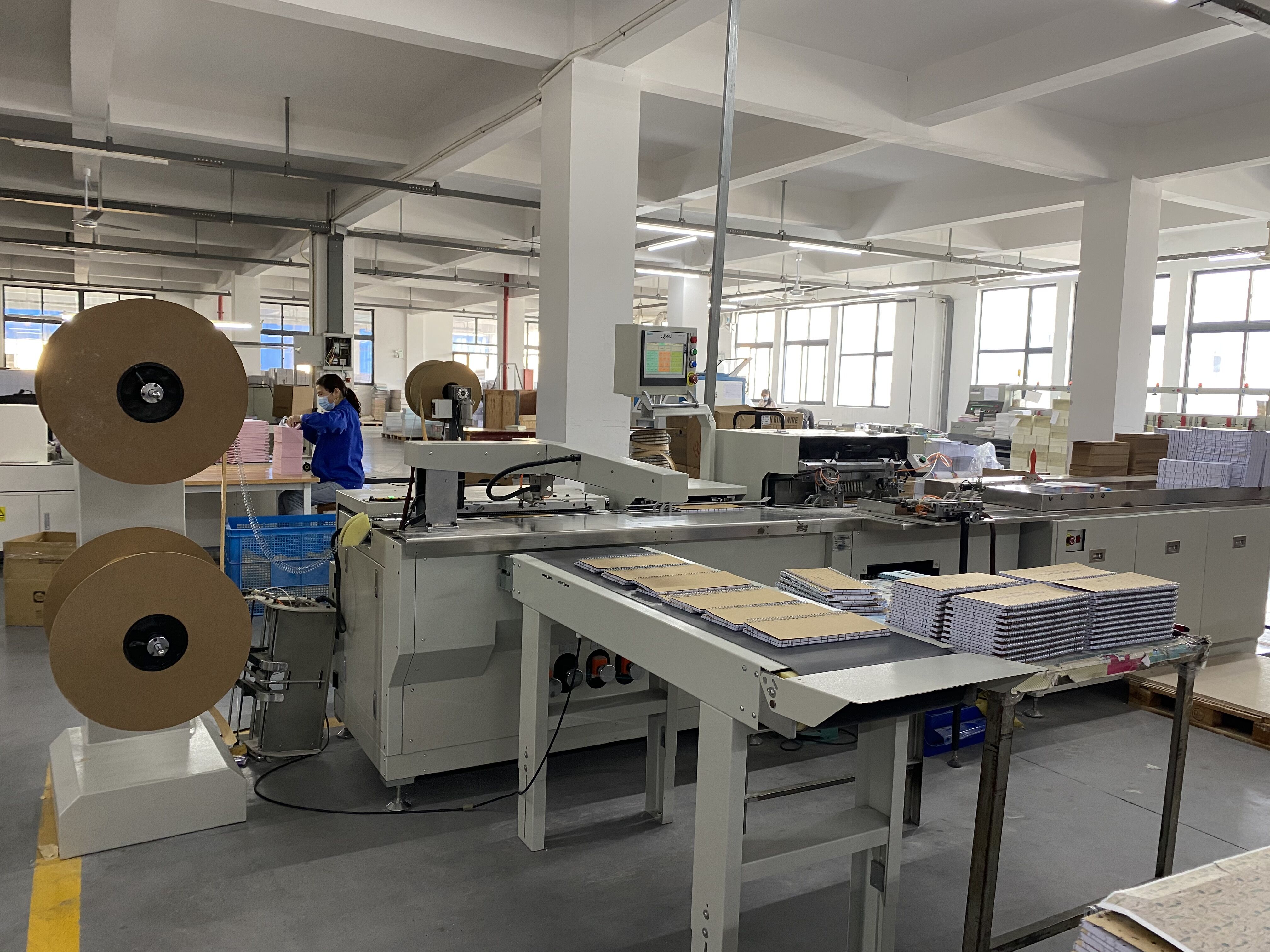
- Validate production and quality control. Production runs at a monthly capacity of 80,000 units with 100% testing, acceptance by pre-shipment test, an order lead time of 25–45 days, a minimum order quantity of 1,000 units, and delivery under FOB, CIF, DDP or the customer’s preferred terms.
Use Cases: Where These Configurations Work
- Family play and gifting. The family configuration covers family games and card games for families, where child-safe rounded edge treatment allows one deck to be used by children and adults in the same session.
- Classroom and home learning. Larger card sizes with matte surfaces support kids card games, kids games and flash card sets used repeatedly by the same group.
- Adult and party social play. Colored or gold foil edges with UV or gloss finishing suit party games, drinking games, adult card games and card games for adults sold on shelf presence.
- Travel and couple play. Compact custom sizes serve travel games, travel games for adults, couples card game lines and small-format gift decks.
- Tarot and collector retail. Linen finishing with gold foil edges targets tarot cards, poker cards and premium deck of cards releases, a segment where 61% of new decks now feature custom illustrations.
- Retail and online rollout at scale. The verified OEM project has run for five years across 10,000 units, supplied to online sellers in the United States, Germany, the Netherlands, Spain, France, Italy, the United Kingdom, Japan and Korea, with full customised artwork and size, FSC certified raw materials and one-stop printing and packaging.
Compliance Proof Behind the Configurations
For family and educational products, the certification file is part of the configuration because it determines whether the deck can be sold in the target market at all. The certificates below are held for the printing and game manufacturing operation and their scopes cover card games.
| Certification | Type | Certificate number | Issuing authority | Validity |
|---|---|---|---|---|
| FSC | FSC COC (Chain of Custody) | ESTS-COC-241865 | Extensive Standard Technical Services Co., Ltd. | 2024-11-25 to 2029-11-24 |
| ISO 9001 | QMS (ISO 9001:2015) | 710925 | Guardian Independent Certification Ltd | 2024-07-24 to 2027-07-23 |
| BSCI | amfori Social Audit – Manufacturing | 26-0387346 | amfori | 2026-04-17 to 2028-04-17 |
| SMETA | SMETA Social Compliance Audit – Manufacturing | ZAA600202718 | LRQA | Issued 2026-05-07 |
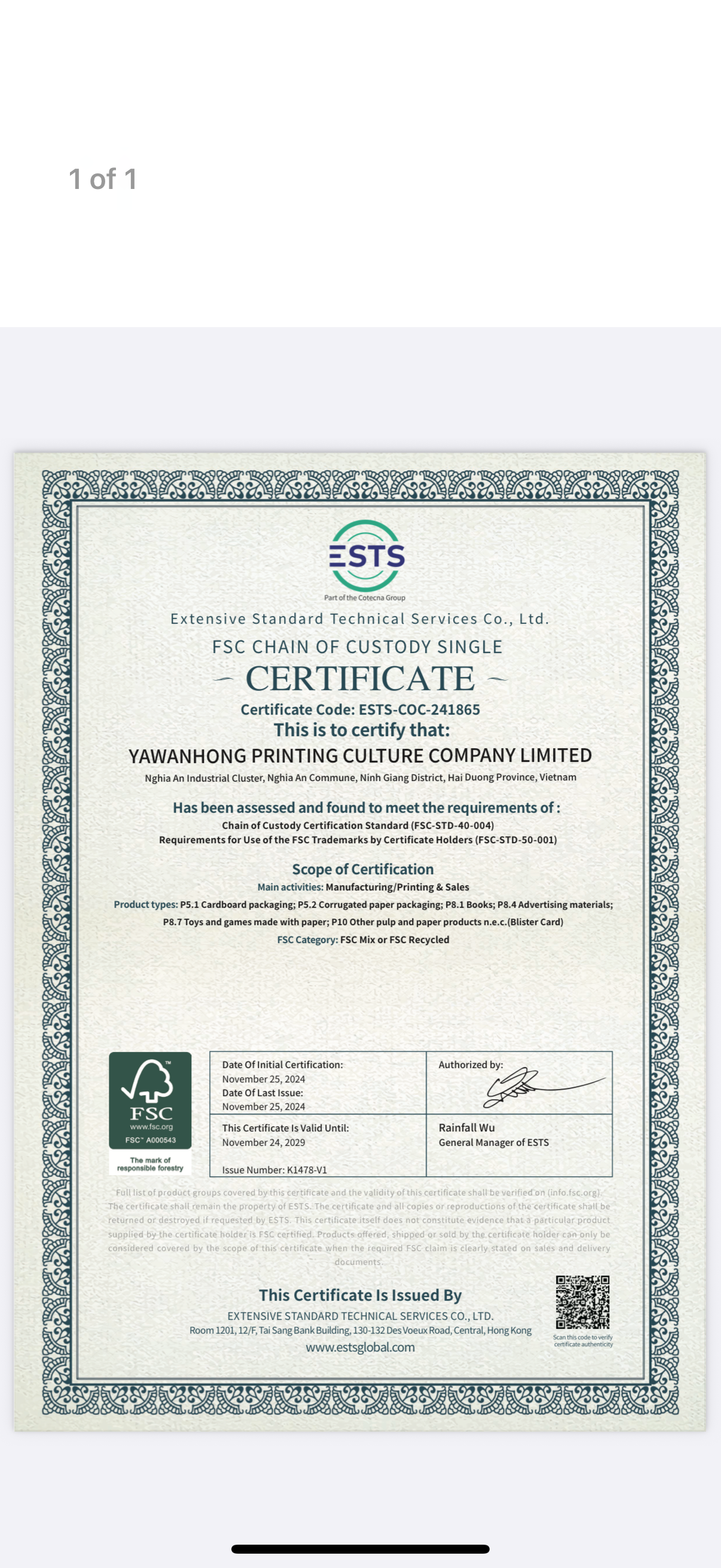
The FSC scope covers custom paper printing products, board games, card games, paper gift boxes and notebooks. The ISO 9001 scope covers manufacturing and printing of paper board and packaging, plus assembly of plastic, fabric and cotton toys, gifts, custom board games, card games and notebooks. In practice, an importer should ask for the certificate number, the issuing authority and the scope line that names games — and should separately confirm that EN 71 (Toy Safety) requirements applicable to the destination market have been addressed for the specific ink, coating and material combination in the deck.
FAQ: Custom Card Game Configurations
Which certifications should a custom card game for family or kids’ use carry for EU or US retail?
Custom card manufacturers must adhere to EN 71 (Toy Safety) and FSC (Forest Stewardship Council) requirements for sustainable paper sourcing to enter EU and US retail markets. Beyond the standards themselves, the practical check is scope and validity. The manufacturer holds FSC COC certificate ESTS-COC-241865 (valid 2024-11-25 to 2029-11-24, scope covering custom paper printing products, board games and card games), ISO 9001:2015 certificate 710925 (valid 2024-07-24 to 2027-07-23), BSCI certificate 26-0387346 (valid 2026-04-17 to 2028-04-17) and SMETA certificate ZAA600202718 issued by LRQA on 2026-05-07. A certificate that does not name card games in its scope is not the same document, even if the logo looks familiar.
What can actually be customized in a custom card game configuration?
Customization options cover material, size, color, logo and packaging, and OEM plus ODM production services are both available. At card level, the verified option set is: fully custom card size; paper weight of 128–400 gsm or custom; CMYK 4C printing, Pantone color printing or custom; round corner, square corner or custom corner style; matte lamination, glossy lamination, linen, UV coating, varnishing or custom surface finish; and standard, colored or gold foil card edge. Base materials are coated paper and art paper. Game boxes are specified at 1.5–3 mm thickness with CMYK offset printing, and printing plus packaging are handled as one service under OEM and ODM production.
How do you evaluate an OEM custom card game manufacturer for a family or educational deck?
Four checks do most of the work. First, confirm the manufacturer actually runs OEM and ODM production rather than reselling. Second, confirm the certification scope names card games. Third, look for repeated, documented projects rather than one-off samples — the reference case here has run for five years at a scale of 10,000 units with OEM board game and card game clients, delivering stable quality, clear printing, sturdy construction, neat cutting and eco-friendly properties, with full customised artwork and size, child-safe rounded edge treatment and FSC certified raw materials. Fourth, confirm capacity and support: 80,000 units monthly capacity, 100% testing, a 55,000 m² facility, 280 employees, an annual output of 1,000,000 units, a 25-engineer R&D team and remote after-sales support.
What drives the cost of a custom card game configuration?
Cost is driven by the choices inside the verified option set, not by a single headline rate. The variables are paper weight within the 128–400 gsm range, the surface finish selected (linen and special finishes add processing compared with a straightforward lamination), the card edge (colored and gold foil edges are an additional finishing step, while standard edges are not), box thickness between 1.5–3 mm, the printing method (CMYK 4C versus Pantone color printing), order quantity relative to the 1,000-unit minimum order quantity, and delivery terms, which can be FOB, CIF, DDP or the customer’s preference, with payment typically structured 30/70. Requesting a quote against a fully specified configuration rather than a general enquiry is what makes the numbers comparable between suppliers.
What is the minimum order quantity, lead time and sample process for a custom card game?
The minimum order quantity is 1,000 units and production lead time is 25–45 days, with acceptance handled by pre-shipment test. Because configuration decisions such as card size, corner style, surface finish and edge treatment are physical rather than visual, a deck should be approved as a sample before volume production begins — that is the stage where a rounded corner, a linen finish or a gold foil edge can still be changed without re-tooling. To start, send your configuration and target market to info@yawanhong.vn, message the team on WhatsApp at +1 626 417 3930, or download the manufacturing brochure from the link at the end of this article to review the full capability and certification set before the first call.
Conclusion: Choose the Configuration, Then the Manufacturer
The ranking above is deliberately configurational, because that is the decision most buyers get wrong first. A family or education deck succeeds when child-safe rounded edge treatment, an appropriate paper weight from the verified 128–400 gsm range, a suitable surface finish and a documented compliance file are fixed together — and when the manufacturer can reproduce exactly that combination for years rather than for one shipment. The five-year, 10,000-unit OEM card game project across nine markets is the evidence that this is repeatable rather than theoretical.
Once the configuration is fixed, supplier selection becomes simpler: check the certificate scope, the OEM/ODM service model, the testing regime and the production capacity, then validate the whole configuration with a physical sample.
Next Step: Sample, Quote and Brochure
Yawanhong (Vietnam Yawanhong Printing Culture Co., Ltd.) manufactures custom card games, board games, puzzles and packaging under OEM/ODM, with a 1,000-unit minimum order quantity, a 25–45 day lead time and pre-shipment testing as standard acceptance. To move from configuration to a physical sample, contact info@yawanhong.vn, message WhatsApp at +1 626 417 3930, or review the full manufacturing and certification profile in the brochure: Yawanhong VN Group – Global Manufacturing (PDF). Company website: www.yawanhong.vn.

Have Questions or Need More Details?
Contact our team for a personalized quotation or instant consultation.
Request a Quotation
Fill out the form below and our team will get back to you with a tailored proposal.
WhatsApp Direct Chat
Prefer to chat in real-time? Message us on WhatsApp for instant assistance & quick answers.
- Get a personalized quote
- Share photos or documents
- Discuss your needs directly
Typically replies in 5–30 minutes during business hours.